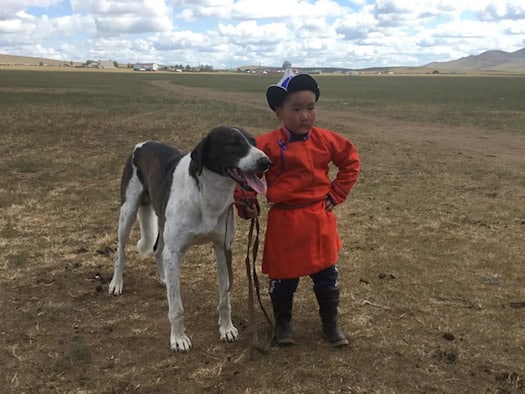
Are dogs really man's best friends all over the world? Researchers from Leipzig and Jena have systematically investigated this question for the first time – in five countries on four continents. Their finding: The bond between humans and dogs is surprisingly universal. | more
A traditional Pacific drink, strict rituals, and a major anthropological question: did intoxication help shape human societies? Researchers at the Max Planck Institute for Evolutionary Anthropology in Leipzig investigated the role of the ceremonial drink Kava — and reached a surprising conclusion. | more
In jedem Verein, in jeder Straße, in jedem Treppenhaus gibt es diesen einen Menschen, der einfach da ist – ohne Bezahlung, ohne Applaus, oft ohne ein einziges Dankeschön. DIE SACHSEN NEWS startet eine neue Serie und sucht genau diese Menschen: Sachsens Alltagshelden. Und die Chancen stehen gut, dass Sie selbst schon eine oder einen kennen. | more
Bones are not rigid structures – they adapt. Researchers have now shown that the inner structure of the tibia reveals how humans, apes, and monkeys move. This insight could help reconstruct the behavior of long-extinct ancestors. | more
How did people in the Bronze Age react to difficult times? What did they eat, how did they bury their dead and where did they come from? A new study led by the Max Planck Institute for Evolutionary Anthropology in Leipzig provides answers for the first time. The study is based on ancient DNA and chemical traces from bones. | more