


Bacteria convert uranium into a stable chemical form
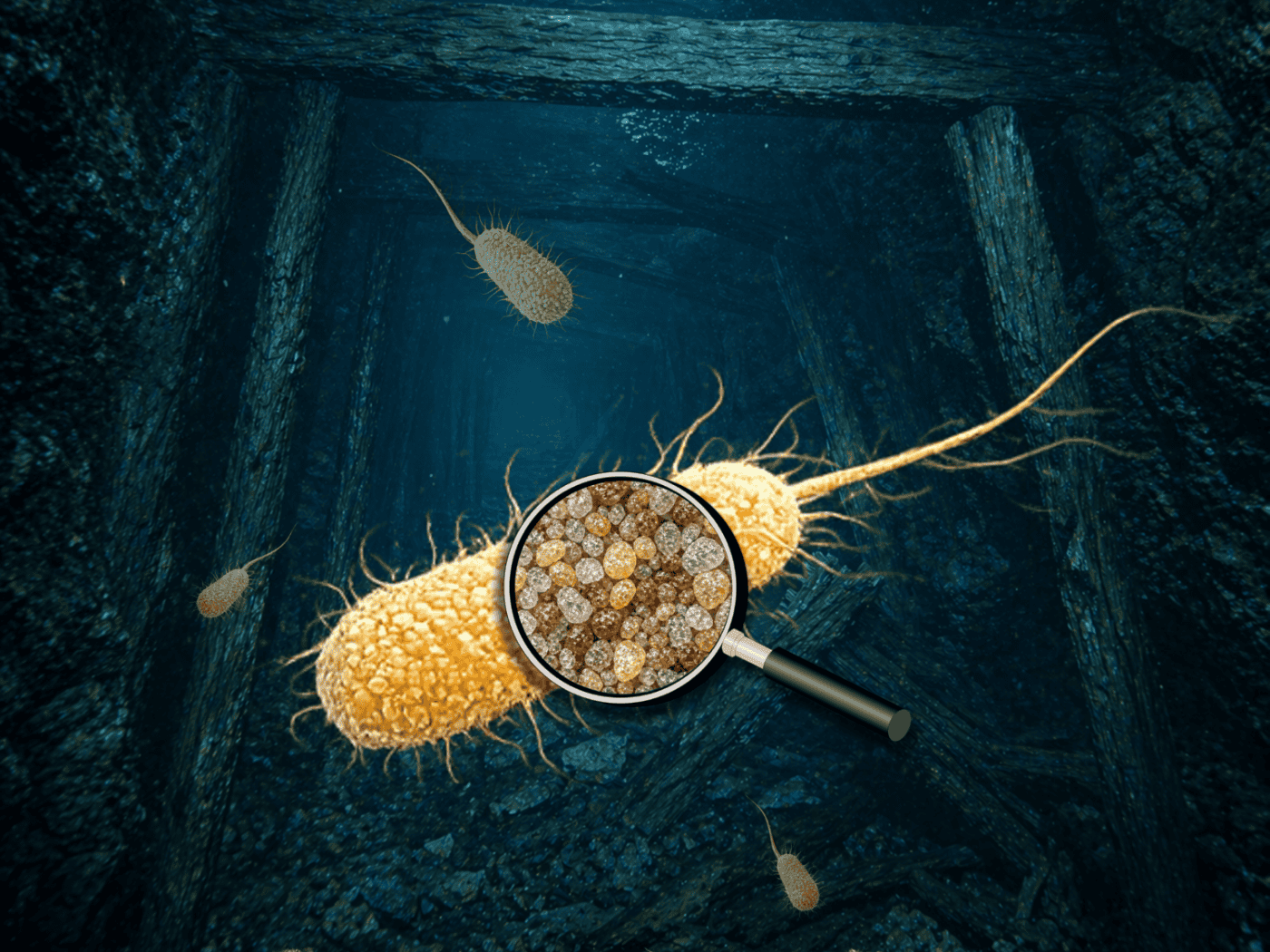
In the Ore Mountains, groundwater contaminated with the toxic heavy metal uranium still sits in abandoned uranium mines. Uranium in drinking water is dangerous to humans. Researchers at the Helmholtz-Zentrum Dresden-Rossendorf (HZDR) have now made a surprising discovery. Certain bacteria can convert dissolved uranium into a stable chemical compound. In the long term, this could help reduce the potential risk posed by contaminated sites.
Uranium ends up in the cell membrane
For their study, the researchers used mine water from a flooded uranium mine operated by Wismut GmbH in the Ore Mountains, which is about 2,000 meters deep. In the laboratory, they mixed the water with glycerin, a substance found in plant and animal fats. The bacteria in the water used the glycerin as a food source, with remarkable results.
“After 130 days, only about five percent of the uranium dissolved in the water remained in the samples,” says Dr. Antonio M. Newman-Portela, a former doctoral student at the HZDR and the University of Granada in Spain. The researchers suspected that the bacteria had incorporated the uranium into their cell membranes. Indeed, they detected the heavy metal there.
Using specialized analytical methods, the team then investigated the chemical form in which the uranium was present. The analyses were conducted at the Rossendorf Beamline (ROBL), which the HZDR operates at the European Synchrotron Radiation Facility (ESRF) in Grenoble, as well as at the University of Granada.
An unusual chemical state
Uranium normally forms chemical compounds in two particularly common states. Pentavalent uranium, on the other hand, is considered rare and has so far been observed mostly only as a short-lived transitional state. This made the result all the more surprising: a large portion of the uranium in the experiments was present as pentavalent uranium.
In addition, the researchers discovered that the uranium forms a stable compound with iron and oxygen. Although this compound was already known, it was first detected in uranium-contaminated soils in Croatia in 2020. There, it remained stable for more than 25 years, even in the presence of oxygen. How this compound forms in nature, and that bacteria contribute to its formation, was previously unknown.
“With our study, we were able to show for the first time that bacteria supplied with glycerin as a food source are capable of converting toxic uranium dissolved in water into a stable chemical compound,” says Dr. Evelyn Krawczyk-Bärsch, a researcher at HZDR. However, further research is needed to determine whether such bacteria can be used in the future for the remediation of uranium-contaminated sites.
Original publication:
A. M. Newman-Portela, K. O. Kvashnina, E. F. Bazarkina, A. Rossberg, F. Bok, S. Ting-Shyang Wei, A. Kassahun, T. Stumpf, J. Raff, M. L. Merroun, E. Krawczyk-Bärsch: Pentavalent and tetravalent uranium formation via glycerol-stimulated bacteria in mine water, in Nature Communications, 2026

