


How did Hannibal get his elephants across the Alps?
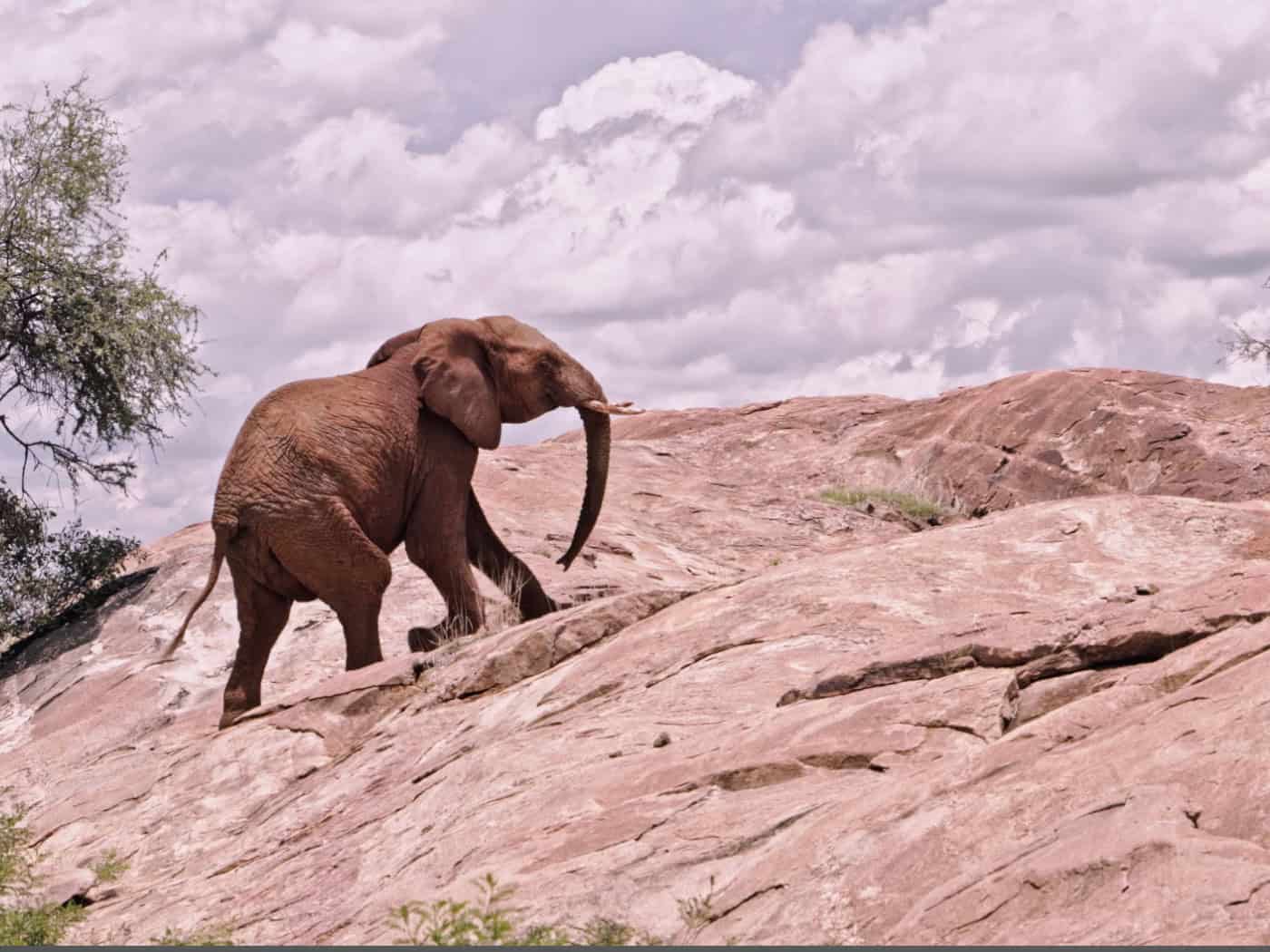
A climb uphill with heavy luggage drains even the strongest person of their last bit of strength. More than 2,200 years ago, the Carthaginian general Hannibal faced a task of far greater magnitude. In 218 B.C., he had to lead an army of 40,000 soldiers, 7,000 horses, and 37 war elephants across the Alps. To this day, historians debate which route he took. An international research team, including researchers from Saxony, is now providing new clues to the answer.
Researchers from the German Center for Integrative Biodiversity Research (iDiv) Halle-Jena-Leipzig, Friedrich Schiller University Jena, and the University of Oxford investigated four possible routes across the Alps. Their approach was novel. They calculated not only the distance but also the energy expenditure for each route. To do so, they used elevation data and bioenergetic models that show how much energy a body consumes depending on its weight and the gradient of the terrain. Data on modern African elephants also served as a comparison.
Energy Expenditure as the Key to the Mystery
For decades, historians have debated which Alpine pass Hannibal actually led his army over. The research team’s calculations point to the Col de la Traversette Alpine pass. According to the model, it was both the shortest and the most energy-efficient route. The entire army would have needed 5.42 trillion joules of energy to complete it.
Other possible Alpine passes fared worse. For the route over the Col de Montgenèvre, the team calculated an energy requirement that was about 11 percent higher. The Col du Clapier, long considered the most likely route, would have required about 16 percent more energy. The route over the Col du Mont Cenis came in last, with about 19 percent higher energy consumption.
The model calculations also show just how much the march wore down the army. According to the calculations, soldiers on the Traversette route would have lost about 19 percent of their body fat reserves. This could explain the high death toll. According to the calculations, the elephants coped significantly better with the hardships. They lost only about four percent of their energy reserves. This could explain why many of them survived the crossing of the Alps.
Elephants Withstood the Hardships Better Than Humans
“The question of Hannibal’s exact route has been debated for generations,” says co-author Dr. Emilio Berti of iDiv and Friedrich Schiller University Jena, putting the results into context. “While the new analysis does not resolve all uncertainties, it does provide additional arguments in favor of the Traversette route.” It shows that this route would have best met the demands of a march with a large army and elephants.
Why Hannibal brought war elephants with him during the Punic Wars remains unclear to this day. He may have relied on their element of surprise in the initial battles against the Romans. He may also have hoped to impress the Celtic tribes of northern Italy with these imposing animals and win them over as allies.
According to the researchers, the study demonstrates how modern analytical methods can examine historical questions from a new perspective.
Original publication:
Berti, E. & Vollrath, F. (2026). Energy costs of Hannibal’s alpine crossing. Proceedings of the National Academy of Sciences.

