


After 20 years in temporary facilities: Dresden is rebuilding this school for 62 million euros!
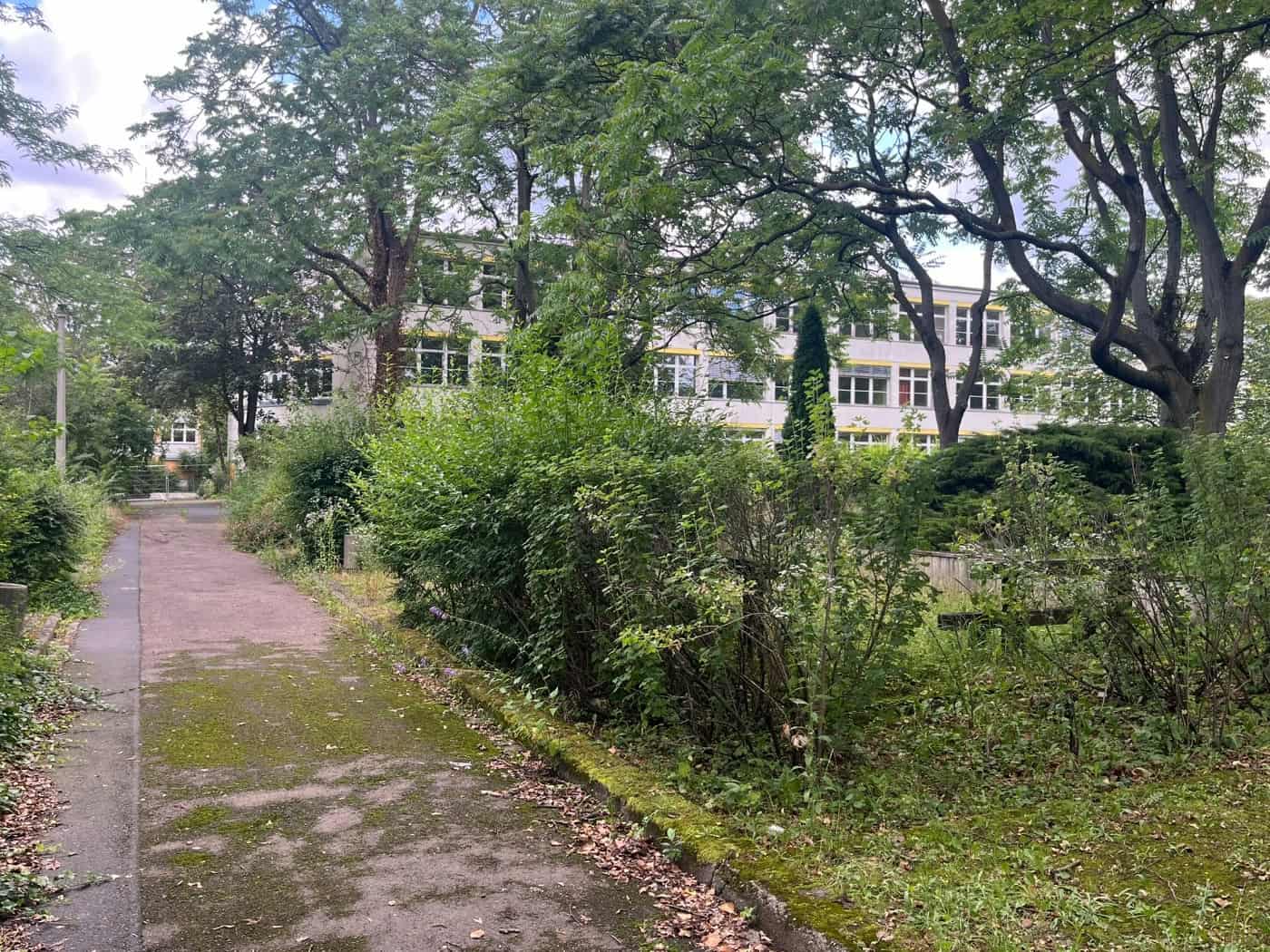
Dresden. Nearly two decades of waiting, classes held on the construction site at times, a construction freeze, and a move to temporary quarters on Terrassenufer: The history of the Bertolt Brecht Gymnasium in Dresden-Johannstadt is a long one. Now, in October, the first work on the new replacement building on Lortzingstraße will begin, according to the City of Dresden. Approximately 62.8 million euros will be invested in the project.
Timeline extends through 2030
Work will begin with tree removal, species conservation measures, and clearing the site. The two old buildings from the GDR era are then scheduled to be demolished by the summer of 2027. According to the city, detailed design planning, as well as the bidding and awarding of construction contracts, will proceed in parallel. Construction of the new school buildings is scheduled to begin in October 2027, and the high school is set to open for the 2030–31 school year.
The schedule has been postponed several times: Announcements from spring 2025 still mentioned demolition starting in late 2025, construction beginning in February 2026, and completion around 2029. Until the opening, the school community will remain in its temporary quarters; since last year, operations have been relocated to Terrassenufer 15 in the Pirnaische Vorstadt neighborhood, where they are expected to remain, according to current plans, until summer 2028.
Climate-Neutral Campus with Hybrid Wood Construction
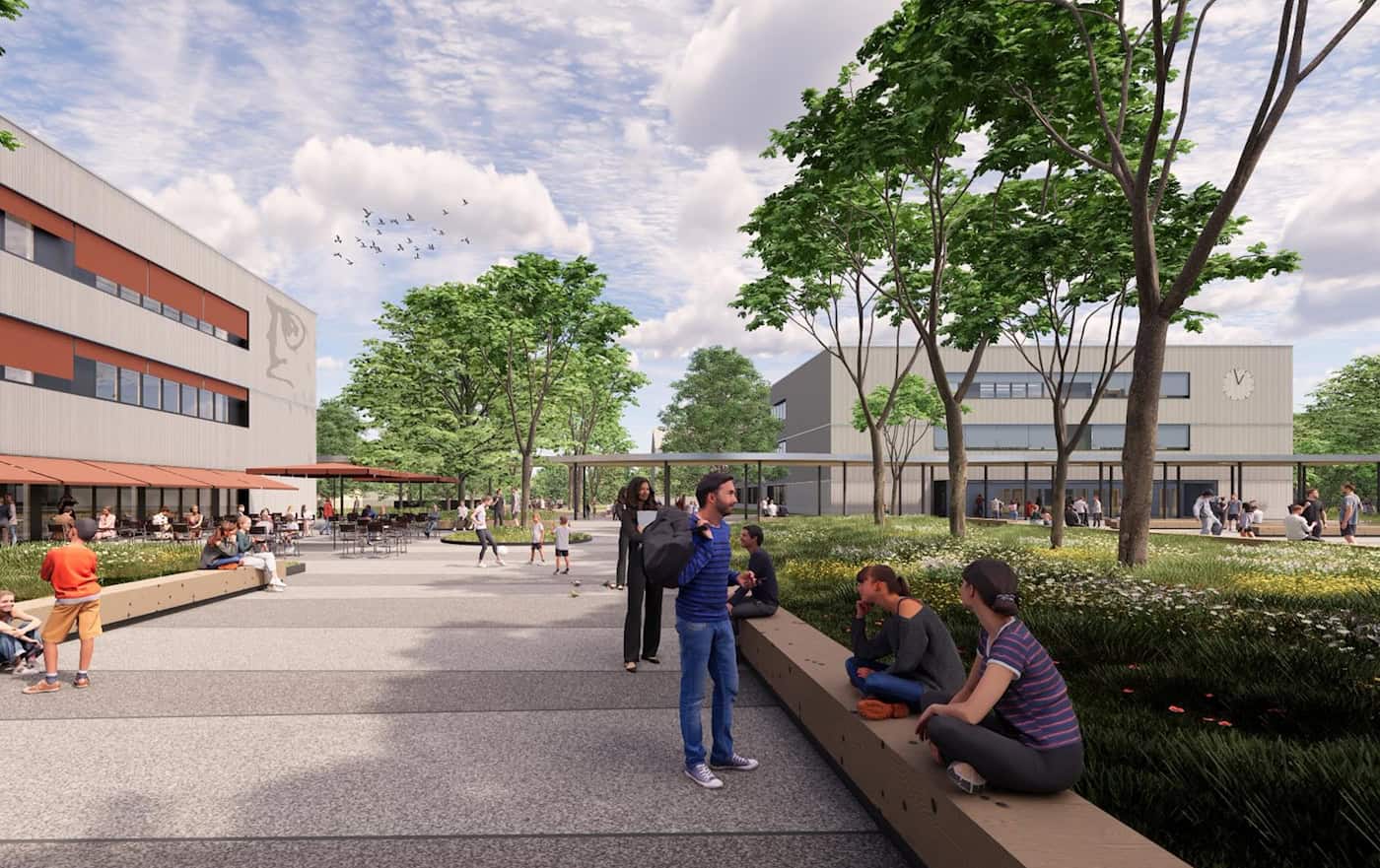
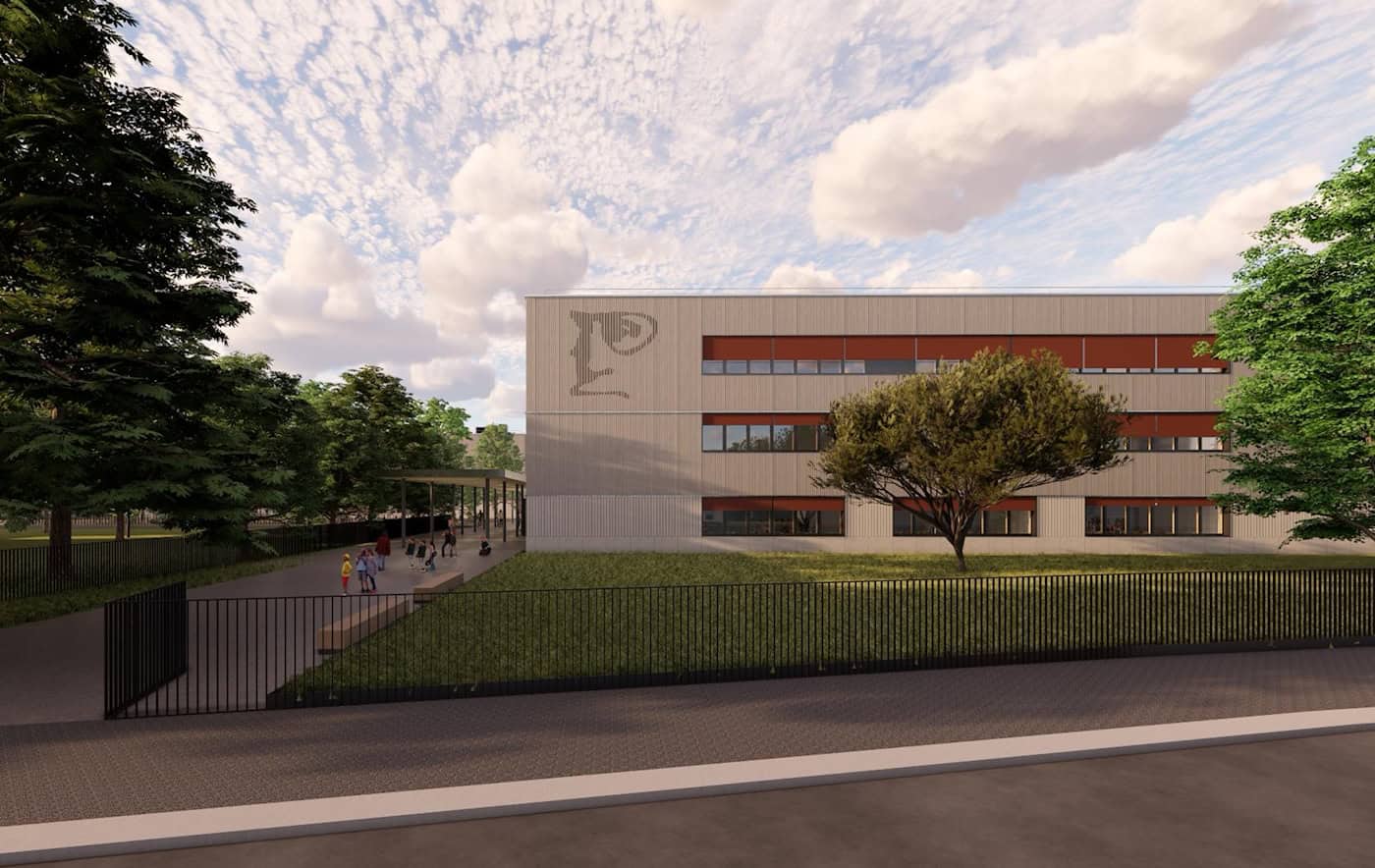
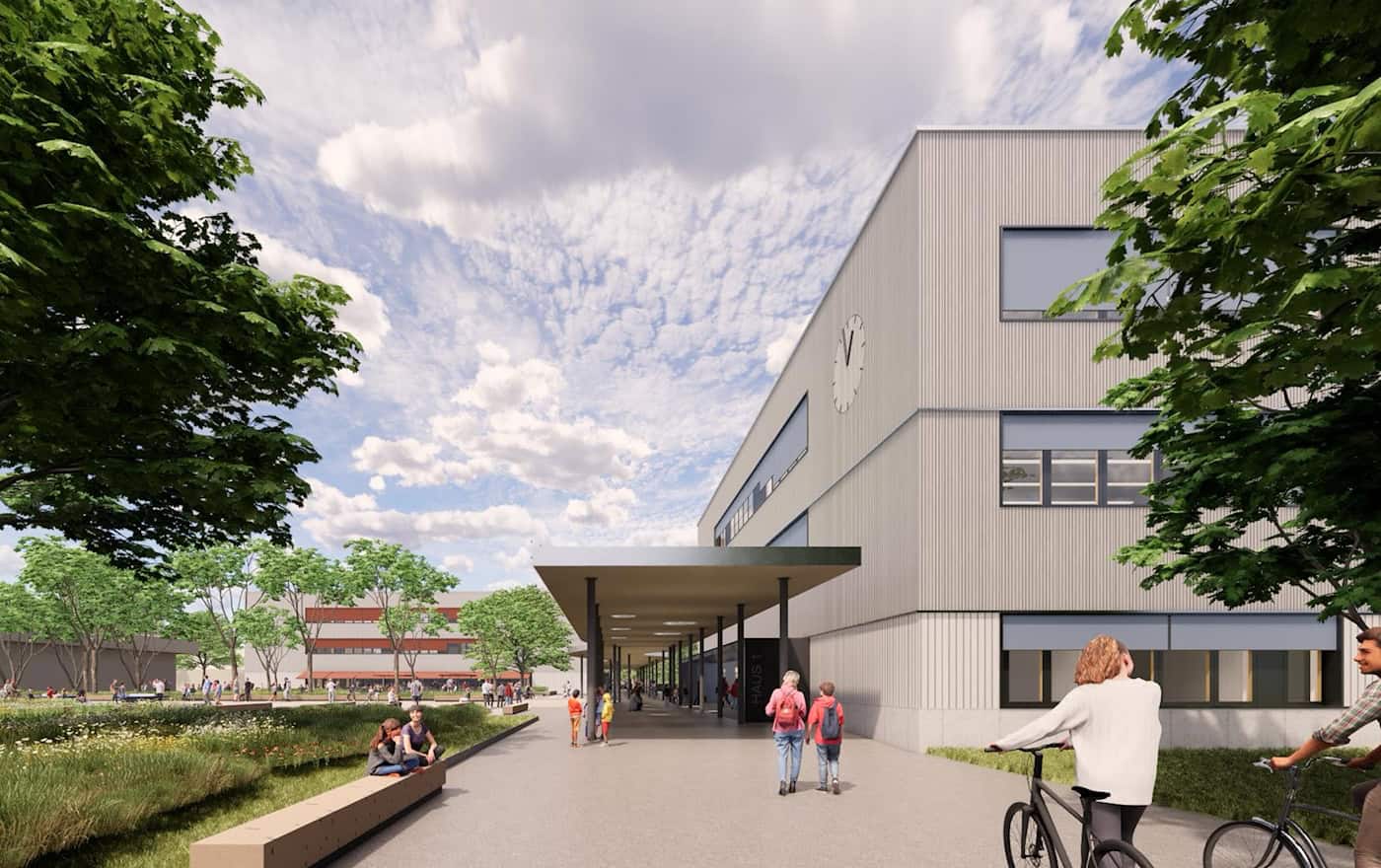
At the school’s traditional location in the southern part of Johannstadt, two new buildings are to be constructed using climate-neutral hybrid wood construction, along with outdoor facilities, designed to accommodate approximately 900 students. Climate neutrality is to be achieved, among other things, through rooftop solar panels, district heating, and a modern ventilation system. The new replacement building will take the place of two school buildings dating from the GDR era, whose condition has deteriorated over the years.
Funding from the Federal Government and the City
Of the approximately 62.8 million euros, about 38 million are to come from a special fund of the federal government, with the city covering the remaining 24 million euros. The federal government will thus cover about 60 percent of the costs. Earlier plans had anticipated even higher costs, ranging from about 66 to 70 million euros. The project cleared its final hurdle with the city budget: it was only the budget resolution in the spring of 2025 that finally paved the way.
International Track to Expand
With the new building, the city also aims to strengthen the school’s international profile. Since 2011, students have been able to earn the internationally recognized IB Diploma in addition to the Saxon Abitur, which is accepted worldwide as a qualification for university admission. In the future, the program will be expanded to include the Middle Years Programme of the International Baccalaureate Organization.
This program is generally aimed at students in grades 6 through 10 and is intended to start the international educational path earlier. Saxony’s Minister of Culture, Conrad Clemens, and Dresden’s Mayor for Education, Jan Donhauser, signed a corresponding memorandum of understanding in September 2025. According to city hall, the new building will provide the physical space needed to ensure the long-term viability of this educational program.
Years of Setbacks
The long lead-up has been a tough journey. Since 2006, the Brecht Gymnasium has faced one setback after another. What was initially supposed to be a one-year construction project turned into a makeshift arrangement lasting years, during which classes were sometimes held under construction site conditions before the school requested a halt to construction. For a long time, it remained unclear whether at least one of the two buildings could be renovated. In the end, the condition of the building and the issue of so-called “gray energy” tipped the scales in favor of a complete replacement.
Criticism in the City Council
The decision to build the new school was approved in February 2025 by a large majority, though not without opposition. The decision came amid a budget marked by austerity measures, which further fueled the debate over costs. CDU City Council member Matthias Dietze warned against a two-tier system in schools and pointed to projects that had fallen by the wayside elsewhere, such as new elementary school buildings, a lack of a gymnasium, or the backlog of renovations at older locations.
Holger Zastrow of Team Zastrow was particularly critical of the millions spent on climate-neutral construction. Green Party City Councilmember Katharina Ringler countered that such a building would actually save costs over the years, for example through solar power and district heating. For the school community, little will change for the time being: Classes will continue at Terrassenufer until completion.

