


A new center to explore how life organizes itself
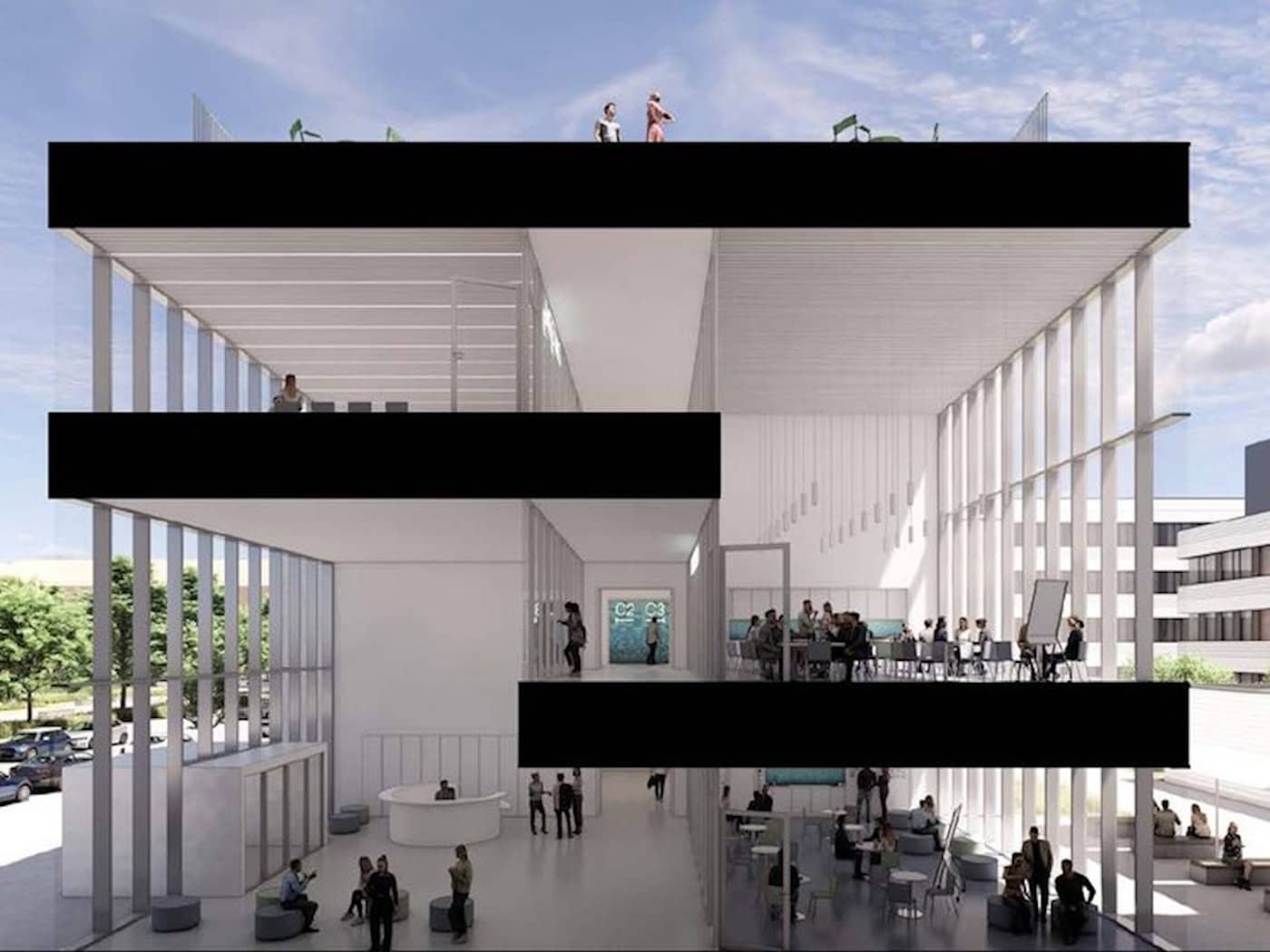
How do cells organize themselves into tissue? Why do complex structures develop in organisms - and why do some processes get out of control, for example in tumors? Researchers at the Technical University of Dresden are investigating such questions. To better answer them, the university is now to have its own research center.
On 24 April 2026, the Science Council, the most important advisory body for science policy in Germany, recommended funding the construction of the "Center for the Organization of Living Matter", COLM for short. Up to 77.2 million euros are available for this, half from the federal government and half from the Free State of Saxony. Construction is due to start in 2027 and the complex should be completed in 2031.
A building for researchers from several disciplines
Researchers from physics, chemistry, biology, medicine, mathematics and computer science will work together at COLM. The different disciplines will not conduct their research separately, but rather closely combine their methods and perspectives. The new building will create space for precisely this. It will be built on the TUD Campus Tatzberg in Dresden-Johannstadt, right next to the medical campus. Open laboratories and offices are planned for 138 people on around 2,775 square meters. The space will not be permanently allocated to individual people, but will be used according to the research project. The aim is to create as many encounters and joint projects as possible.
"A dedicated building plays an essential role in building such a unified community and creating unique spaces that will promote interdisciplinary research, innovation, collaboration and opportunities for many," says Prof. Otger Campàs, spokesperson for the Physics of Life Cluster of Excellence at TU Dresden.
Lasers, AI and the question of what life is
Large-scale equipment is also to be purchased at the new center. These include a so-called 2-photon laser scanning microscope. It uses laser light to generate extremely detailed images of living cells and can specifically influence their behavior. This makes it possible to observe how cells form organs or why some of them turn into tumors.
In addition, the Cluster of Excellence PoL, which includes the Max Planck Institute of Molecular Cell Biology and Genetics, the Leibniz Institute of Polymer Research Dresden and the Helmholtz-Zentrum Dresden-Rossendorf as well as TU Dresden, is expanding its use of artificial intelligence. AI is intended to help evaluate large amounts of data from basic research. Today, many questions in modern biology can hardly be answered within individual disciplines. How cells organize themselves, form tissue or develop diseases is increasingly understood as an interplay of physical, chemical and biological processes. At the same time, the amount of data from microscopy, simulations and genetic analyses is growing rapidly. Research centers such as the planned COLM are therefore intended to bring together specialist knowledge, high technology and computer-aided analyses in one place.
"The COLM research building stands for several innovations at once: It creates a place for cutting-edge research into the organization of living matter and, with a newly developed space concept for laboratory buildings, sets new standards in space efficiency and cost-effectiveness in operation," says TUD Chancellor Jan Gerken. The Joint Science Conference of the federal and state governments still has to give its final approval for the funding. But the course has been set for the new research center.

