loading

Nachrichten werden geladen...

Electric cars in Saxony: what buyers need to know

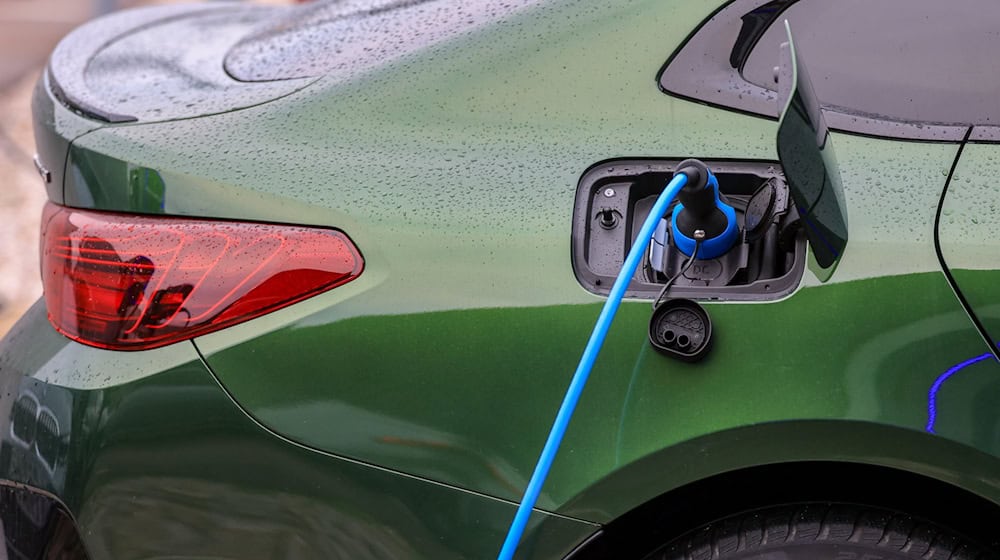
Politicians are planning new premiums for e-cars. (Archive image) / Photo: Jan Woitas/dpa

New premiums from 2026 should make e-cars more attractive for more households in Saxony. However, uncertainties regarding electricity prices and charging infrastructure remain an issue.

Saxony, which is often referred to as the "car state" by politicians and businesses, is at a critical point in terms of electromobility. In Zwickau, where Volkswagen has been producing exclusively e-models for years, weaker demand, overcapacity and reduced shifts are depressing the mood. The Free State is a long way from a broad-based spirit of optimism - as can be felt in Norway, for example, where there are now more electric cars on the road than combustion engines. One reason for this is the continuing high purchase costs.


New funding to boost momentum

This is set to change: The black-red coalition recently agreed on the key points of a new subsidy program for households with small and medium incomes. The background to this is that previous purchase premiums were abruptly stopped at the end of 2023 and sales plummeted as a result. Subsidies for the purchase and leasing of purely electric and plug-in hybrid vehicles are now planned again.

The subsidy limit is to be set at a taxable household income of 80,000 euros, increased by 5,000 euros per child. A basic premium of 3,000 euros is planned, which will increase by 500 euros per child. Additional premiums are planned for low incomes. The program is set to start in 2026 - subject to the approval of the EU Commission - and will be financed with three billion euros from the Climate and Transformation Fund.

While the federal and state governments are struggling to provide new impetus, many people in Bavaria are asking themselves: Is an electric car worth it for me personally - now that the industry is under pressure and new incentives are yet to come? The most important questions and answers.

How is the demand for e-cars developing in Saxony?

After a difficult year in 2024, there is a slight recovery, says Jens Katzek, Managing Director of the Automotive Cluster East Germany (ACOD). "There is still a lot of room for improvement in the demand for e-cars. The trend from 2025 is an initial slight recovery that will and must continue." At the same time, political uncertainties regarding electricity prices, subsidies and charging infrastructure remain an obstacle for many buyers.

How do local manufacturers assess the situation?

Volkswagen emphasizes that the Group has done its part and now needs reliable political framework conditions. The Group refers to "extensive investments" in electric models and the goal of offering the majority of new cars electrically from 2035. "It is now up to politicians to create the necessary framework conditions to make electromobility a success," it said.

Porsche is continuing to focus on the all-electric Macan in Leipzig and is investing in the expansion of the plant. BMW is also strengthening the Leipzig site: the car manufacturer intends to invest a three-digit million sum there to make the plant fit for future vehicle generations. The Mini Countryman is currently the only fully electric model at the Leipzig plant - but that could change. The site is being prepared for future models, said plant manager Petra Peterhänsel recently: "We are currently preparing our plant for future vehicle generations." How many of these will be electric, however, remained open.


Are e-cars currently cheaper or more expensive for consumers?

"First of all, the question of whether an e-car pays off or not is a very individual one," explains ADAC Sachsen. The decisive factor is where the e-car is to be charged for the most part.

"If charging takes place mainly at home with a very favorable electricity tariff or even at your own solar system and electricity can also be recharged cheaply at your employer, for example, then an e-car definitely pays off in relation to a comparable combustion vehicle."

In addition, it depends on how the vehicle is used. Shorter daily journeys are more in favor of an electric car, while frequent journeys of several hundred kilometers can still be a challenge despite better ranges. Those who often rely on public charging points, on the other hand, would have to factor in significantly higher electricity prices in some cases.

According to ADAC calculations from October 2025, petrol or diesel cars are still cheaper overall than electric cars - even if their prices have fallen. It remains to be seen whether the planned premiums will change this.

How good is the charging infrastructure in Saxony?

Saxony is statistically far ahead with around twelve cars per public charging point. However, the ADAC warns that this is not a realistic picture: "These statistics are more illusion than reality." As there are still few e-cars on the road overall, the infrastructure appears denser than it actually is. In rural areas in particular, there are large gaps between charging stations.

Why does international battery dependency also affect the price of electric cars?

The battery is the most expensive component of an electric car - and therefore has a significant impact on the price. Because the majority of battery cells still come from Asia, European manufacturers and therefore their customers are heavily dependent on developments there, explains ACOD boss Katzek. Asian manufacturers have built up large production capacities over decades and can deliver more cheaply. This may help with costs in the short term, but it also entails strategic risks.

"China has repeatedly imposed export restrictions in recent years - in some cases with dramatic consequences for our industry." For consumers, this means that the prices and availability of electric cars can depend heavily on global supply chains. In the long term, it is therefore necessary to establish European cell production in order to become more independent and stabilize costs, Katzek emphasizes.

What significance do the Saxon locations have in the long term?

Saxony remains central to the automotive industry. Katzek puts it clearly: "Without the Volkswagen, BMW and Porsche sites in Saxony, there would be virtually no car manufacturing in eastern Germany."

The pressure on the plants is high - for example due to a global market that is growing more slowly than once expected. At the same time, Katzek sees opportunities in the circular economy, battery technology and digitalization, for example. BMW, for example, shows that companies are continuing to hold on to their sites: with up to 1,300 cars per day and 24-hour production in three-shift operation, the site is heading for another production record, according to its own information.

Copyright 2025, dpa (www.dpa.de). All rights reserved

🤖 Die Übersetzungen werden mithilfe von KI automatisiert. Wir freuen uns über Ihr Feedback und Ihre Hilfe bei der Verbesserung unseres mehrsprachigen Dienstes. Schreiben Sie uns an: language@diesachsen.com. 🤖