


The First Stollen Sommeliers: Experts Who Look Far Beyond the Aroma
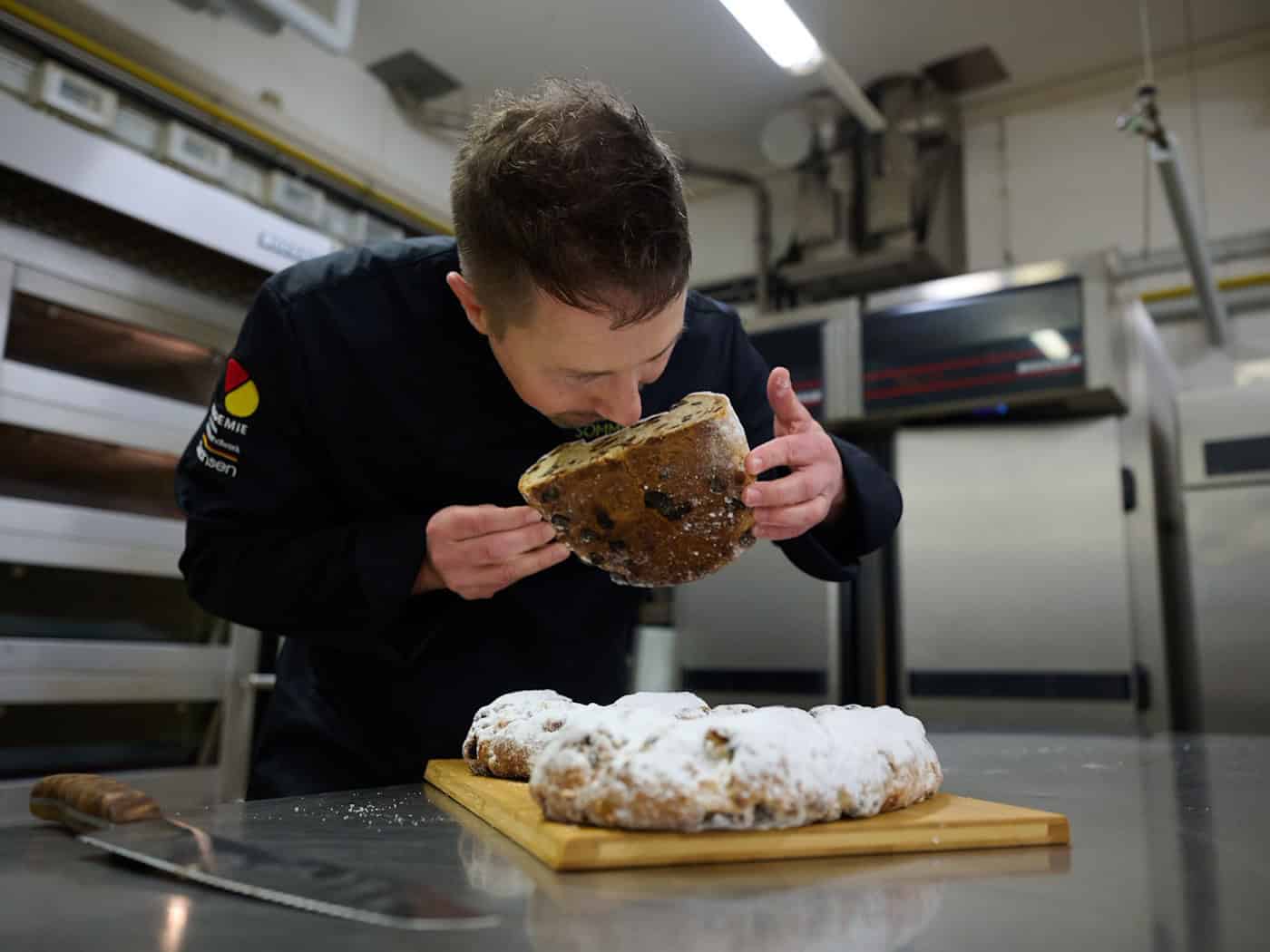
What does a good stollen smell like? What flavors can you taste, and which drink pairs best with it? Over the past few months, 17 master bakers and pastry chefs from several German states have been intensively exploring these questions. After completing their exams, 16 of them received their certificates as Stollen sommeliers in Dresden. According to the Academy of German Baking Crafts in Saxony, this certification program is considered unique worldwide. The training program is intended to help preserve knowledge about the diversity of the Stollen while also creating space for new creations, said Academy Director André Bernatzky at the certificate presentation. Since May, the participants had explored the history, ingredients, and production of this traditional Christmas pastry in five three-day modules. With twelve participants, Saxony—the home of the Stollen—accounted for the largest share. Thuringia was also represented by one participant. Other participants came from Brandenburg, North Rhine-Westphalia, and Hamburg. Master baker Alexander Schellenberger from the Ore Mountains is one of the Saxon graduates. His goal: to gain an even deeper understanding of this traditional Christmas treat and to pass on his enthusiasm for it to future generations. “You never stop learning,” he said after his oral exam. He explained that continuing education isn’t a prerequisite for his work, but rather a means of consistent professional growth. “Qualities change, people change, and so do habits.” Especially with a product that has a long history, he says, it’s important to preserve its significance and artisanal quality. He also wants to pass on his knowledge to the next generation and his customers. Schellenberger is the fourth generation to run a family business in the Ore Mountains. The bakery was founded in 1927. In addition to the traditional bakery, the family operates a stollen factory whose products are shipped throughout Germany and abroad. The training curriculum covered the history of the Stollen, regional specialties, ingredients, and storage conditions, as well as the artisanal production process, reported school director André Bernatzky. A key focus was sensory analysis. The participants learned to systematically evaluate the pastry. “How does the stollen look to me, what do I taste, what do I smell?” Schellenberger described the process. First, the surface is examined; then, upon cutting into it, the distribution of fruit and almonds as well as the texture of the crumb are assessed. After that, the aromas are smelled and the flavors are tasted. Consistency is also crucial: additional flavor notes can unfold as the stollen is chewed. Finally, the focus is on pairing the stollen with beverages that complement or highlight its flavors. To complete the training, participants had to pass three parts of the exam: a theoretical and a practical exam, as well as the presentation and defense of their final projects. The practical exam involved, among other things, identifying different flavor notes. According to Bernatzky, 16 participants successfully completed the certification. One participant failed one part of the exam. He will be able to retake the exam next spring. Bernatzky gave a positive assessment during the certificate presentation. The participants should now bring the knowledge they’ve acquired back to their businesses and act as ambassadors for this Christmas treat. “Please be ambassadors for the stollen, be advocates, spread the word about stollen, and tell people about it,” he urged the graduates. “Show people out there that there’s more than just raisin stollen—there’s so much more. But the raisin stollen and the tradition behind it are also an incredibly great treasure that we have, that we work with, and that we should continue to develop.” The academy plans to continue offering the certification program in the future. The next class of trainees is scheduled to begin in 2028. The goal is to build a network of experts who will share their knowledge of the Stollen beyond Saxony, Bernatzky said. The participants’ final theses show just how differently they approach this traditional pastry. Schellenberger dedicated his final project to the influence of salt content on the flavor of a Saxon Bodenstollen. Salt affects how flavors are perceived. “My father always said that baking is a matter of luck, and my mentor always said that baking is a science.” For Schellenberger, it’s both: “Science and passion.” The Thuringian participant, Wolfgang Süpke, on the other hand, focused on a chocolate creation. He developed a stollen with particularly dark, intensely chocolatey cocoa. “I’m very proud to be such an ambassador,” said Süpke about his new role as a stollen sommelier. Further inspiration came from Hamburg: One participant developed a “Franzbrötchen” stollen that combines the North German baking tradition with the Saxon Christmas pastry. Traditionalist Schellenberger is not averse to this experimental stollen: “It’s a good variation, but you can tell just from the basic texture—the dough is definitely different from what we’re used to.” Copyright 2026, dpa (www.dpa.de). All rights reserved“You never stop learning”
From Appearance to Aroma
16 participants pass the exam
New Ideas for the Stollen

