


Tracing the inner fire of the stars
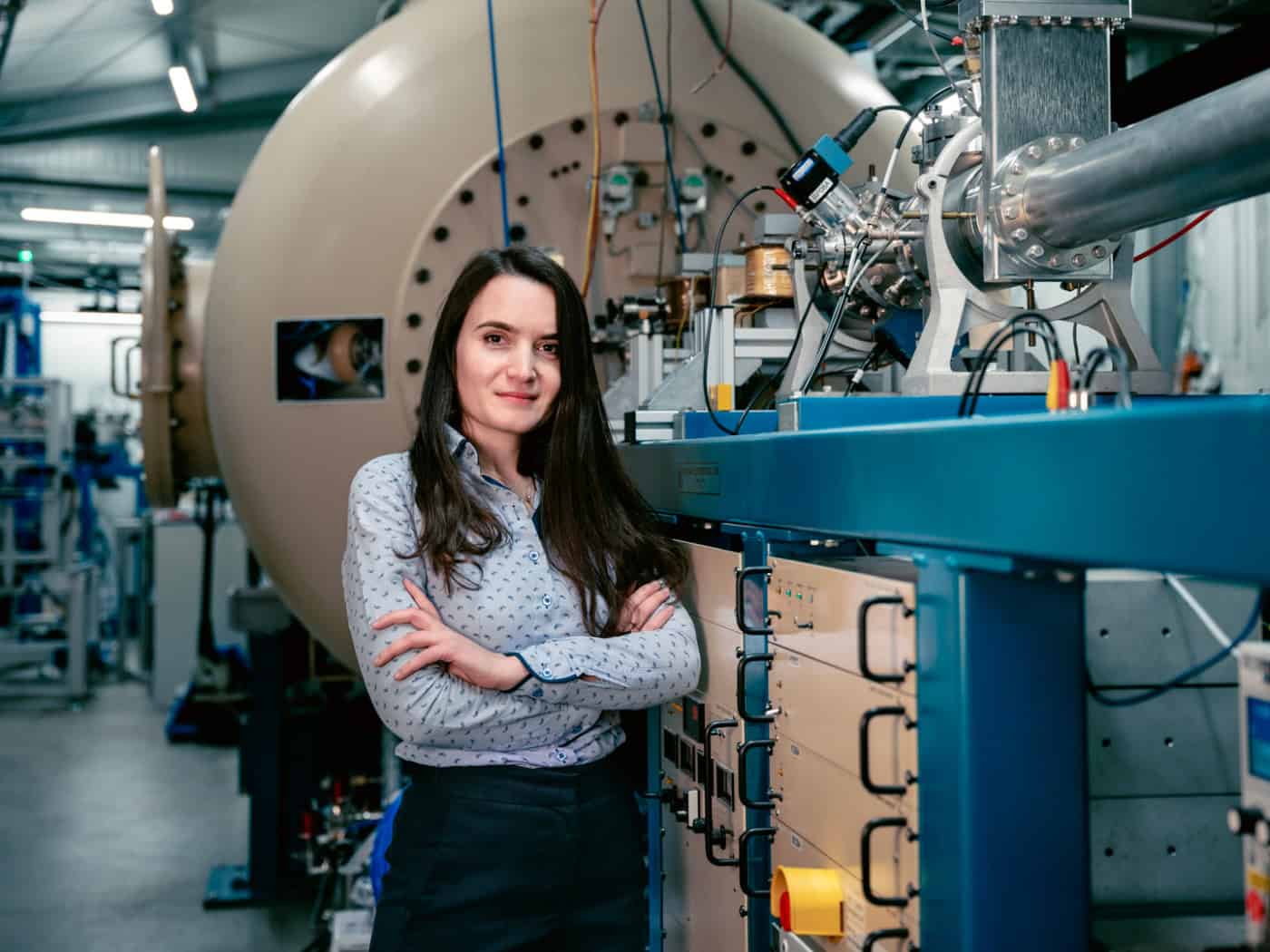
Carbon and oxygen - without these two elements, there would be no life on Earth. But where do they come from? The answer lies deep inside stars. And researchers at the Helmholtz-Zentrum Dresden-Rossendorf (HZDR) want to finally understand exactly how it works there.
The new research project is called HEARTS, short for "Helium Burning Experiments for Astrophysics". It is led by physicist Dr. Eliana Masha. The 34-year-old has lived in Dresden for years and conducts research at the HZDR. She and her team are investigating what happens when stars burn helium. It is precisely in this phase of their lives that stars produce particularly large amounts of carbon and oxygen. How much of both is produced influences not only the fate of individual stars, but also the chemical development of entire galaxies.
What is measured deep underground
The special thing about her work is the place where it takes place. The Felsenkeller in Dresden is located under 45 meters of rock. It is the only underground laboratory for nuclear astrophysics in Germany, operated by the HZDR together with the TU Dresden. Why so deep? Cosmic radiation from space would interfere with the sensitive measuring instruments. Under the earth, hardly any of this can be felt.
The researchers use a particle accelerator to shoot atomic nuclei at each other - just as happens in stars. When the nuclei fuse together, tiny signals are produced: gamma rays or free neutrons, i.e. electrically uncharged particles. Highly sensitive measuring devices register these signals. From this, it is possible to calculate how often such nuclear reactions actually take place in stars.
The physics of the universe in a laboratory
One particular reaction is regarded by experts as the "holy grail of nuclear astrophysics". A helium nucleus fuses with a carbon nucleus to form oxygen. How often this happens in stars determines how much carbon and how much oxygen a star leaves behind at the end of its life. This in turn influences how the star dies - whether as a quietly extinguishing white dwarf or as a massive supernova explosion. So far, there are still uncertainties about the exact frequency of this reaction. This makes it difficult to make precise predictions in models that are supposed to explain how massive stars develop and how chemical elements are formed in the universe. HEARTS aims to change this.
In addition to this central reaction, the team is also investigating other processes of helium burning, which produce neon and magnesium, among other things. They are also looking at reactions in which neutrons are released. These play an important role in the formation of elements that are heavier than iron, such as gold or uranium. The origin of the element fluorine, which has not yet been fully clarified, is also on the research agenda.
"What excites me about nuclear astrophysics is that it connects the big picture, i.e. our universe, with the smallest particles," explains Eliana Masha. According to Masha, the findings could even help in the search for planets on which life could be possible. HEARTS will initially start its experiments in the Gran Sasso underground laboratory in Italy, before further measurement campaigns follow in the Dresden Felsenkeller and at the GSI Helmholtz Center for Heavy Ion Research in Darmstadt.

