


Fraunhofer makes adhesive in paper packaging superfluous
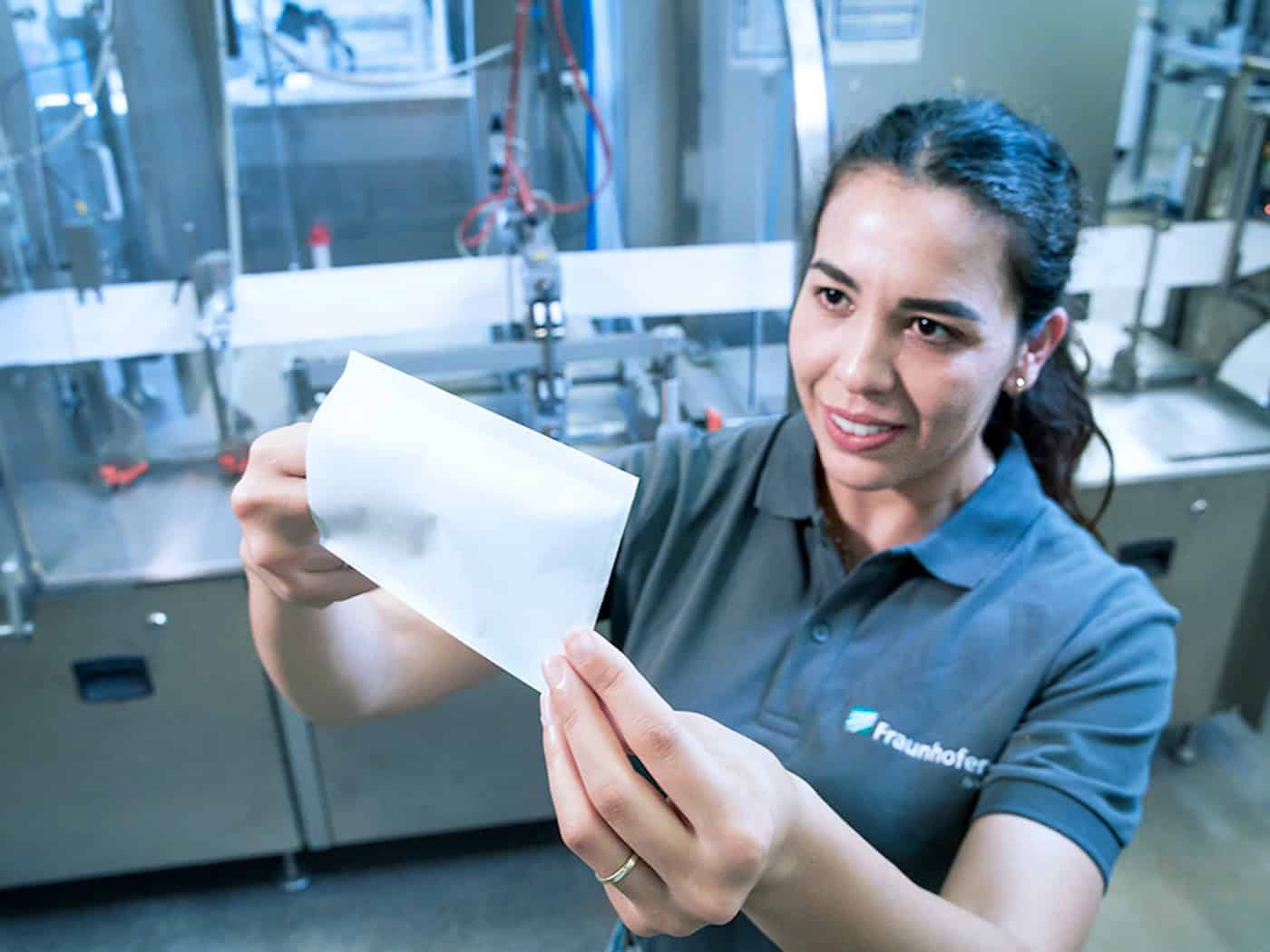
Every box of cornflakes, every paper bag and every paper cup has a hidden problem. To seal them, manufacturers need adhesives or layers of plastic. However, these contaminate the paper and make it difficult to recycle the used packaging. Four Fraunhofer Institutes want to change this - with a laser.
The project is called PAPURE. The Dresden-based Fraunhofer Institutes for Material and Beam Technology IWS, for Machine Tools and Forming Technology IWU and for Process Engineering and Packaging IVV as well as the Fraunhofer Institute for Applied Polymer Research IAP in Potsdam are involved. Together, they are developing a process that seals paper packaging without foreign substances.
The laser creates its own adhesive
Paper consists of plant fibers, primarily cellulose, hemicellulose and lignin. The exact composition of the paper also plays a role in the subsequent adhesive strength. The researchers are taking advantage of this. A carbon monoxide laser, or CO laser for short, heats the paper surface at lightning speed. This produces sugar-like, sticky compounds.
"By irradiating the paper with a CO laser, we generate re-meltable, sugar-like reaction products that we use to join the paper using the heat-sealing process instead of the otherwise required plastics or adhesives," explains Volker Franke, Group Manager Laser Micromachining at the Fraunhofer IWS in Dresden. "In other words, we create our own adhesive in the form of the fission products." Two layers of paper are then pressed together using heat and pressure - the so-called heat-sealing process. The result is a strong bond without any foreign matter.
20 kilograms on a tiny seam
How strong is it? "The seam strength determines how difficult it is to tear or open a package," explains Fabian Kayatz, project coordinator at the Fraunhofer IVV. In initial tests, a seam just two centimetres long and three millimetres wide was able to withstand a full 20 kilograms. The desired seam strength should exceed the tear strength of the paper itself - in other words, the seam should be more stable than the paper around it, adds project manager Prof. Marek Hauptmann.
A laboratory facility that maps the entire process, from the laser beam to the finished packaging bag geometry, is currently being built at the Fraunhofer IWU in Dresden. The scientists' aim is to produce ten packages per minute on the laboratory system by the end of the project in September 2026. The process can be integrated into existing production lines in the future. This could make paper recycling much easier, as no additional adhesive or plastic layers would remain in the material.

