


One gene, all colors: Why chickens come in so many colors
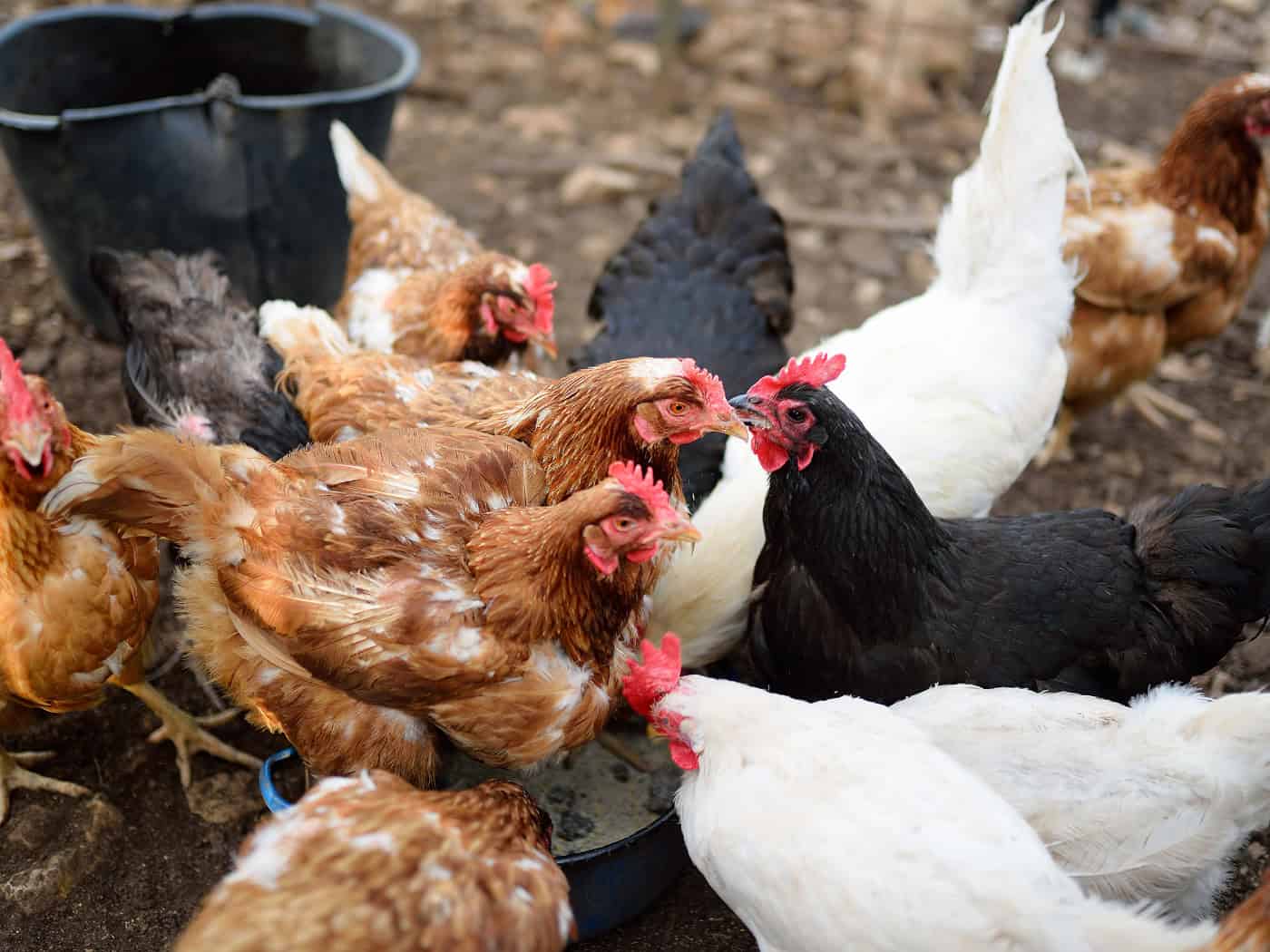
Golden brown, snow white, jet black, or speckled: Anyone walking through a chicken coop is amazed by the variety of plumage colors. But why do chickens look so different? A new international study, in which the University of Leipzig played a key role, provides the answer: a single gene plays a decisive role.
The study focuses on a molecule called MC1R. It acts like a switch in the skin cells, controlling the formation of color pigments. Depending on how active this switch is, more dark or more light color pigments are produced.
The gene that contains the blueprint for MC1R has changed significantly in domestic chickens since they were domesticated by humans thousands of years ago. The study began with a genomic analysis conducted by Uppsala University in Sweden, which examined the genetic material of more than 10,000 chickens. During this analysis, MC1R stood out as a particularly variable section of the genome.
18 variants of a single gene
Researchers Dr. Claudia Stäubert and Dr. Aenne-Dorothea Liebing from the Rudolf Schönheimer Institute of Biochemistry at the University of Leipzig investigated the effects of the various gene variants in living cells in the laboratory. Their findings revealed that even single mutations in the gene can influence how strongly the MC1R color switch functions. When several of these changes occur together, they can either reinforce or weaken each other’s effects. This gives rise to new color patterns.
In total, the researchers identified 18 different variants of this single gene. Their different combinations give rise to the wide variety of plumage colors in domestic chickens. A comparable diversity is not known in wild birds. The team was thus able to show that the many colors of domestic chickens are essentially due to different variants of a single gene.
In addition, a research group at Charité in Berlin investigated how these changes affect the structure of the MC1R molecule. The collaboration between the two research groups arose within the framework of Collaborative Research Center 1423, which is based at the University of Leipzig.
From the Chicken Coop to Evolutionary Research
Apparently, human breeding has contributed to the accumulation of a particularly large number of variants of this gene in domestic chickens. This demonstrates how quickly new traits can develop when humans breed animals over many generations. The researchers thus provide a vivid example of a fundamental principle of evolution.
In practical terms, this could mean that color traits in animal breeding will be easier to predict in the future. The scientists also plan to investigate whether similar patterns occur in other vertebrates, in order to perhaps solve even more of nature’s color mysteries.
Original publication:
C. Ma, A. Liebing, G. Kleinau, A. Kamprad, L. Calabrese, M. Szczepek, Z. Li, M. Larsson, P. Scheerer, C. Stäubert, & L. Andersson, Ultrarapid MC1R protein and associated plumage color evolution in the domestic chicken, Proc. Natl. Acad. Sci. U.S.A. 123 (24) e2605288123

