

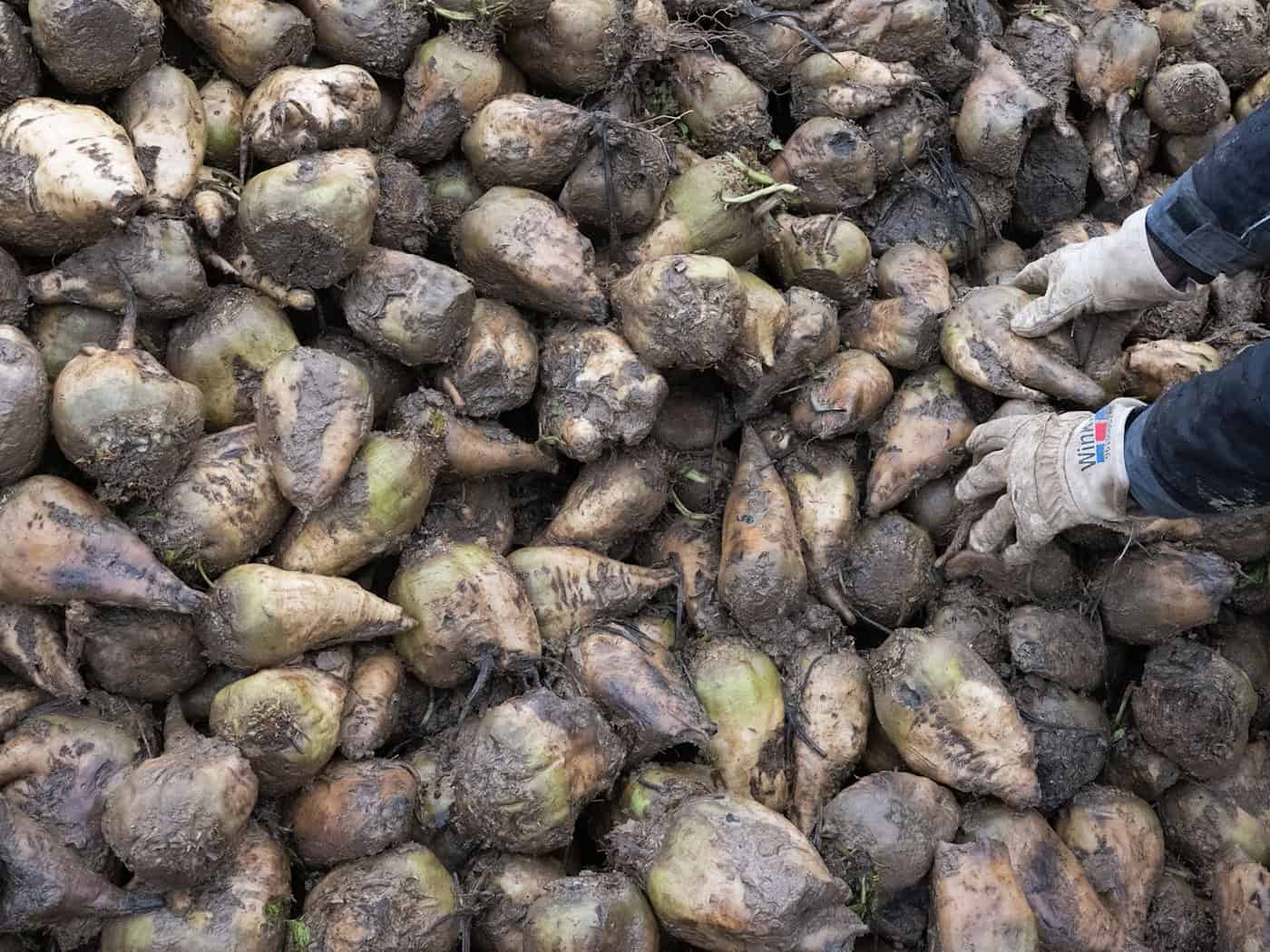
The long-awaited rain of the past few days has come far too late for the sugar beets—and, according to the Association of South German Sugar Beet Growers (VSZ), is actually detrimental. “The beets will use this rain solely for their own regeneration and will use the sugar they have already produced to grow new leaves,” the association stated in Ochsenfurt, Lower Franconia. “Even heavy rainfall will no longer be able to compensate for the harvest losses expected in the coming weeks.” For southern Germany, the VSZ anticipates a historic crop failure, with some growers facing a total loss. “In particularly hard-hit regions such as the Rhine-Main area, Baden-Württemberg, and Franconia, some fields will yield almost nothing.” In addition to the drought and heat, the beets were also plagued this year by diseases such as Stolbur. Drought stress weakens the plants’ resistance to pathogens. As a result of the diseases, the beets developed a rubbery consistency, and significantly less sugar can be extracted from them. “2026 threatens to go down as one of the most difficult and bitter years for sugar beets in the history of sugar beet cultivation in southern Germany,” said association head Stefan Streng. “Even rising sugar prices can no longer offset the losses.” The Association of South German Sugar Beet Growers is the umbrella organization for seven regional associations and, according to its own figures, represents nearly 10,000 sugar beet growers. According to the association, they grow sugar beets on approximately 100,000 hectares and supply seven factories. The area spans the federal states of Bavaria, Baden-Württemberg, Hesse, Saarland, Rhineland-Palatinate, Saxony, and Thuringia, as well as parts of North Rhine-Westphalia, Saxony-Anhalt, and Brandenburg. Copyright 2026, dpa (www.dpa.de). All rights reservedThe Problem of Drought Stress
Thousands Affected


