

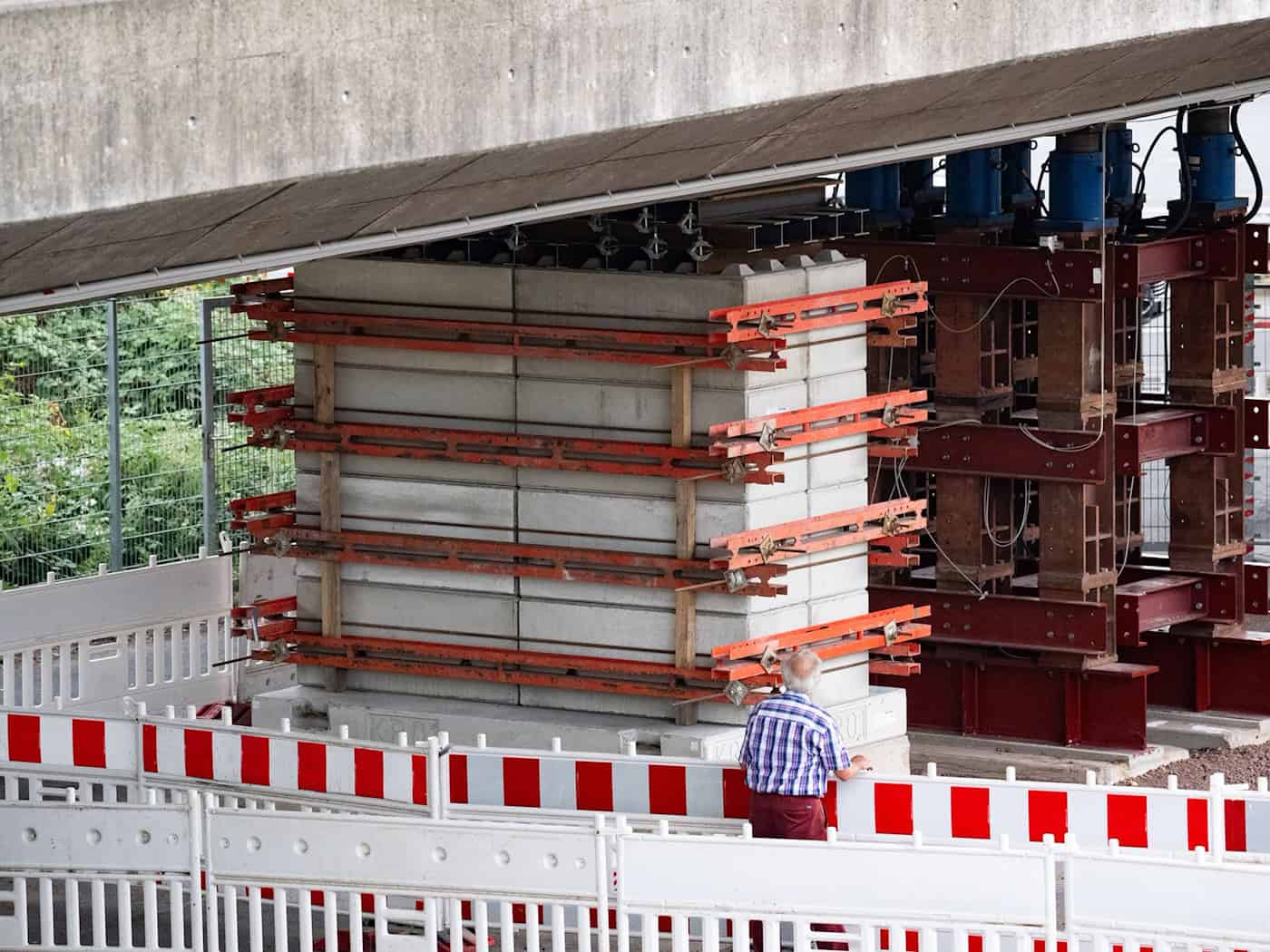
Following a successful load test, the bridge on Budapester Straße in Dresden will reopen to bus traffic and vehicles weighing up to 7.5 metric tons starting next Monday. The city administration announced that, given the safety measures that have been implemented, the structure’s load-bearing capacity is assured in the medium term. The city had restricted traffic on the bridge as a precautionary measure in May after measurements revealed new damage to the prestressing tendons. As a result, additional heavy-duty supports were installed on particularly affected sections of the bridge. “These emergency supports are functioning as intended and are reliably stabilizing the structure,” officials said. On August 10 and 11, the bridge underwent a load test. No further critical damage or unacceptable deformations occurred during the test, the administration reported. “The results of the inspections are a great relief. We can continue to use the bridge,” said Stephan Kühn (Greens), the city’s mayor in charge of construction. With the bridge’s reopening, one of the most important connections to the city center is once again available. The existing Bus Line 62 can also resume service without a detour. The reopening will take place in stages—initially with one lane open in each direction. According to reports, the bridge remains closed to heavy-duty traffic. Dresden’s Carolabrücke—a prestressed concrete structure from the GDR era—unexpectedly partially collapsed on the night of September 11, 2024. No one was injured. The two remaining bridge spans were also so severely damaged that the entire structure had to be demolished. The cause of the collapse is believed to be corrosion, which led to the failure of the prestressing tendons. Copyright 2026, dpa (www.dpa.de). All rights reservedDamage to the bridge’s prestressing tendons
Load tests successful
The Carolabrücke was demolished after sustaining damage


