Printed solar cells are seen as a beacon of hope for affordable and flexible photovoltaics. Researchers at Chemnitz University of Technology have now discovered that they can remain efficient even with extremely little material. | more
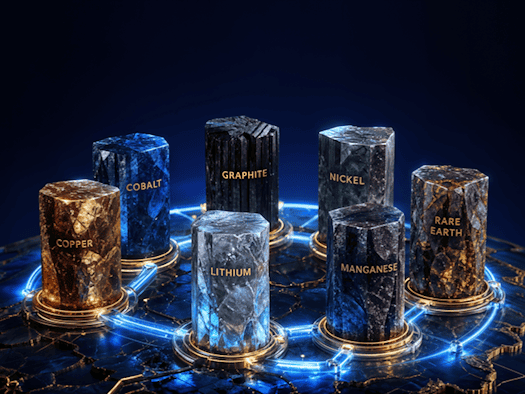
The modern world depends on critical raw materials. Lithium powers electric cars, rare earths are essential for smartphones, and many high-tech products rely on metals that are mined in only a few places around the world. To help make Germany’s supply of these resources more secure, the Helmholtz-Zentrum Dresden-Rossendorf (HZDR) has secured nearly €20 million in federal funding for eight new research projects and junior research groups. | more
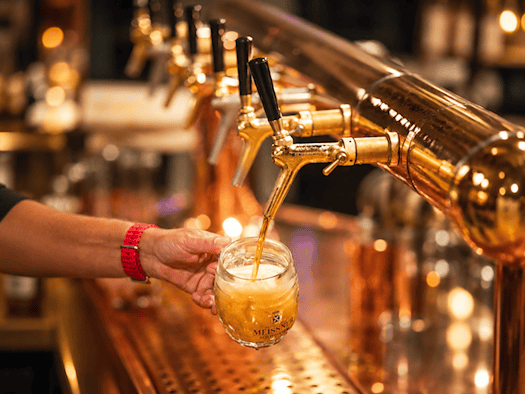
Das Familienunternehmen Meißner Schwerter erhielt 2025 den Bundesehrenpreis für Bier – als eine von zwölf Brauereien bundesweit. Hinter der Auszeichnung stehen Braumeister mit Erfahrung, regionale Rohstoffe und eine Brautradition, deren Wurzeln bis ins Jahr 1460 reichen. Kennenlernen lässt sich diese Meißner Braukultur auch in den Gasthäusern der Privatbrauerei. | more
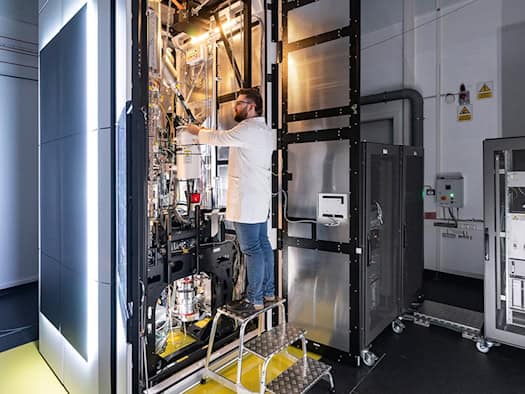
Using two highly sensitive electron microscopes, researchers at Chemnitz University of Technology are now looking deep inside materials, right down to the level of individual atoms. What this means for everyday products, materials and the scientific region of Saxony. | more
Ultra-thin material layers are found in almost every modern device. Their performance depends on precise measurements. A Dresden research project now aims to take thin-film characterization to a new level. | more
The smartphone, the solar cell, the electric car battery - each of these everyday objects is the result of years of materials research. In Dresden, two Leibniz Institutes want to radically shorten this process with artificial intelligence. Their joint project aims to predict which materials and combinations will work before the first experiment even starts. | more
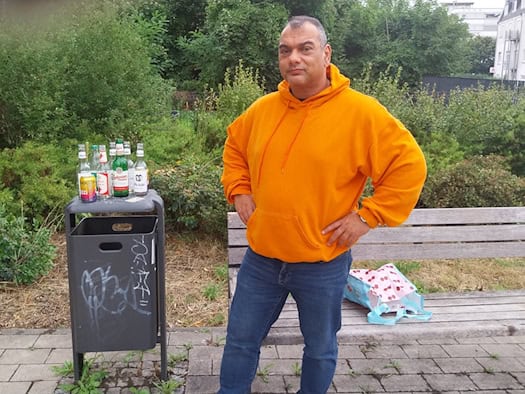
Auf dem Weg zur Arbeit, beim Spaziergang durch Dresden oder beim Warten auf die nächste Bahn – überall können sie liegen: leere Pfandflaschen und Dosen. Für die meisten sind sie Müll, für andere ein kleiner Schatz. Genau daraus macht Pfandpirat eine digitale Schatzsuche, bei der Nutzer Fundorte entdecken, selbst Flaschen melden, Punkte sammeln und gemeinsam auf die Jagd gehen können. Hinter der ungewöhnlichen Idee steckt der Dresdner Sammy Zimmermanns. Wie aus herumliegenden Pfandflaschen ein echtes Spiel für die Stadt geworden ist, lesen Sie hier. | more
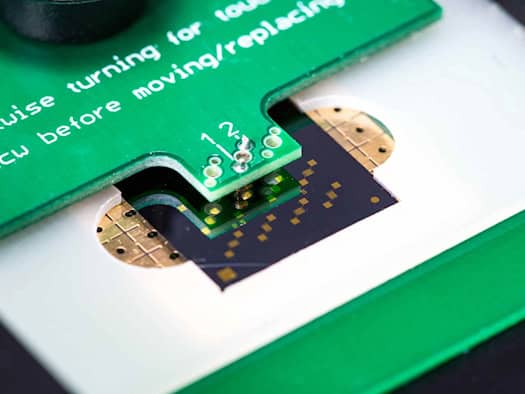
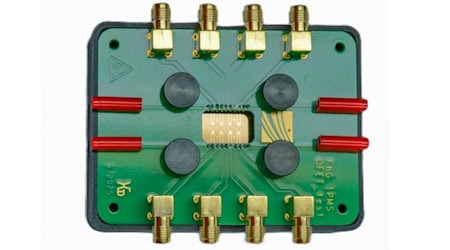
A new measuring adapter from Dresden is revolutionizing materials research. Researchers at Fraunhofer IPMS can use it to test eight samples simultaneously - a breakthrough for the development of displays, solar cells and sensors. The innovation saves time and accelerates the path to better electronics. | more