Who owns the land? Three countries, three answers
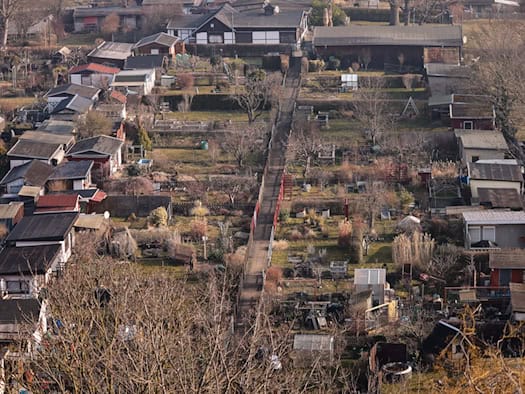
Are share purchases of agricultural businesses becoming a problem? Eastern German states assess share deals and investors differently - and take different approaches to soil protection.
جاري تحميل الرسائل...
Are share purchases of agricultural businesses becoming a problem? Eastern German states assess share deals and investors differently - and take different approaches to soil protection.
The financial equalization between the federal states is intended to prevent the gap between rich and poor countries from widening. This is how much money flowed into the local region recently.
Bürgschaftsbank Sachsen facilitated more loans for companies in 2025 - there was also significant growth in successions and business start-ups.
From 2030, Leipzig/Halle and Dresden airports are to manage without state support. How the federal states are gradually reducing their payments - and what this means for the region.
Leipzig/Halle and Dresden airports are to manage without state funding from 2030. Saxony and Saxony-Anhalt are gradually reducing aid. Will that work?
Saxony is once again investing in the Altenberg artificial ice rink. Interior Minister Schuster speaks of a "clear commitment to the location" and wants to further strengthen winter sports.
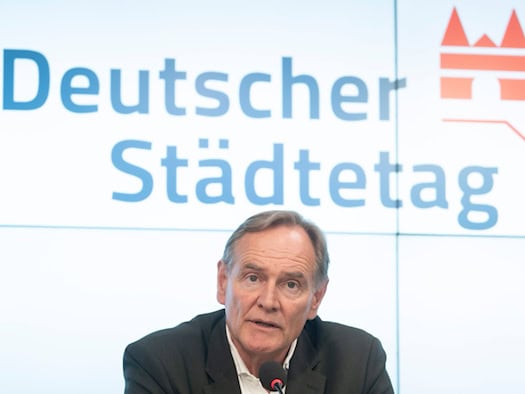
Local authorities are sounding the alarm: social costs are rising rapidly and their deficits are growing. President of the German Association of Cities Jung calls for fundamental reforms and more digitalization.
Alliances are forged in times of need. In Saxony, local authorities and businesses are pushing for binding measures to end the standstill.
The euphoria surrounding artificial intelligence is enabling new business models. This is driving the number of start-ups to unprecedented heights. Saxony is at the forefront.
Financing is secured until the end of 2026. From 2027, Saxony-Anhalt no longer wants to contribute to the losses of Dresden Airport. A solution is close to being finalized.
The contribution for AOK policyholders in Saxony and Thuringia will remain unchanged in 2026. However, the Board of Directors is calling for reforms on the part of politicians.
Billion-euro gaps in both budgets, but different paths: the deputy prime ministers of Saxony and Thuringia on saving, debt and investment.
The number of corporate insolvencies continues to rise in Saxony - but remains below the national average. What is behind this development and which sectors are affected.
Ahead of a meeting, the President of the Association of German Cities is appealing to the federal and state governments: without rapid support, local authorities are threatened with severe cuts - from social work to city festivals.
Over-indebtedness in Germany has fallen in recent years - now the trend is turning negative. The figure has also risen slightly in Saxony.
The eastern German states are demanding that they continue to have a say in the distribution of EU funds. Why they are critical of the planned changes.
Can you refuse to pay the broadcasting fee if the program does not seem diverse enough? The Federal Administrative Court has made a fundamental ruling on this.
It is a huge sum: 500 billion euros. The main aim is to get the infrastructure up to scratch. Where will the money end up?
From renovated town halls to youth clubs: Saxon municipalities can use new funding to make their towns even more liveable. There are also newcomers among the municipalities receiving funding.
Empty coffers, dilapidated schools, broken roads: East German mayors are sounding the alarm and insisting on rapid help from the federal special fund. President of the Association of Cities and Towns Jung also calls for reforms.
A bridge without a connection and expensive bicycle barometers: Two Saxon projects are featured in the Taxpayers' Association's new Black Book. What is criticized.
The joint police interception center in eastern Germany is experiencing considerable delays. The taxpayers' association criticizes the high costs - although operations have not yet been running properly.
Tens of thousands of Thuringians and West Saxons do not pay their vehicle tax on time. Millions are at stake every year. How the money is still collected by customs.
The Thuringian head of government sees the meeting with Chancellor Merz as a new start for cooperation between the federal government and the eastern German states. The topics at the center of the meeting.
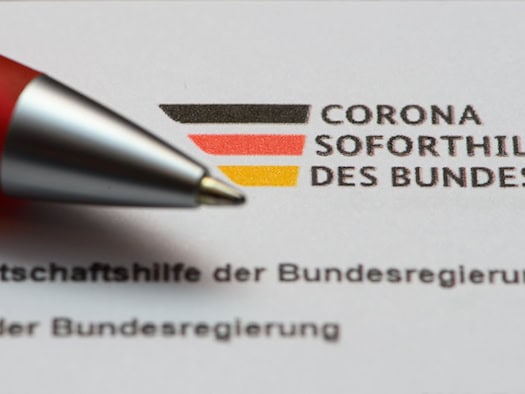
During the coronavirus pandemic, many entrepreneurs received emergency aid to help them make ends meet. However, these usually have to be repaid. Thousands have yet to do so.
Leipzig is allowed to invest despite planned deficits - subject to strict conditions. The conditions imposed by the state directorate and how much the city has to borrow.
The decision is tough: Leipzig will hold back on new investments in the coming months. The reason is financial uncertainty, according to the city administration.
Rising expenditure and falling income are putting a strain on Dresden's budget. A new structural concept and tough debates lie ahead.
The insurance industry has calculated new regional classes for motor vehicle liability: While car owners in Leipzig will benefit, those in the district of Meißen will probably pay more next year.
Saxony can expect more than four billion euros from the federal government's special fund. The state sports association is demanding a share of this.
Tax revenue in Saxony in the first half of the year is above the previous year's level. The situation at the end of the year is still uncertain.
Saxony's companies increased their innovation expenditure again in 2023. Small companies in particular are driving development - and lifting the state above the national average.
On Wednesday, the EU Commission will present the key points of its multi-year financial framework. It is unclear whether Saxony will be able to benefit from EU funds in the future as it has done so far.
Former members of the army or police in the GDR receive special and supplementary pensions. This is divided between the federal government and the eastern states, with the federal government now paying more. This is not enough for the eastern states.
Saxony and Thuringia want to double the number of high-tech start-ups with a new initiative. From October, several million euros will flow into a network designed to position the East internationally.
The coronavirus pandemic has put many Saxon companies in financial difficulties. The emergency aid provided by the federal government must be repaid. However, there are exemptions and exceptions.
While Leipzig/Halle Airport is bustling with activity, Dresden Airport remains much quieter. Fewer passengers, high costs - and a financial backer who wants to turn its back on the location.
Like so many cities, Leipzig has to make savings. These areas will receive significantly less money in the coming year.
The maintenance of buildings and roads alone is too much for many cities and municipalities. Investments in the future are out of the question. Billions from the state could alleviate the hardship somewhat.
Entrepreneurs had complained about difficulties. Economics Minister Panter wants to give them some breathing space.
Time is of the essence: On July 11, the "investment booster" for the economy is to be passed by the Bundesrat. However, the federal states are still expecting commitments from the federal government before then.
Saxony wants to continue to support the Deutschlandticket - but only if the federal government pays at least half. The minister responsible would also be happy to receive a higher federal contribution.
Saxony's Minister President makes it clear: there will only be a majority if the federal government pays for the tax shortfalls at state and local level.
Saxony's hospitals are sounding the alarm about a lack of budget funds. The hospital association warns: the state parliament must make a decision before the end of June - otherwise there is a threat of a care emergency.
With a view to the new double budget, the Left Party is campaigning for more money for social housing. According to figures, there is a shortage of more than 11,000 social housing units in Saxony.
If it were up to the federal states, the new date with Federal Chancellor Friedrich Merz would have been June 18. Contrary to what was announced, this will not happen.
A relief package is intended to make Germany's economy competitive again. Saxony's Minister President wants this "investment booster" - but insists on help for the federal states.
Due to his trip to Trump, Chancellor Merz had canceled his participation in the Minister Presidents' Conference. But time is pressing for economic aid and investment.
Former members of the army or police in the GDR receive special and supplementary pensions. This is shared between the federal government and the eastern states. Brandenburg's head of government hopes for changes.
The federal states support the federal government's planned economic stimulus program, but complain that the costs will primarily be borne by them. Their current spokesperson says what they are demanding.
The German government wants to give the economy a boost with tax relief for companies. Further measures are needed for smaller companies, warns Economics Minister Panter.
The number of millionaires in Saxony is rising. The Left Party wants top earners to contribute more to the financing of the social systems - that would not make anyone poor, but would make everyone richer.
In the GDR, individual occupational groups received supplementary or special pensions. The East German states pay the majority of these - and have long been demanding relief from the federal government.
At their state conference, Saxony's Young Socialists are calling for bold investments instead of cuts. With an initiative motion, they are sending a clear signal against the Saxon government's austerity measures.
The chemical industry is under pressure. The Managing Director of the Leuna Chemical Park is calling for a different energy policy and is relying on Russian gas.
The Saxon government's austerity measures are causing a stir. It is clear to everyone that cuts are necessary in view of falling revenues. But where should savings be made?
Saxony's Interior Minister defends cuts to the fire department budget.
Saxony's government wants to cut the generation fund - but legal experts and associations are sounding the alarm. This is increasing the pressure on politicians - shortly before the budget consultations.
The financial package for defense and infrastructure has cleared the hurdle in the Bundesrat. Saxony also voted in favour - out of conviction, as Minister Köpping emphasizes.
An amendment to the Basic Law is necessary for the black-red billion euro financial package. The debate is currently underway in the Bundesrat.
Today, the Federal Council is deciding on the multi-billion euro financial package. Saxony's Infrastructure Minister Kraushaar is expecting tough negotiations on the distribution of funds.
Saxony's Minister President Kretschmer believes the special fund is the right thing to do. However, he also wants to solve other obstacles to growth. He has a clear message for Europeans on the war in Ukraine.
Is the CDU/CSU being led through the nose ring by the SPD? At least that is the impression of the conservative home party in the CDU in Saxony when looking at the exploratory plans in the federal government.
The federal states should benefit from the relaxation of the debt brake. But for this to succeed, some constitutional amendments would be required. Economic experts see problems.
Sometimes people are also tempted by the illegal import of products such as chocolate. One shipment from south-eastern Europe was stopped at the German-Czech border.
Saxony as an entrepreneur: The Free State has a stake of almost 600 million euros in the companies. This is intended to promote the common good.
Following the scandal between US President Trump and Ukrainian head of state Selensky, the exploratory talks in Berlin are also under increased time pressure. They continue in the afternoon.
There are clear differences in donations across Germany. This applies to the amount of donations as well as the trend from year to year. New figures are now available.
Taking instead of giving: The federal financial equalization system is based on the principle of solidarity. Financially strong federal states pay into the pot from which weaker states help themselves. Bavaria is complaining about this.
Little was built in 2023 due to inflation and high interest rates. After the slump, things are now slowly picking up again.
The German Association of Cities is sounding the alarm about the financial difficulties facing local authorities. Leipzig's Lord Mayor calls for "fair cooperation" with the federal and state governments.
Revenue from traffic fines has been rising since the catalog of fines was tightened. Speeding and red light offenders also generated record revenue in 2024.
Hospitals receive money from health insurance companies for the treatment of patients. The sum is higher this year than in 2024.
Out-of-control social spending, empty coffers, investment backlog: German cities are crying out for help ahead of the Bundestag elections.
The economy is weakening and tax revenues are not rising as expected. Now Saxony's new Finance Minister Christian Piwarz wants to look at spending - and save money.
E-mobility is booming worldwide - but not in Germany. In Saxony, too, the number of electric car registrations fell significantly last year. A missed opportunity, according to experts.
It takes an average of 51 days to process tax assessments in Saxony. There are considerable regional differences.
The job cuts at Leipzig/Halle and Dresden Airports will be greater than expected. According to the information provided, the main areas affected are administration and management.
A house that only slightly exceeds the legally permitted living space can be counted as an asset for recipients of citizen's allowance. This was decided by the Saxon State Social Court.
Trade unions and employers are concerned about the strained municipal financial situation. To counteract the problem, Verdi is relying on an unusual alliance - but its success is uncertain.
As a result of its annual audit, the State Court of Audit publicizes problems in state and municipal financial administration. In addition to the annual report, the institution also makes statements.
Men from North Rhine-Westphalia and Saarland receive the highest old-age pensions in a nationwide comparison. Saxony's men are below the average, but its women are above it.
The construction industry in Saxony recorded a significant drop in turnover in the first half of the year. Much less was built.
Contrary to predictions, the number of over-indebted people in Germany is falling. The experts at Creditreform see a serious reason for this.
The EU is planning a reform in the allocation of funding. The money is only to go to the federal states and no longer to individual regions. In Saxony, people are worried about funding.
Sharp rent increases in Saxony are no longer limited to the metropolitan areas of Dresden and Leipzig. According to the Left Party, consideration must also be given to building social housing in the surrounding areas.
Taxes must be paid on inheritances and gifts that exceed the tax-free amount. Last year, 12 million euros more was due than in 2022.
The city of Dresden experienced its blue miracle with a traffic experiment. An experiment that cost a lot of money failed on the bridge of the same name. A case for the taxpayers' association's black book
Childcare, energy transition, migration - local authorities have to deal with many tasks at the same time. East German city leaders are calling for more support - and criticizing the federal government.
Saxony's tax offices also constantly need skilled workers. The next generation of tax administrators is trained in their own state.
In order to transmit electricity from wind and solar power, the electricity grids need to be renewed and expanded. Up to now, it has mainly been the local people who have paid for this. But that is set to change.
Following the DHL deal, Mitteldeutsche Flughafen AG has now also secured its financial stability - at least until the end of 2026, after which new growth strategies are to be pursued.
Those who receive citizen's allowance receive additional support with rent and heating. However, this is often not enough, especially for families and in Saxony's large cities.
Almost 13,500 fewer people are expected to have lived in Leipzig in 2022 than previously assumed - according to the results of the census. Many cities in Saxony are in a similar situation.
Refugee costs, citizens' income and the Germany ticket are currently placing an enormous burden on state and municipal budgets. These are tasks that arise from federal laws.
Civil society organizations are pushing for a change of course regarding the follow-up costs of lignite. They fear that taxpayers could be faced with billions in clean-up costs.
Should Saxony go into debt to clear the investment backlog? The CDU is adamant about the debt brake and refers to the constitution. Other parties are calling for the rules to be relaxed.
Saxony has doubled its funding for the exchange program with the Hebrew University of Jerusalem in order to strengthen bilateral relations and intensify cooperation.
The Mitteldeutsche Flughafen AG (MFAG) is in considerable financial difficulties. According to a report by the auditing company KPMG, MFAG, which operates Leipzig/Halle and Dresden airports, needs 145 million euros, as a spokesperson said on Tuesday in response to an inquiry. A restructuring and tra ..
Saxony's Social Affairs Minister Petra Köpping (SPD) considers the failure of the talks on municipal finances to date to be fatal and warns of serious consequences.