


Beekeepers worried about colony losses - Is honey becoming scarce?
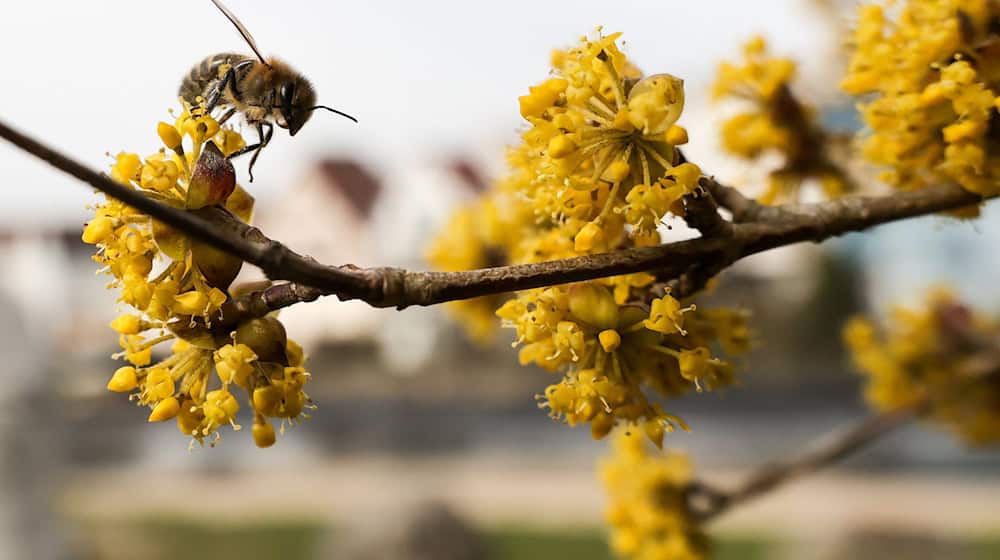
Saxon beekeepers are complaining about considerable losses among their bees at the start of spring. "Many colonies have come out of the winter relatively weak," said Michael Hardt, Chairman of the Saxon Beekeepers' Association, to the German Press Agency. And a number of colonies had died completely. He estimated the losses at 30 to 50 percent, with some beekeepers even losing all their colonies. Hardt believes the main reason is the Varroa mite. Local beekeepers have been struggling with this pest for decades. Last year's early start to bee breeding also provided the mites with good conditions to multiply. The high mite load weakened the colonies. In the mountains in particular, there were also problems with so-called melicite honey, also known as cement honey. It becomes very hard in the combs and the bees can hardly dissolve it as food in winter. Hardt does not believe that honey is now becoming scarce: "The market is flooded with imported honey." Beekeepers who run their beekeeping as a main or sideline business have recently found it difficult to find wholesalers who will buy honey from them. However, anyone who values honey from the region could be left empty-handed for the time being due to the loss of colonies at their regular beekeeper. However, many beekeepers in Saxony are well networked through their associations and can help out through fellow beekeepers if necessary, explained the expert. However, local honey could become more expensive in the future. According to Hardt, this is not so much due to colony losses, but rather to the general price trend, which is also making beekeepers' work more expensive. As examples, he cited the cost of winter feed, which has risen significantly, and higher travel costs. He now sees 7.50 euros for a 500-gram jar of honey as the lower limit for Saxony. Beekeeping has experienced a boom in recent years. There are still new people interested in beekeeping, explained Hardt. However, their numbers are no longer as high as they were a few years ago. This is offset by people leaving for reasons of age, for example. According to the Animal Disease Fund, almost 9,500 beekeepers were recently registered in Saxony with 69,200 bee colonies (2023). By comparison, in 2015 there were fewer than 5,500 beekeepers with just under 46,400 colonies. Not all of them are organized in associations. Currently, the bees find food on crocuses, willows and shrubs such as cornelian cherry. However, they also live off the food reserves in the hive. Hardt is confident that the loss of colonies can be made up again. There is already new brood in the colonies and the swarming season begins at the end of April. Bee colonies naturally reproduce by one part of the colony swarming out with the old queen, while the other part raises a new queen. With a few tricks, beekeepers can take advantage of this to build up new colonies. Copyright 2025, dpa (www.dpa.de). All rights reserved"The market is flooded with imported honey."
Crocus & Co offers bees their first food

