Logo Die Sachsen News
Nachrichten / Health

New AI from Dresden to detect liver cancer early

Early detection saves lives. Researchers in Dresden use everyday health data to identify people with an increased risk of liver cancer in good time.
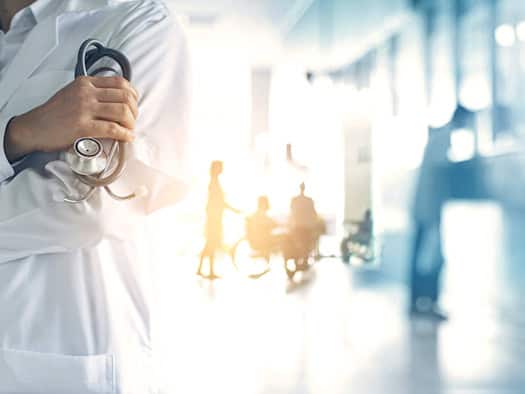
What doctors already know could save lives in the future: an AI model from TU Dresden analyzes health data and detects cancer risks earlier. © Freepik
Von: Wissensland
Liver cancer is often detected too late. Researchers at the EKFZ at TU Dresden have developed an AI model that uses routine clinical data to estimate individual risk – potentially enabling earlier diagnosis.

Liver cancer is one of the deadliest forms of cancer worldwide. Hundreds of thousands of people die from it every year, often because the disease is detected too late. The reason is simple. For a long time, it causes no symptoms. By the time patients notice anything, the tumor is often already advanced.

Early screening could save lives. But it is often unclear who actually needs it. This is where a new AI model comes in, developed by researchers at the Else Kröner Fresenius Center for Digital Health (EKFZ) at TU Dresden together with RWTH Aachen University Hospital.

Mehr aus dieser Kategorie

Calculating cancer risk from routine data

The most common form of liver cancer is hepatocellular carcinoma, or HCC. It usually develops after years of liver damage, for example due to alcohol, fatty liver disease or hepatitis. The PRE-Screen-HCC model uses data routinely collected in clinical practice, including blood values, medical history and lifestyle factors. Based on this, it calculates an individual’s risk.

For the study, the researchers analyzed health data from more than 900,000 people in the UK and the US. Nearly 1,000 confirmed cancer cases were included. PRE-Screen-HCC outperformed established risk models without requiring complex genomic or metabolic analyses. “The key advantage is that our model is based on routine data that is already available in everyday clinical practice. This would allow us to identify people who would benefit from ultrasound screening at an earlier stage,” says Jan Clusmann from the EKFZ.

Open to all to advance research

The model assigns individuals to different risk groups. Those at higher risk could be invited for targeted ultrasound screening. This could make preventive care more efficient. All models, the code and a web-based risk calculator are freely available, allowing other researchers to validate and further develop the approach. “In the future, algorithms such as PRE-Screen-HCC could be linked directly to patient records, for example within the European Health Data Space,” explains Prof. Jakob N. Kather. This would be a major step forward. The AI could immediately indicate whether screening is advisable.

Researchers worldwide are working on using AI to detect cancer risks earlier. Many models rely on genetic data or specific biomarkers. The Dresden approach shows that routine clinical data can also be sufficient, which makes implementation in practice easier. At the same time, challenges remain. The model was developed using data from the UK and the US and needs to be validated in other populations. It is also important to assess how well such predictions perform in real-world settings and whether all patient groups are equally represented..

The study was funded by German Cancer Aid and published in the journal Cancer Discovery.
Die Übersetzungen werden mithilfe von KI automatisiert. Wir freuen uns über Ihr Feedback und Ihre Hilfe bei der Verbesserung unseres mehrsprachigen Dienstes. Schreiben Sie uns an: language@diesachsen.com.
Wissensland
Artikel von

Wissensland

Wissensland ist für die Inhalte selbst verantwortlich. Es gilt der Kodex der Plattform. Die Plattform prüft und behandelt Inhalte gemäß den gesetzlichen Vorgaben, insbesondere nach dem NetzDG.

METIS