


When sensors listen to birds chirping
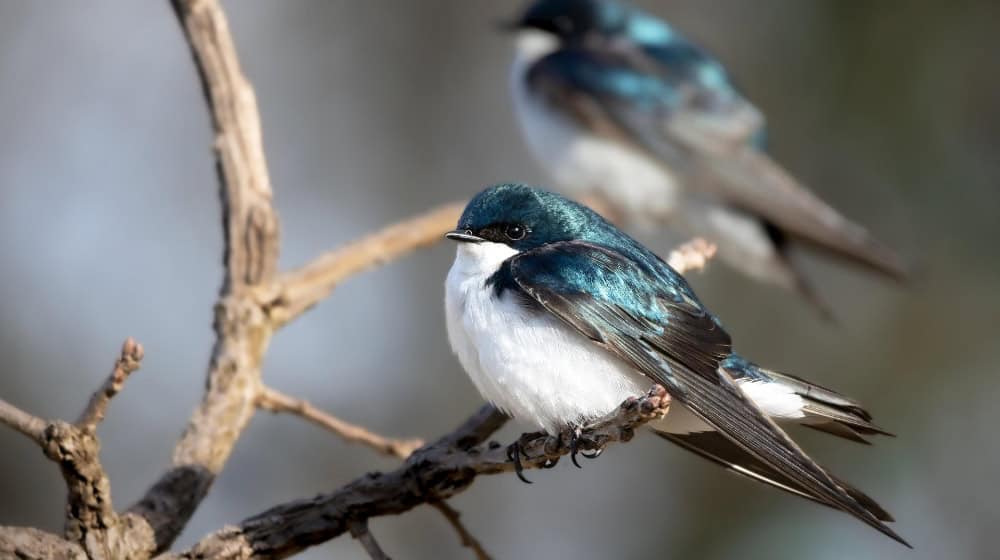
Somewhere in the forest, a bird sings. A dragonfly flits across the pond. In the riverbed, invisible traces of fish DNA drift through the water. All of this happens every day, but no one in Europe records it consistently. This is now set to change. Researchers led by the University of Amsterdam, the German Center for Integrative Biodiversity Research (iDiv) in Leipzig and Martin Luther University Halle-Wittenberg have published a roadmap that shows how Europe can finally systematically monitor its biodiversity. It concerns all animal and plant species and their habitats.
The problem has serious consequences. Governments often do not know exactly how nature and species are really doing in their country. "Europe has hundreds of monitoring programs, but the data is often isolated, inconsistent or incomplete," says Prof. Henrique Pereira, research group leader at iDiv and MLU. Without reliable figures, no good decisions can be made. Neither about protected areas nor about laws to restore nature.
84 measured values for Europe's nature
The roadmap names 84 so-called Essential Biodiversity Variables. These are measured values that can be used to describe the state of nature. For example, how many birds of a species still exist, how large seagrass meadows are or how diverse the genes of an animal population are. The aim is to use these uniform measurements to create a transnational network that brings together all European observations.
In order to achieve this, the researchers recommend the establishment of a European Coordination Center for Biodiversity Observation. It would pool data from various sources, standardize methods and prepare reports for decision-makers. It would be a new EU institution that coordinates monitoring across Europe. The European Parliament has already adopted preparatory measures.
Drones, DNA and volunteers working together
Modern technology plays a major role in the new system. Automatic microphones will record bird calls, cameras will capture wildlife and satellites will observe entire forest areas. Environmental DNA can be detected in the water. These are genetic traces that animals leave behind in the water without you having to see them. Artificial intelligence helps to analyze the huge amounts of data.
But technology alone is not enough. First author Dr. Daniel Kissling from the University of Amsterdam emphasizes that the network should extend "from the DNA of plants and animals to entire forests, rivers and oceans". This also requires people. Citizens who observe and report animals themselves, as well as experienced experts in species identification, remain indispensable. New technologies should complement their work, not replace it.
The study has now been published in the journal Nature Reviews Biodiversity. The roadmap is not a pipe dream. It was developed as part of the EU research project EuropaBON, in which 15 organizations were involved. And it shows that research from Saxony and Saxony-Anhalt directly contributes to how Europe will systematically record the state of its nature in the future.
Publication:
Kissling, W.D., ..., Pereira, H.M. (2026). Building the backbone for Europe's biodiversity monitoring. Nature Reviews Biodiversity. DOI: 10.1038/s44358-026-00140-6

