


Thoughts: Why our life is a simulation
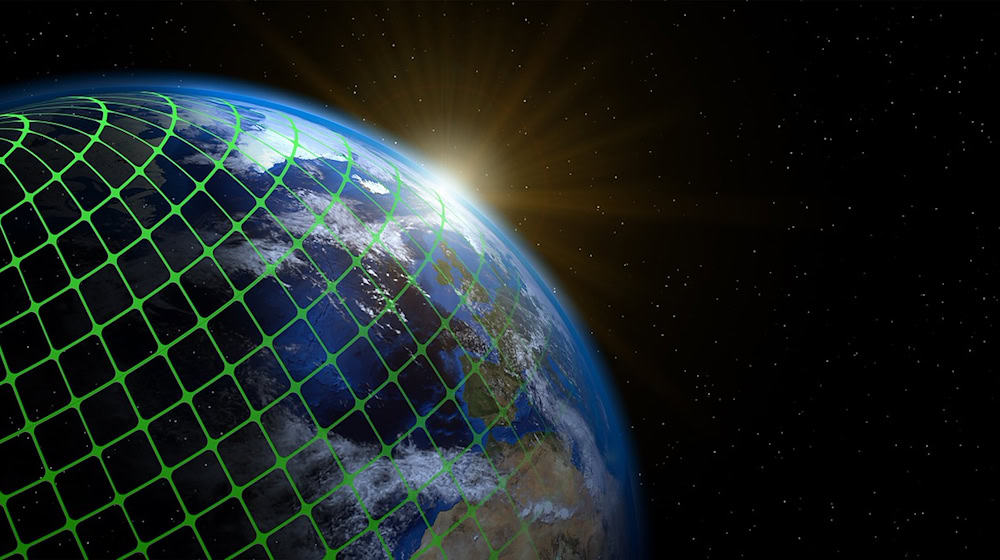
Have you ever wondered why people perceive the same event so differently? Why their memories and reactions are unique, even if they have had similar experiences to others? Could it be that these individual realities are part of a larger, simulated scenario? The idea that we are all living in a simulation sounds like science fiction at first. But what if there is more to it than that? Immerse yourself with us in a fascinating world where philosophy and technology merge and discover why the idea of a simulated reality is not as far-fetched as it seems.
Individual experiences and our own reality
Every person sees the world through their own lens. Our perceptions, thoughts and feelings are shaped by our personal experiences. One and the same event can be interpreted completely differently by different people. These individual realities form the basis for our understanding of the world. In a simulation, these subjective experiences could be consciously designed to create a variety of experiences that enrich the overall system.
The human being as a biological computer
To better understand the possibility of a simulation, it is helpful to compare humans with a computer. Similar to computers, we humans function according to certain principles that are reflected in our learning processes and behaviors:
- Learning and storing: Like a computer that stores data in its memory, we learn individual things throughout our lives and store these experiences in our brains. This information shapes our knowledge and influences our behavior.
- Recalling and reacting: In certain situations, we retrieve stored information and react accordingly. This process is similar to how a computer works, accessing stored data to run programs or solve problems.
- Individual adaptation: Each person accumulates unique experiences and stores individual memories. These personalized databases lead to different reactions and behaviors, similar to how different software programs can produce different results.
Simulation theory and philosophy
In his essay "Are You Living in a Computer Simulation?", philosopher Nick Bostrom argues that it is likely that we are living in a simulation. His argument is based on the assumption that future civilizations could have immense computing capacities. These could be used to create detailed simulations of their ancestors. If this is the case, it would be more likely that we exist in one of these simulations than that we are the "originals".
The influence of artificial intelligence
Artificial intelligence (AI) plays a crucial role in the discussion about simulation theory. AI could act as both a creator and a component of simulation. On the positive side, AI could help make simulation more realistic and diverse. It could enrich our experiences and create new opportunities for learning and growth. An AI-powered simulation could also take ethical considerations into account and ensure that the simulated entities lead fulfilling and meaningful lives.
On the other hand, there are also negative implications. If the AI controls the simulation, it could also manipulate and restrict our free will choices. This could lead to a dystopian reality in which our actions and thoughts are monitored and controlled. Such control could undermine the sense of authenticity and self-determination that is essential for a fulfilling human life.
Why is this topic important?
The question of whether we live in a simulation touches on fundamental aspects of our existence and our understanding of reality. It prompts us to reflect on the nature of our experiences and to critically question what we consider to be reality. It also raises ethical questions: How should we deal with the possibility that our lives are part of a simulated reality? What responsibility do the creators of such a simulation bear?
In a world increasingly characterized by technology and AI, simulation theory could help us to better understand the impact of these developments on our lives. It challenges us to maintain a balance between technological advances and human values, and to ensure that our reality - whether simulated or not - remains a place where freedom, autonomy and ethical action are respected.
Overall, the idea that we live in a simulation offers fascinating perspectives on the human condition and our relationship with technology. It reminds us that our individual realities are valuable and unique, regardless of whether or not they are part of a larger simulation.
Whether or not we actually live in a simulation, it is the philosophical exploration of this possibility that enriches us. It opens up new perspectives on our existence and allows us to re-evaluate the meaning of our individual experiences. It is not about spreading a conspiratorial view, but rather about expanding and critically questioning our understanding of reality. In the end, it is the quest for knowledge and the pursuit of a conscious, fulfilling life that should guide us - whether our world is simulated or not.

