


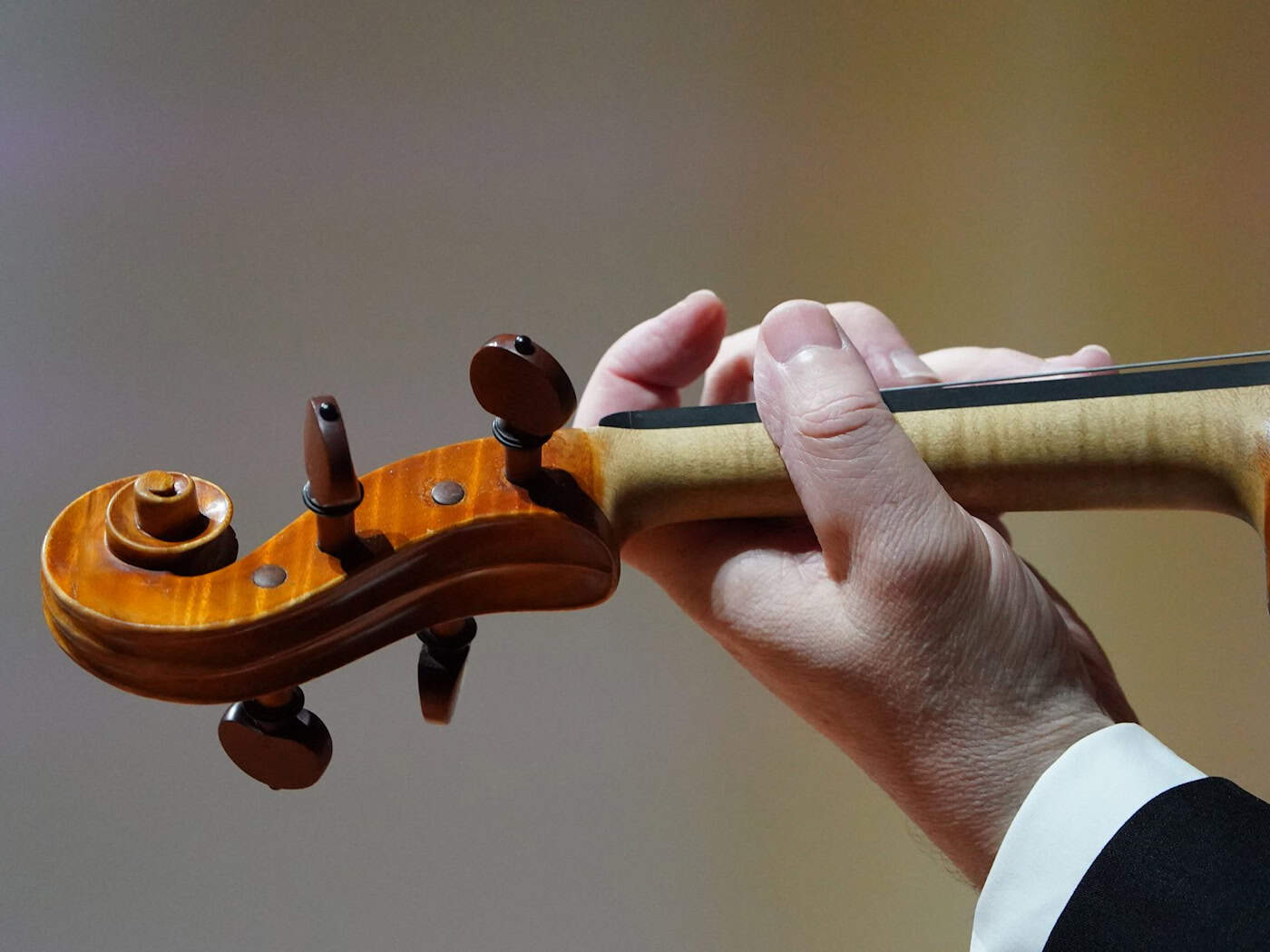
When the strings of the Robert Schumann Philharmonic Orchestra perform on Friday afternoon, they will be playing well-known melodies: Mozart's Little Night Music, for example, or songs such as "Alle Vögel sind schon da". Unlike at a conventional concert, singing and humming along to the songs is expressly encouraged. This is because the special concert is aimed specifically at people with dementia and their relatives. The aim is for them to escape from everyday life in a relaxed atmosphere. Coffee and cake will also be served. The Chemnitz General Music Director Benjamin Reiners has experience with such concert formats from his previous work in Kiel. There were often goosebump moments for him, as he recounts. For example, when a couple lovingly held hands during a concert. "You could suddenly feel a great closeness and bond between them again." The concerts are touching for those affected and their relatives, as well as for the musicians. "They are special moments to see what music can trigger, how memories and personality come back." This impressively demonstrates the power of music and how directly it can reach people. According to the German Alzheimer Society, more than 1.8 million people in Germany live with dementia; in Saxony, there are around 104,000 over the age of 65. The likelihood of developing dementia increases with age. Because society is getting older, the proportion of people with dementia is also increasing. According to the data, it is highest nationwide in Saxony, Thuringia and Saxony-Anhalt. Dementia begins gradually and changes the lives of those affected and their relatives enormously. The mental abilities decline: Sufferers have problems orienting themselves, following conversations, the transfer of content from short-term to long-term memory is impaired; behavioral and mood changes occur and they withdraw from social activities. The cause is degradation processes in various areas of the brain, explains Mirko Wegscheider, senior physician at the Department of Neurology at Chemnitz Hospital. Alzheimer's disease, the most common form of dementia, affects areas of the brain other than the "music memory" in the early stages. Above all, active music-making such as singing and playing an instrument, but also passive listening to music, stimulate motor, linguistic and emotional areas in the brain. According to the expert, this can also create new connections in the brain or strengthen existing network connections in some cases of dementia. "The positive effects of music are easily demonstrable," adds Thomas Barth, Head Physician at the Clinic for Psychiatry, Behavioral Medicine and Psychosomatics. He regularly observes this in his patients. "The improvements brought about by music therapy are on a par with those of medication." Until now, medicine has not been able to stop the illness, but only treat its symptoms. Despite the memory loss caused by dementia, music manages to awaken emotions and memories, helps patients to become calmer and sleep better. This has also been proven by studies. A visit to a concert can also provide a change from the daily grind, which is often burdened by care. "Some patients really push for it," explains Barth. "Even people with severe dementia can calm down, get stimulation and come back to life for a moment." It also allows those affected to take part in social life again. Offers like the special concert in Chemnitz also exist elsewhere in Saxony. Since 2018, the Leipzig Opera has been offering music for people with dementia under the title "In mir singt ein Lied". Visitors sit in a large circle in the concert foyer of the opera house and sing operetta arias, pop songs or folk songs together with piano accompaniment. "The demand is unabatedly high, the dates are always booked up very quickly," says opera spokeswoman Gudula Kienemund. The response is moving. She has personally witnessed "how people start to smile and even dance who otherwise seem completely lost in an unknown world". It is also a deeply emotional experience for the relatives to see how their loved ones with dementia come to life. For the special concert in Chemnitz, the musicians of the Robert Schumann Philharmonic Orchestra are leaving their usual rooms and inviting people to the university library. Some other things are different too. The pieces will be played in excerpts and the concert is limited to one hour so as not to overwhelm the audience, as dramaturge Friederike Pank explains. From an hour before the start, they can familiarize themselves with the venue and talk to the musicians. The seating is arranged loosely and there is the option to leave the room at any time. "If someone claps along or gets up and dances, that's no problem." In addition to groups, couples and families with children and grandchildren have also registered. And Pank and Reiners are already certain that the new format will be continued next season.More than 100,000 people in Saxony suffer from dementia
Music awakens emotions and memories
When the loved one comes back to life despite dementia
Copyright 2026, dpa (www.dpa.de). All rights reserved

