


New compounds could remove radioactive substances from the body
An accident at a nuclear power plant or an incident in a laboratory: radioactive substances can enter the human body through inhalation, ingestion or wounds. Once inside the body, they can accumulate in organs or bones, with potentially serious consequences. But what can be done? To date, only one approved drug is available worldwide for such cases, and it is effective against only some radioactive elements.
Jason Ross is researching this problem. The doctoral researcher at TU Dresden (TUD) and guest scientist at the Helmholtz-Zentrum Dresden-Rossendorf (HZDR) is working on developing new compounds that can remove radioactive elements from the body. For his work, he has now been awarded the prestigious Roy G. Post Fellowship.
Molecules like tailor-made grippers
Ross conducts his research within the Franco-German project ActiDecorp. The goal is to develop so-called chelators—organic molecules that bind metal ions by wrapping around them like tiny grippers and encapsulating them. In this form, the radioactive substance can be excreted from the body.
The challenge is considerable. Radioactive elements known as actinides—such as uranium, plutonium and americium—occur in many different chemical forms. Each of these forms behaves slightly differently. An effective compound therefore has to be highly selective: it should bind only the radioactive metal ion, not essential elements such as calcium or magnesium.
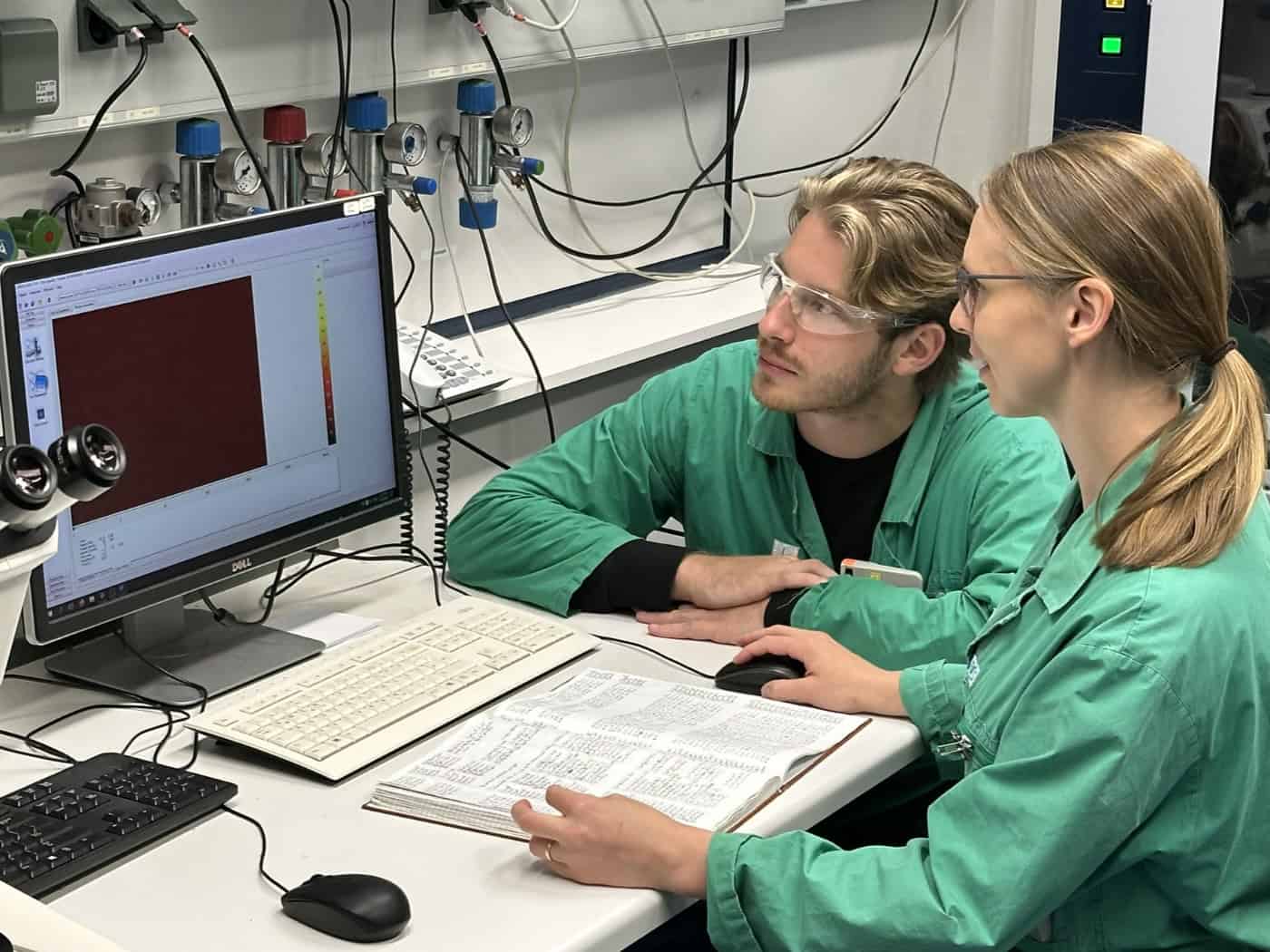
At the Institute of Resource Ecology at HZDR, Ross uses specialized laboratory techniques to study how newly developed molecules bind to different actinides. His experimental results are combined with computer simulations, helping researchers design increasingly effective and precisely tailored compounds.
A team from two countries
Ross is not working alone. The ActiDecorp project brings together researchers from Germany and France. TU Dresden and HZDR collaborate with the Université de Strasbourg, the Université Bourgogne Europe in Dijon, and the French radiation protection authority ASNR in Paris. While fundamental chemical studies are conducted in Dresden, new chelator structures are synthesized in Strasbourg and tested for stability in Dijon. In Paris, the most promising candidates are evaluated in animal studies.
The research has implications far beyond medicine—for example for the remediation of contaminated soils or for new technologies to detect radioactive substances in the environment.

