


Lab-grown mini-organ advances liver research
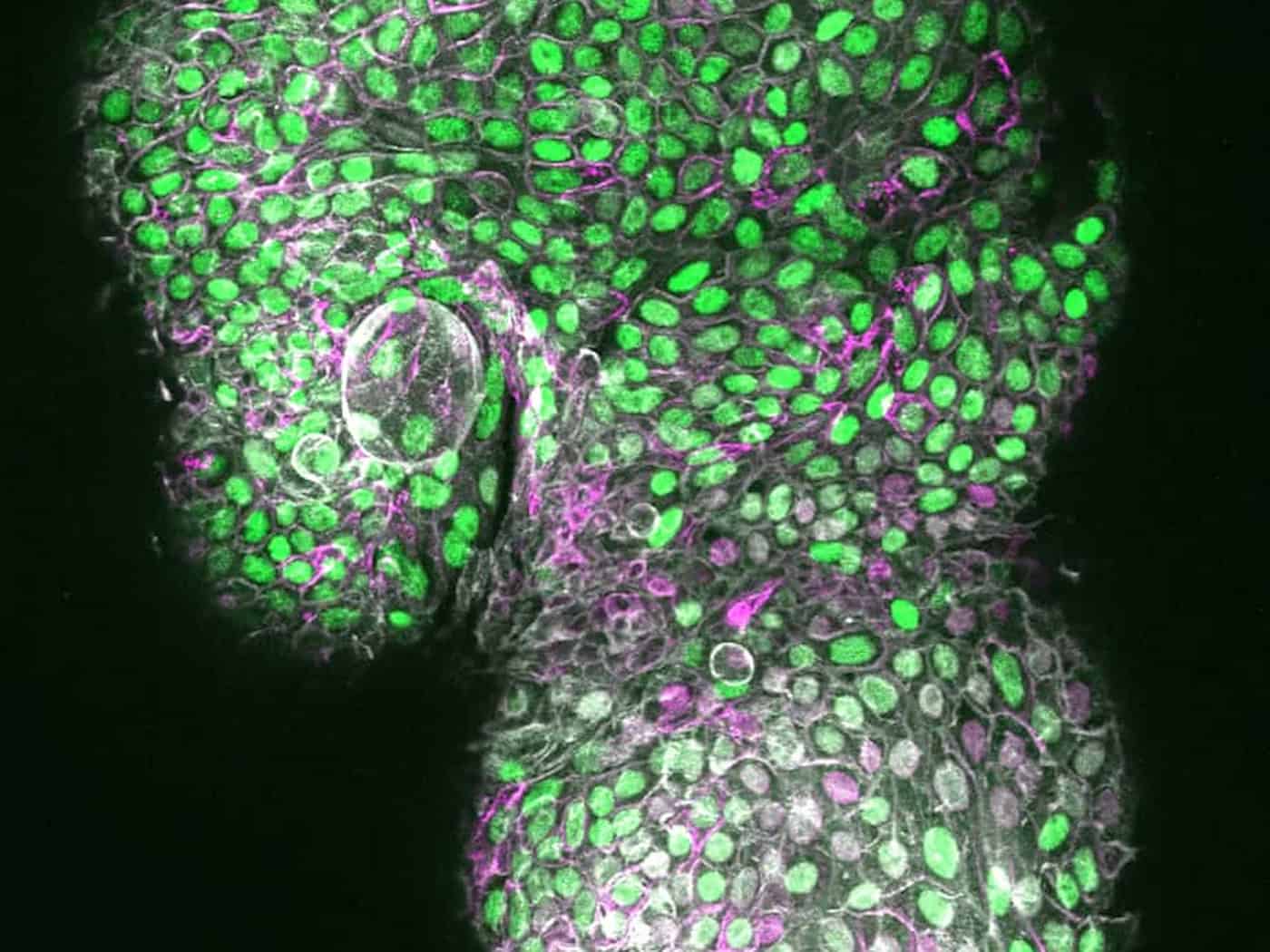
The liver is an remarkable organ: it can regenerate itself after damage. But exactly how this process works has been difficult to study until now. Researchers at the Max Planck Institute of Molecular Cell Biology and Genetics (MPI-CBG) in Dresden have now taken an important step.
The team developed a so-called organoid, a tiny three-dimensional model of an organ. It grows in the laboratory and behaves similarly to real tissue in the body. Such mini-organs help researchers around the world better understand diseases. Over the past ten years, more than 20,000 scientific studies have been published on this topic.
Two cell types, one important role
The human liver consists mainly of two cell types: hepatocytes, which perform most of the liver’s metabolic functions, and cholangiocytes. These cells line the bile ducts, small channels through which bile is transported. In cases of severe liver damage, cholangiocytes can under certain conditions even give rise to new hepatocytes and thus contribute to the repair of the organ.
However, previous laboratory models have struggled to reproduce this ability. The Dresden team’s new organoid model now makes this possible. The researchers adjusted the growth conditions in the laboratory so that the cells display many of the cell states also found in the human liver.
Recreating the natural environment
“A key challenge when studying organoids is maintaining the balance between cell growth and the diversity of different cell types present in the organ,” explains doctoral researcher Javier Bregante. The team therefore adapted the growth conditions so that they more closely mimic the natural environment of the tissue.
The study was carried out in collaboration with the University Hospital Carl Gustav Carus in Dresden and the University Hospital Rostock. The research group is led by Meritxell Huch, Director at MPI-CBG and Honorary Professor at the Faculty of Medicine at TU Dresden.
The new model allows researchers, for the first time, to study different forms of human cholangiocytes and how they transition between states. This could help scientists better understand disease-related changes in the liver. The results were published in the journal Cell Reports.
Original publication:
Javier Bregante, Flaminia Kaluthantrige Don, Fabian Rost, André Gohr, Germán Belenguer, Franziska Baenke, Dylan Liabeuf, Jessie Pöche, Clemens Schafmayer, Michaela Wilsch-Bräuninger, Sebastian Hinz, Kevin O' Holleran, Daniel E. Stange, Meritxell Huch: Human liver cholangiocyte organoids capture the heterogeneity of in vivo liver ductal epithelium, Cell Reports, Volume 45, Issue 1, 2026, 116786.

