


Smaller, faster, smarter: Researchers develop new chip architecture
Every smartphone, every laptop and every smart heating control system only works thanks to tiny chips. But the demands on modern microelectronics are growing rapidly. Chips need to be more powerful, more compact and more energy-efficient. Traditional production methods are increasingly reaching their physical and technical limits. Researchers at the Fraunhofer Institute for Photonic Microsystems IPMS in Dresden have now developed a method that could solve this problem.
The core of the idea: instead of building a single large chip, several small special chips are combined to form an overall system. These small components are called chiplets. The challenge is to connect them together as tightly and with as little loss as possible.
Like puzzle pieces in matching recesses
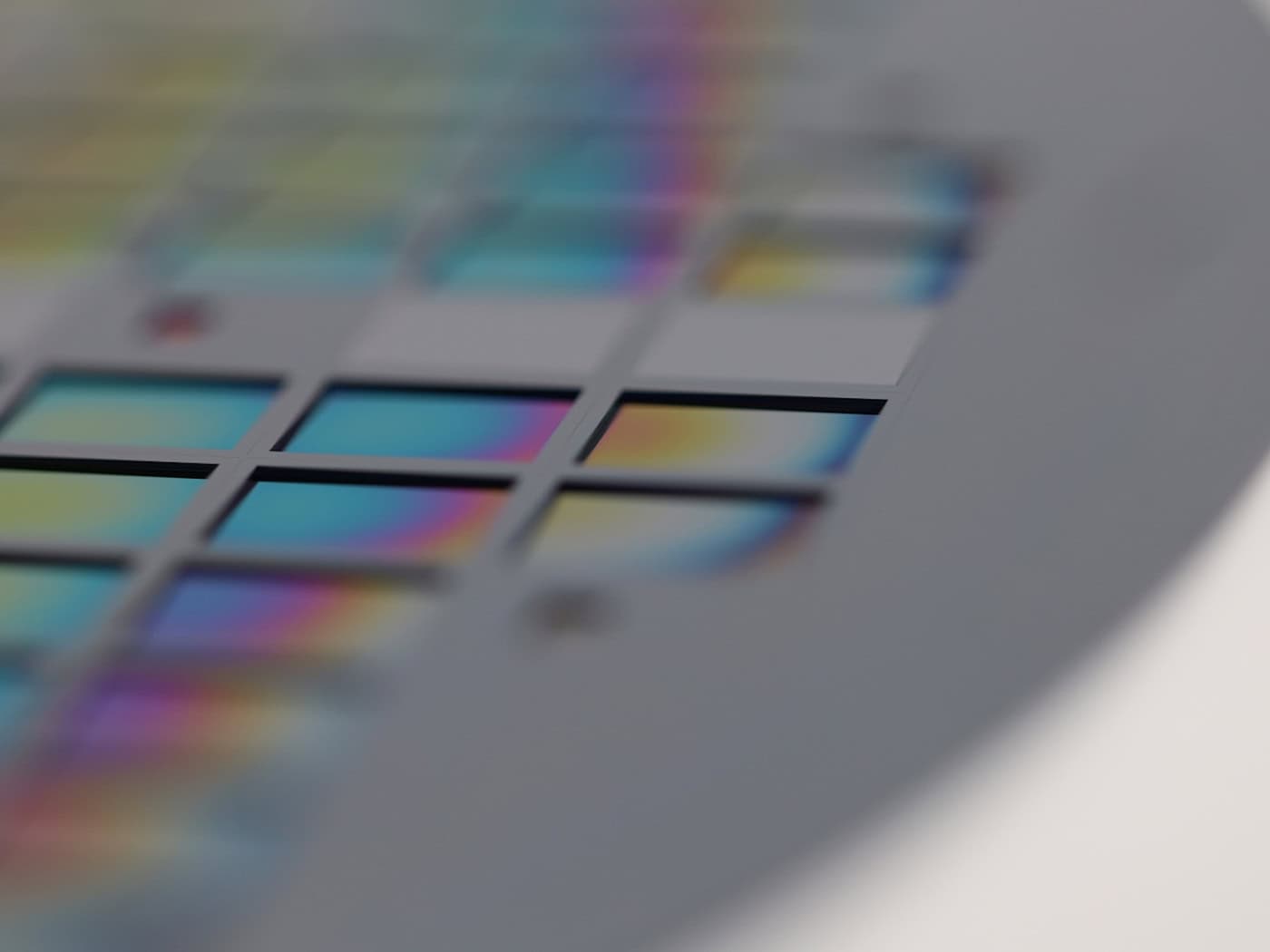
The Dresden team has provided silicon wafers - thin slices of high-purity silicon on which chips are manufactured - with small recesses. The chiplets are inserted into these so-called pockets and then sealed to create a virtually smooth surface. "QMI is based on silicon wafers with structured recesses," explains Lukas Lorenz, group manager at Fraunhofer IPMS. QMI stands for "quasi-monolithic integration" and refers to a design that technically behaves almost like a single chip, although it consists of several components.
"Dummy chiplets were inserted into the so-called pocket wafers for the first time and the surface was leveled with a passivation layer for subsequent wiring," he adds. As a result, the small chiplets work together almost as closely as if they were a single chip. The close connection of the chiplets shortens the signal paths. This means less energy loss, fewer delays and more computing power. At the same time, the system is more robust because there are fewer mechanical connection points that could fail. And because only the components that are actually needed can be combined, chips could be developed more efficiently and cost-effectively in future.
From research to the factory
The technology is particularly interesting for applications with artificial intelligence, such as in intelligent sensors or fast wireless systems. Such devices require powerful chips in a very small space, for example in cars, medical technology or communication systems. The current demonstrator from Dresden is still based on simplified test structures. However, the team already sees this as an important step towards industrial application. "Although the current demonstrator is based on dummy structures, the process chain can be transferred to real customer applications," emphasizes Lorenz.
The research was carried out as part of the European APECS project, which is being funded with a total of 730 million euros. The aim is to create a joint European pilot line for modern chip production.

