


Freiberg-built diving robot inspects dam walls
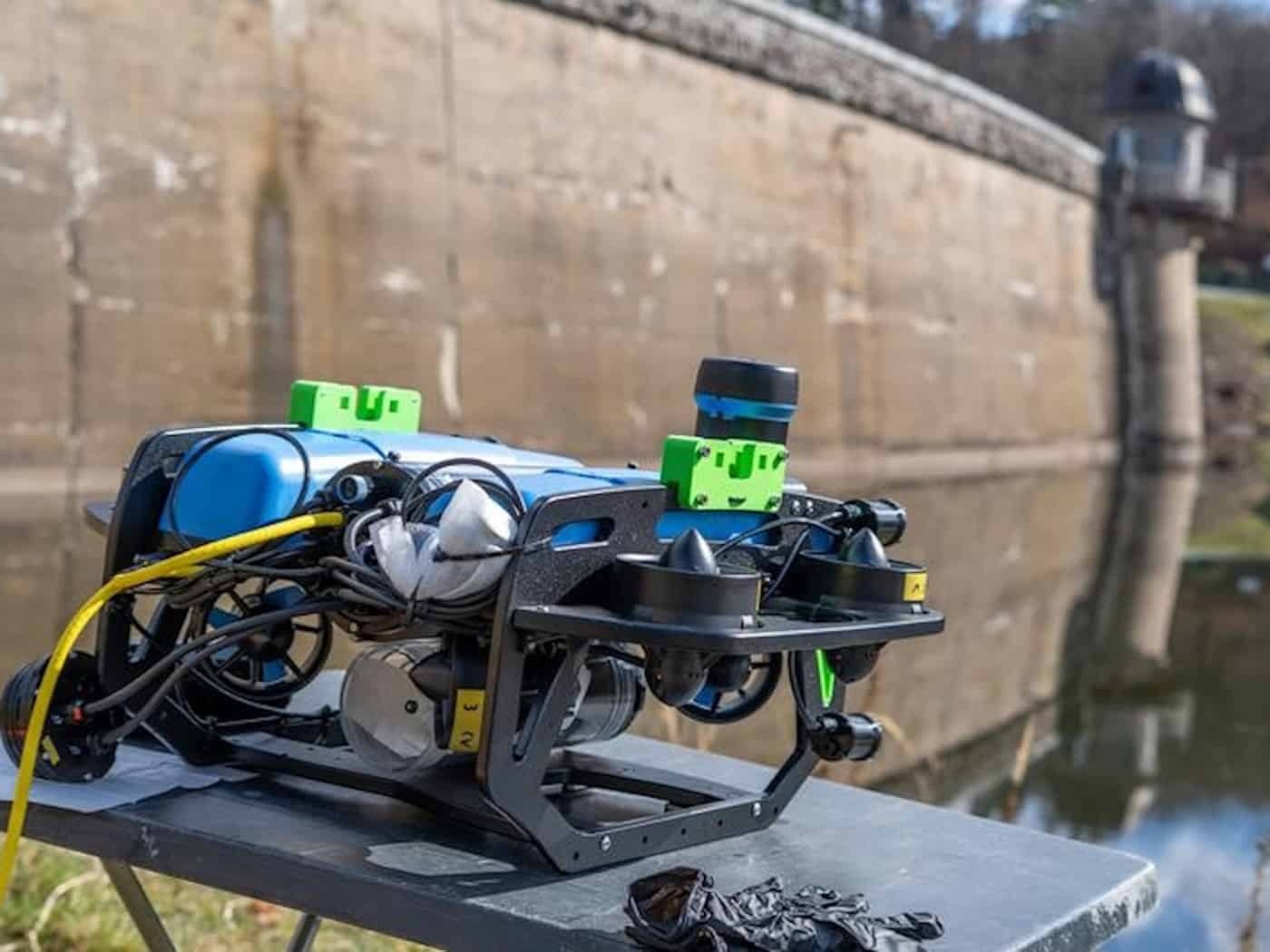
Dams retain drinking water, protect against flooding and can contribute to energy supply. But how safe are their walls — especially underwater, where access is difficult? Researchers at the Technische Universität Bergakademie Freiberg have developed a diving robot to find out.
The Malter dam near Dippoldiswalde is a good example. Its structure dates back to the imperial era. It was built after the Weißeritz river flooded in 1897, killing 19 people and destroying houses, bridges and railway lines. Many dams in Germany are more than 100 years old. At the same time, climate change is increasing the pressure on such infrastructure — for example through heavier rainfall, longer periods of drought and greater fluctuations in water levels. This makes regular and precise inspections more important than ever.
However, the underwater side of a dam is difficult to access. Until now, such inspections have been time-consuming, costly and often risky for diving teams. This is where the Freiberg project “SUBmarIne” comes in.
Robot provides data, software evaluates
Gero Licht from the Institute of Computer Science at TU Bergakademie carefully lowers the flat robot into the water. A yellow cable transmits the camera images directly to his laptop. “We later extract images from the video and use them to create a 3D model of the dam wall,” says the computer scientist. The resulting digital model makes it possible to precisely locate damage. It can also automatically identify and mark suspicious areas. Such digital models allow structures to be monitored systematically and compared over time — something that has been difficult to achieve until now.
“In the context of climate change, it is becoming increasingly important to ensure a reliable water supply throughout the year,” explains project leader Dr. Thomas Grab from the Scientific Diving Center at TU Bergakademie Freiberg. Safely operating dams is therefore becoming a key challenge.
More safety with less effort
During the first test runs, human divers still accompany the robot. Research associate Richard Gruhn operates a second camera in parallel. In the future, the robot is intended to operate independently, first scanning the entire dam wall. The team can then decide which areas require closer inspection.
“This allows the diving team to focus specifically on critical areas in follow-up missions. This saves time, reduces costs and increases safety,” Grab summarizes. Technologies like this could fundamentally change how critical infrastructure is inspected. Instead of isolated spot checks, regular and comprehensive monitoring would become possible — allowing damage to be detected earlier, before it turns into a safety risk.

