


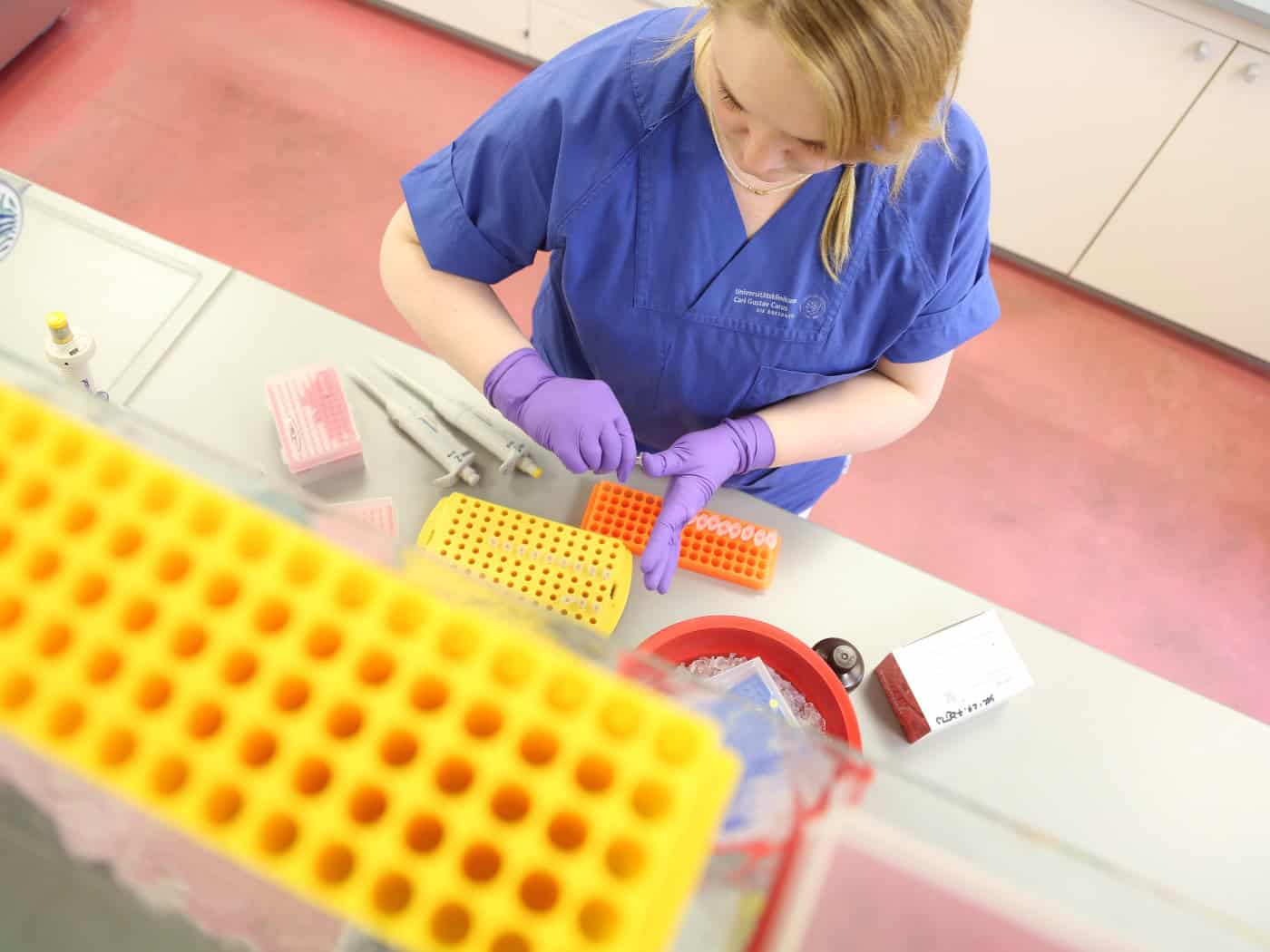
Rare diseases, long COVID or other chronic complaints in children still pose many mysteries for researchers. In order to better understand them, science needs one thing above all: biological samples and medical data. The BioBank Dresden at the Carl Gustav Carus University Hospital is therefore expanding its commitment to children and young people.
The facility in Dresden's Johannstadt district has been storing biological samples since 2008. Blood, tissue and urine are stored there at temperatures below minus 180 degrees Celsius. This preserves them for research for many years. In the future, there will be space for five million samples. Currently, 220,000 are stored. Since 2022, samples from children and adolescents have also been added.
Children are not small adults. Many diseases affect them differently, some medications work differently and some diseases only occur in childhood. Research therefore requires its own data and samples. At the same time, working with children's samples is more complicated than with adults. The quantities are often tiny and the preparation is time-consuming.
"By also accepting biosamples from children and adolescents, we are creating opportunities for our researching doctors and other scientists to explore new diagnostic and therapeutic avenues for this patient group," says Dr. Heidi Altmann, spokesperson for BioBank Dresden.
Research without consent is not possible
Nothing works without consent. Parents must agree to a sample donation. But the children themselves are also informed and asked. A new animated film developed by the German Biobank Network together with the DZKJ site in Dresden helps with this. Dresden University Hospital is one of seven sites of the newly founded German Center for Child and Adolescent Health (DZKJ).
The film explains in a child-friendly way what happens to the samples and how personal data is protected. "The film helps children and families to make an informed and voluntary decision," says Prof. Reinhard Berner, Director of the Department of Pediatrics and Adolescent Medicine at Dresden University Hospital.
Long COVID in focus: samples even from home
An initial major research project shows what the samples are used for. The network is called PEDNET-LC and is funded by the Federal Ministry of Health. It is dedicated to diseases that occur after infections, such as long COVID or chronic fatigue syndrome. These are conditions in which those affected remain exhausted and ill for months after an illness.
"The aim of PEDNET-LC is to establish and enable new care structures and research results for post-infectious diseases such as Long COVID in children and adolescents," says PD Dr. Nicole Töpfner, co-head of the network. Blood, urine, hair samples and nasal and throat swabs are collected at 20 centers across Germany.
There is one special feature. If you are too ill to go to a clinic, you can take part at home with special self-collection kits. Biobanks are now considered one of the most important foundations of modern medicine. The more samples and data are available, the better the causes of diseases can be researched and new therapies developed.
The samples are intended to help find new biomarkers. These are measurable indicators in the body that can point to a disease or certain disease processes. In the long term, the researchers hope to be able to develop more targeted therapies on this basis.

