


Revealing 773,000-year-old bones: Here lies the key to our origins
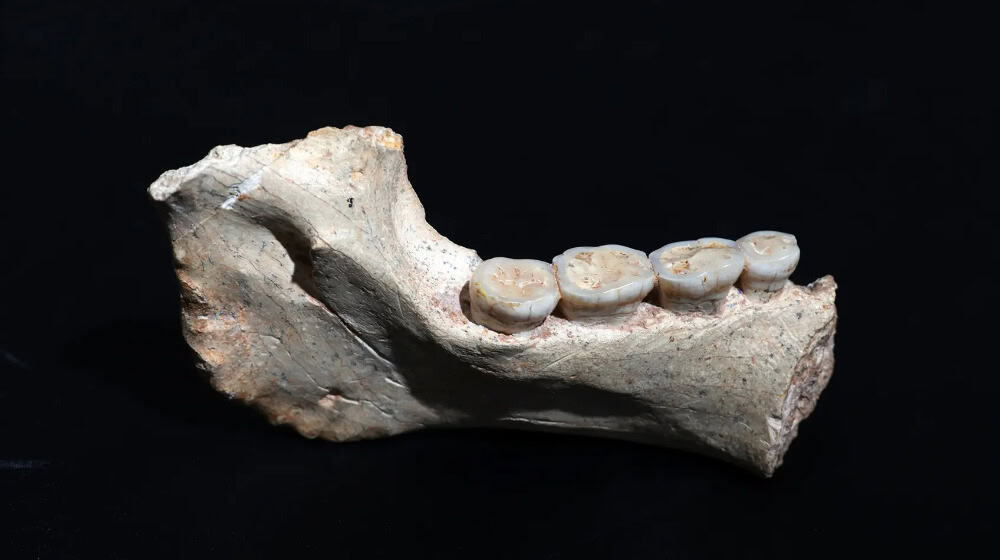
Our great-grandparents in the 30,000th generation - researchers have now come across their bones. In a quarry in Morocco, scientists have found lower jaws and other remains that are 773,000 years old. These people lived at a time when our ancestors and the Neanderthals had only just parted ways.
The Max Planck Institute for Evolutionary Anthropology in Leipzig was also involved in the investigation of the finds. Jean-Jacques Hublin, one of the leaders of the international research team, explains the significance: "The fossils from the Grotte à Hominidés are probably currently the best evidence of African populations that are close to the root of this common ancestry." In other words, these people are our direct ancestors - and at the same time relatives of the Neanderthals.
Perfect timing for precise dating
The researchers were exceptionally lucky in their work. The bones were found in a cave that was once inhabited by predators. There, they were quickly covered by sediment and remained undisturbed. The special thing: At this exact time, the Earth's magnetic field reversed - an event that happened every 773,000 years. This magnetic polarity reversal left a kind of time stamp in the sediments, which the scientists were able to read.
Matthew Skinner from the Max Planck Institute in Leipzig examined the teeth using modern computer tomography. He looked under the enamel to see the inner structure. "Analysis of this structure consistently shows that hominins differ from both Homo erectus and Homo antecessor," he explains. Hominins - that's what researchers call all human-like creatures. The individuals found show a mixture of old and new features. Some are reminiscent of very early human forms, others already point in the direction of modern humans.
Africa confirmed as the cradle of humanity
The finds come from the coastal region near Casablanca. Moroccan and French scientists worked together there for over three decades and dug systematically. They found an almost complete lower jaw of an adult, half a lower jaw, the jaw of a child, several vertebrae and individual teeth. One thigh bone bears clear bite marks. An indication that predators had eaten these people.
The fossils are around 500,000 years older than the oldest known remains of Homo sapiens, i.e. modern humans. These were also found in Morocco and are around 300,000 years old. According to genetic analyses, the new finds correspond exactly to the period in which the last common ancestor of humans, Neanderthals and Denisovans is believed to have lived. At that time, the Sahara was not an impenetrable desert. Climate fluctuations repeatedly opened up green corridors through which animals and humans could move.
The discovery shows once again that Africa was indeed the cradle of humanity. From there, various human forms spread across the world. Today, the Moroccan finds provide a rare glimpse of the moment when this development was just beginning.

