


Human DNA discovered on cave walls for the first time
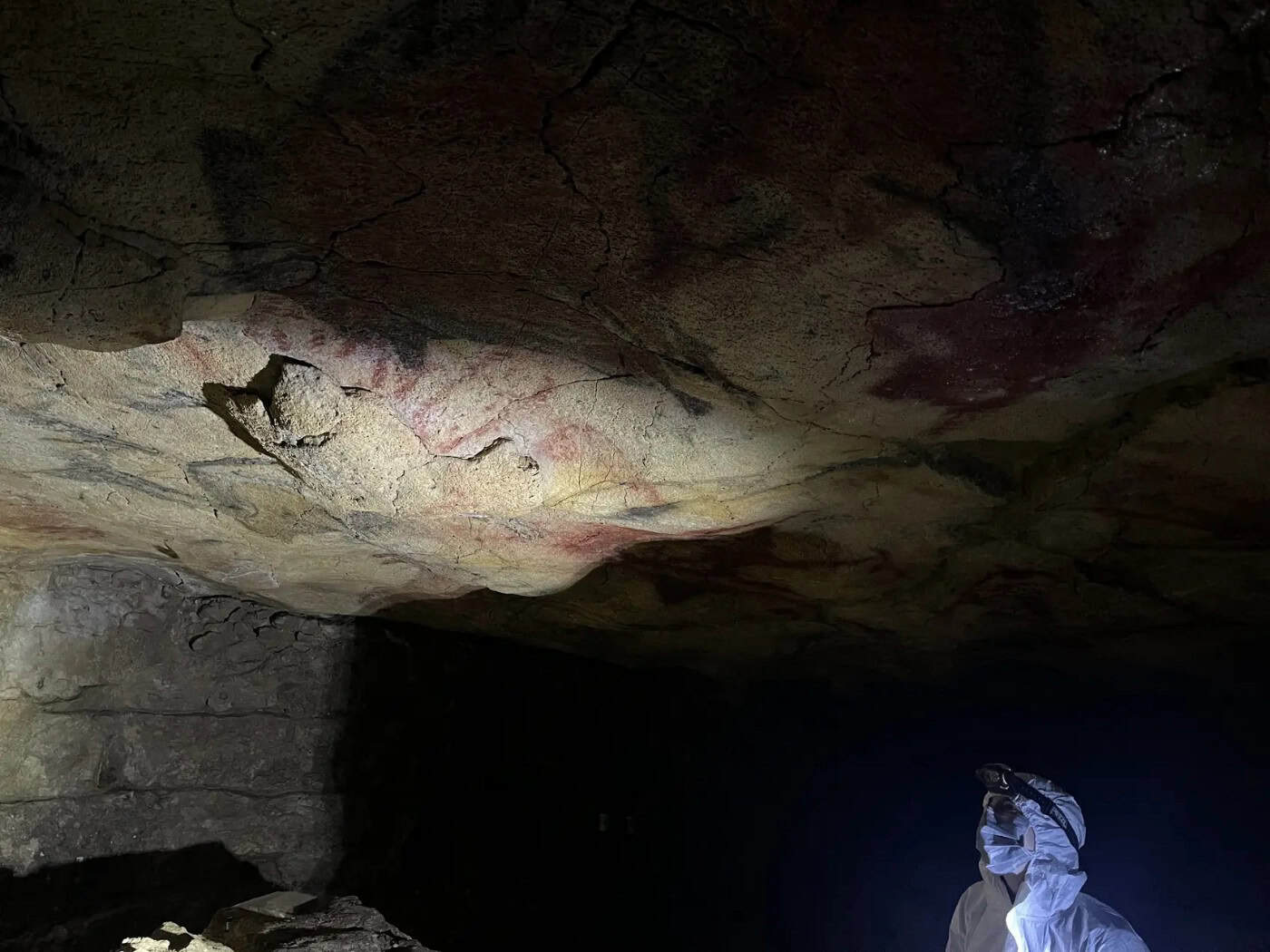
The researchers had actually intended to study cave art. Instead, they made a discovery that could open up new possibilities for archaeologists. For the first time, they succeeded in extracting ancient human DNA directly from cave walls – not from bones, not from the ground, but from the rock itself.
The study was conducted as part of the international “First Art” project, which examines cave paintings, handprints, and other traces of early art in caves in Spain and Portugal. Originally, the researchers intended to date this art and analyze it chemically. In collaboration with researchers from the Max Planck Institute for Evolutionary Anthropology in Leipzig, the team expanded its investigations to include DNA analysis – with surprising results.
A Hidden Legacy in Stone
The researchers examined 120 samples from eleven caves in Spain and Portugal. Of these 120 samples, five contained authentic ancient human DNA. This is precisely why the findings are considered particularly remarkable. Samples from the Escoural Cave in Portugal and the Covarón Cave in northern Spain were particularly revealing. In two samples, the researchers found only human DNA and no animal DNA whatsoever. This is strong evidence that humans directly touched the cave walls. With their hands, saliva, or sweat.
“Even though we cannot directly link the traces of ancient human DNA we found to the creation of cave art, this is the first evidence that human DNA can be preserved on cave walls for millennia,” says Alba Bossoms Mesa, first author of the study and a doctoral candidate at the Max Planck Institute in Leipzig. “It’s fascinating that we may have discovered a new way to investigate the presence of prehistoric humans.”
The DNA detected is at least 2,000 years old, but is likely much older. The genetic traces in three samples predominantly point to female individuals, while one sample points to a male. Another sample could not be clearly assigned. Analysis of nuclear DNA – that is, the complete genetic material in the cell nucleus – also showed that the individuals from Covarón resemble Western European hunters and gatherers already known from other sites on the Iberian Peninsula.
A New Chapter in Prehistory
What Does This Mean for Science? "This study fundamentally changes our understanding of where ancient DNA can be found," says Matthias Meyer, a paleogeneticist at the Max Planck Institute in Leipzig and senior author of the study. “We were surprised to see that ancient DNA can be extracted not only from pigmented samples but also from cave walls that show no visible signs of past human activity.”
The key advantage of this method is that archaeological sites do not need to be excavated or damaged. Even in places where no bones or other human remains have been preserved, genetic traces may still be found. This means that researchers could still draw conclusions about past inhabitants in the future – about their gender, origin, or migratory patterns.
“This is just the beginning,” adds Meyer. “We now know that cave walls are genetic archives that can be used to prove the presence of humans in the past.”
How much DNA actually survives depends heavily on the conditions. Temperature, humidity, and protective mineral layers play an important role. "The preservation of human DNA on cave walls varies greatly. But when it is preserved, it tells a compelling story," explains Alba Bossoms Mesa.
Original publication:
Bossoms Mesa, A., Essel, E., Jáuregui, L. et al. Investigating ancient human DNA preservation on cave walls and in rock art. Nat Commun 17, 5561 (2026).

