


Dresden's chip boom is now breaking all records
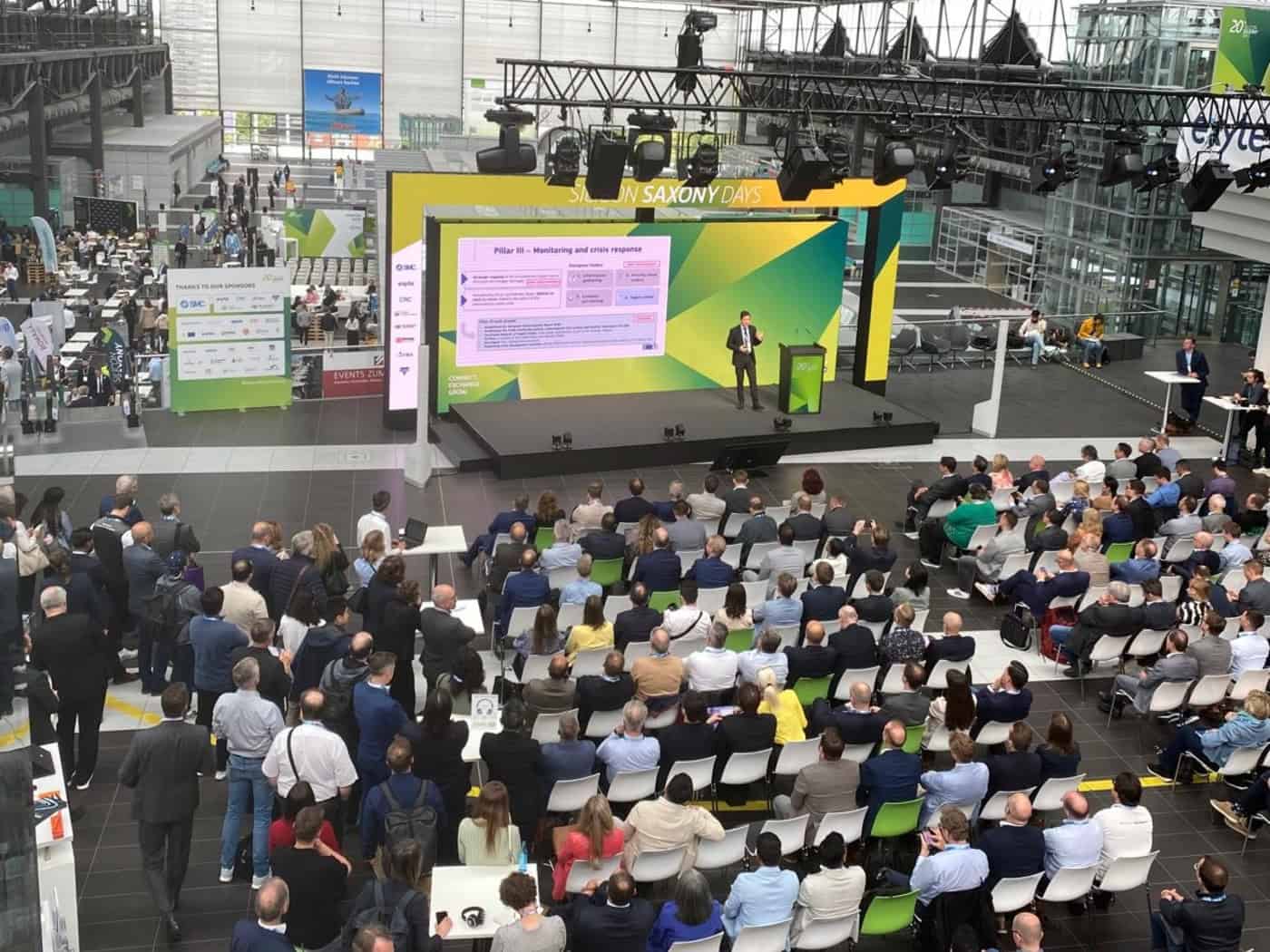
Dresden. While Intel’s billion-dollar project was quietly shelved in Magdeburg, Silicon Saxony is buzzing like never before: 82,500 people now work in Saxony’s microelectronics and software industry - 1,500 more than just a year ago. And now, of all times, on the cluster’s 25th anniversary, more than 2,000 representatives from 14 international delegations are traveling to Dresden to spend three days discussing chips, AI, and the future of Europe.
The contrast with the rest of the German economy could hardly be sharper: While many industries continue to suffer from a weak economy, Saxony’s high-tech sector grew by nearly two percent - evenly distributed between the semiconductor and software industries.
Not just chip factories: SMEs are driving growth
The gain of 1,500 jobs does not come solely from the large factory floors. Increasingly, it is small and medium-sized suppliers and service providers that are expanding the Silicon Saxony ecosystem: providers of cleanroom infrastructure, specialty gases, measurement technology, robotics, and industrial AI solutions. Last year alone, international companies such as Air Liquide, Exyte, Mitutoyo Europe, SMC Corporation, and EBARA Precision Machinery Europe expanded their presence in Saxony or announced new activities.
The growth momentum is thus no longer limited to chip manufacturing itself, but extends to the entire industrial ecosystem - and, according to the cluster’s assessment, makes the region more resilient to global fluctuations.
Silicon Saxony Days: 25 Years of the Cluster, a New Format
The anniversary falls in a special year: Silicon Saxony was founded on December 19, 2000, and is celebrating its 25th anniversary with a conference format that is larger and more international than ever before. Taiwan is this year’s Special Partner of the event. At the same time, Saxony and Finland are signing a Memorandum of Understanding, and the German-Taiwanese Business Network is officially launching. The European semiconductor community is also gathering in Dresden: As part of IPCEI Connect, representatives of numerous major European projects along the semiconductor value chain will come together.
There will also be firsts for the startup scene: Around 75 startups will present themselves, including as part of a Robotics Challenge hosted by Infineon. The Silicon Saxony Startup Awards will also be presented for the first time this year.
TSMC is hiring, Infineon is building: Dresden’s largest construction sites are picking up speed
Behind the conference halls, the largest industrial construction projects in Dresden’s history are underway. The ESMC - a joint venture between TSMC, Bosch, Infineon, and NXP - celebrated its topping-out ceremony in Dresden-Klotzsche in January 2026. Production is scheduled to begin in late 2027; plant manager Christian Koitzsch confirmed to Handelsblatt in mid-June that staff recruitment is now being ramped up “massively.” Currently, around 100 employees are working at the site, 40 of whom are from Taiwan. The ten-billion-euro project thus stands in stark contrast to the failed Intel plant in Magdeburg, which put an end to the dream of a second German chip metropolis for the time being.
Infineon is also on schedule with the construction of another plant right next to its existing production lines - production is set to begin in fall 2026. Up to 1,000 additional workers are being sought there. Industry history shows that such large-scale projects can also fail: The former Infineon division Qimonda collapsed spectacularly, and Globalfoundries placed its workforce on short-time work multiple times.
The blind spot in the success story: Where will the skilled workers come from?
The press release from Silicon Saxony makes no mention of a structural problem that has been on the minds of industry experts for years: the shortage of skilled workers. The demand for specialists in cleanroom production, plant engineering, and semiconductor design is growing faster than the supply of training opportunities. Dresden is responding: The city is currently building Germany’s largest and most modern vocational school to train more than 2,000 electrical and electronics specialists.
For TSMC and ESMC, this means that a significant portion of the workforce must initially be recruited from abroad - primarily from Taiwan. This presents the city with challenges far beyond the factory floors: Dresden is collaborating with ESMC to create housing, school placements, and public transportation connections for the internationally diverse workforce. Silicon Saxony’s growth trajectory is real - but it hinges on whether the region can find the people needed to run the new factories quickly enough.
Sustainability as a new focus: Two Gates for Green Chip Manufacturing
In addition to semiconductors, AI, and digitalization, sustainability is taking center stage this year. New to the program: the Sustainability Gate, which brings together issues related to resource efficiency, the circular economy, and sustainable electronics design. The complementary Zero Emissions Fab Gate specifically addresses the challenges of modern chip factories - from exhaust gas and wastewater treatment to water reuse and resilient infrastructure concepts for the next generation of factories. In doing so, the industry is sending a clear message: technological and environmental ambitions must be considered together in the future.

