


Is the moose coming back to Germany?
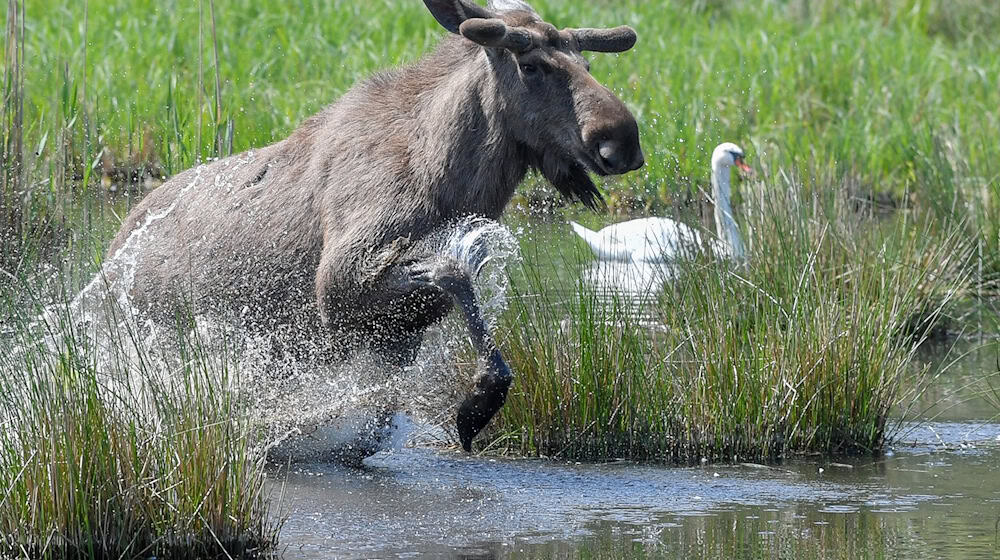
Moose are seen time and again in eastern Germany. Since spring, for example, Elwira the moose has been roaming the forests of Saxony. After a trip to Saxony-Anhalt, she was last spotted in the Düben Heath on the Saxon side. Another moose was seen in Leipzig's Neuseenland in October. The animals are regularly on the move in Brandenburg and Western Pomerania and a cow moose also made it as far as Thuringia around two years ago. Have the animals come to stay? Not really, says moose expert Michael Striese. The biologist practically runs his own moose monitoring program on a voluntary basis from his base in Upper Lusatia. "The fact is that they are more or less migratory animals in most cases," he says. This applies to all moose sightings so far, except for one animal: Bert, who has been living in the Nuthe-Nieplitz Nature Park southwest of Berlin since 2018. As there is no systematic monitoring of moose apart from in Brandenburg, it cannot be ruled out that other animals have been around for longer, says Striese. According to animal welfare organization WWF, it is unknown how many moose actually live in Germany. Most of the moose come from Poland, where the population in the east of the country now numbers around 30,000 animals or more. However, moose also sometimes migrate from the Czech Republic, according to biologist Striese. The border region between Austria, the Czech Republic and Germany is home to the most south-westerly occurrence of moose in continental Europe, according to estimates by the Bavarian Forest National Park Authority. Around 20 animals live mainly on the Czech side in the Šumava National Park. This is also where Emil the moose comes from, who wandered through Lower and Upper Austria for more than a month in the summer and was finally stopped by a tranquillizer shot. Moose are solitary animals and usually look for a place where they like it - "and they may stay there their whole lives", says Striese. Because the animals can easily cover a daily distance of 30 kilometers, they can sometimes be seen much further away from the German border, for example in Saxony-Anhalt and Thuringia. Apart from the Brandenburg moose Bert, the animals in eastern Germany generally seem to turn around and go back at some point. According to the WWF, moose were once widespread throughout Germany - in Thuringia and north-east of the Elbe, they existed until the late Middle Ages, and in Saxony probably until 1746. Where there is a lot of forest and possibly also water, the animals can still make a good living today, says moose expert Striese. In this respect, there are actually areas in all eastern German states that would be suitable for moose. The closer you get to the eastern border of Germany, the more likely a settlement is. Similar to Bert, Striese believes that a further permanent migration of the animals across the Oder and Neisse rivers is the most likely scenario. The number of sightings in Saxony, where Striese collects data, and in Brandenburg, which has its own moose monitoring system, fluctuates from year to year. A clear growth trend is not discernible. Because there are now wolf monitoring stations in all eastern German states, moose that have been spotted - for example via wildlife cameras - are also repeatedly documented, says Striese. Much depends on how Central Europe's largest moose population continues to develop in Poland. According to the "Rewildering Oder Delta" association, which supports nature conservation projects in the east of Mecklenburg-Vorpommern, the animals are systematically spreading further west. "If this development continues, the moose will most likely migrate further west and colonize new territories in Germany," says the association's website. Adult moose weigh up to 500 kilograms. In summer, the animals eat around 40 kilograms of leaves and branches and mainly feed on forest trees, says moose expert Striese. This can become a problem for young trees, especially in winter. "If there's a moose like that in a one-hectare pine plantation, it will be nothing but firewood next spring." Traffic accidents involving moose are more problematic than those involving other animals. Moose are significantly taller and heavier than other wild animals, and accidents involving moose are correspondingly more dangerous. It is advisable to avoid moose and avoid collisions. The term "moose test" for an evasive maneuver is no coincidence. In moose areas at night and at dusk, it is therefore advisable to simply drive more slowly, says Striese. "Well, if you see a moose, you should be happy about it because it's a bit like winning the lottery. It just doesn't happen that often," explains biologist Striese. However, the animals are not completely harmless. They can feel threatened by dogs, for example. But sometimes they are simply curious. "And that's why you should keep a distance of 30 to 40 meters." When they need to defend themselves, the animals kick out with their front hooves, explains the elk expert. "Even a one-year-old moose weighs over 150 or 200 kilos. If they push us the way they do each other, we're ready for the hospital." If you have seen a moose, you can contact moose researcher Michael Striese directly by email: m.striese@lutra-striese.de Copyright 2025, dpa (www.dpa.de). All rights reservedAre there any permanent moose in Germany?
Where do the animals come from?
Where do the moose that are seen again and again migrate to?
Which areas are particularly suitable for moose?
Will the animals eventually live permanently in Germany?
Does the moose also bring problems?
How should I behave if I see a moose?

