


Researchers: New species of mosquitoes will establish themselves in Saxony
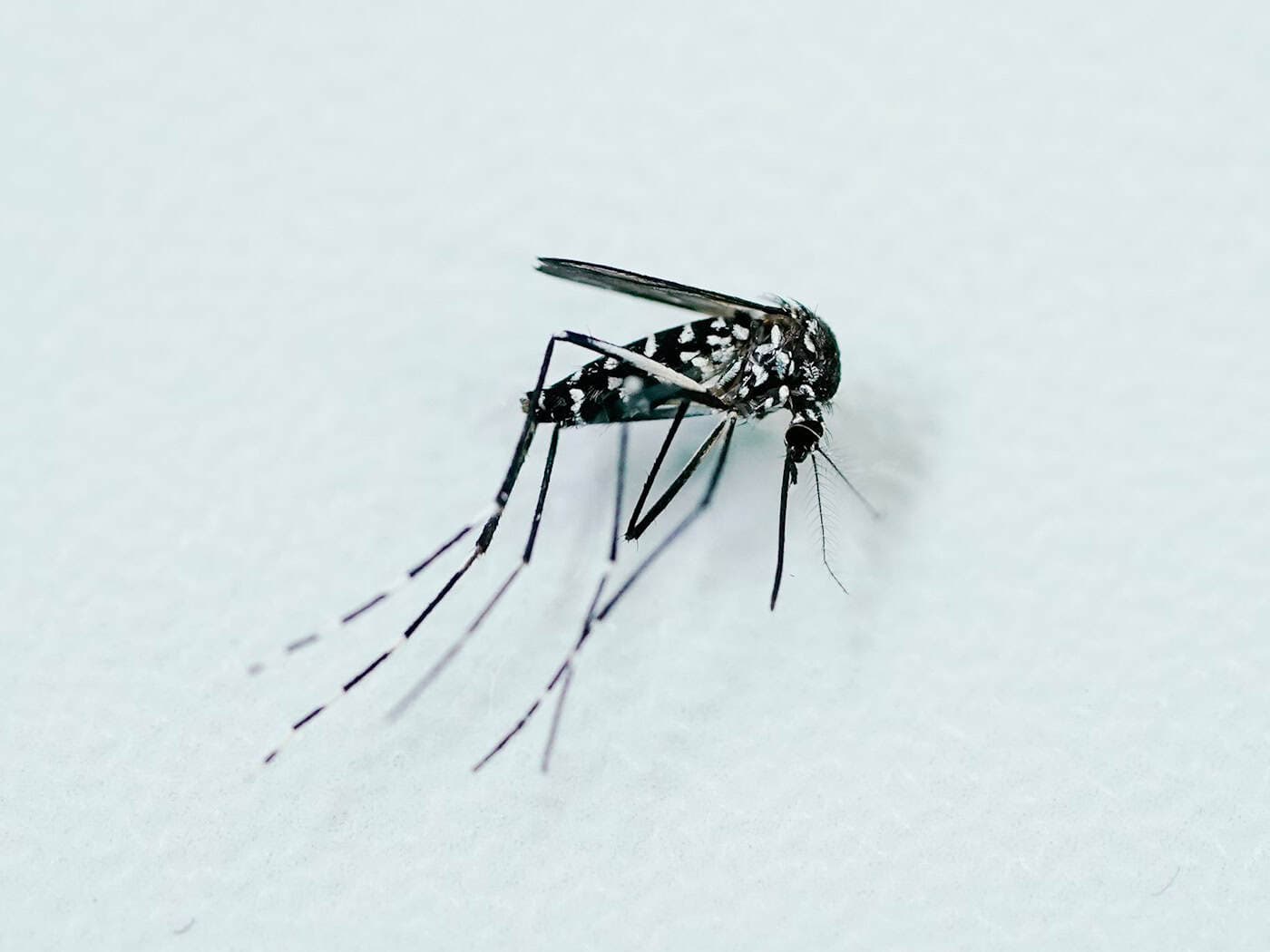
New mosquito species, such as the Asian tiger mosquito (Aedes albopictus)—known as a vector of tropical diseases—and the Asian bush mosquito (Aedes japonicus), will continue to establish themselves in Saxony. “The models, including those for the tiger mosquito, indicate that it will become firmly established here,” entomologist Matthias Nuß told the German Press Agency. The head of the Department of Zoology at the Dresden Natural History Collections is certain that it is only a matter of time before additional sightings occur within Dresden as well as in other towns. Increasingly milder winter temperatures are further contributing to this trend. In 2025, entomologist Nuß and his team conducted a comprehensive survey of mosquito populations in the greater Dresden area, identifying 25 of the 53 mosquito species known to exist in Germany. The researchers are currently compiling the results to publish them in a scientific journal later this year. According to their findings, the Asian bush mosquito in particular is already widespread, as the team was able to confirm based on submitted samples. The data, which is available online on the participatory portal “Insekten-Sachsen,” shows that, in addition to the greater Dresden area, the bush mosquito has been detected as far as Meissen, as well as in Döbeln, Chemnitz, the Ore Mountains, and the Vogtland region. The bush mosquito looks almost identical to the tiger mosquito but is less dangerous. In principle, the bush mosquito is also capable of transmitting tropical diseases such as dengue fever. “But it does not transmit diseases as reliably as the tiger mosquito,” says Nuß. The two introduced mosquito species are significantly smaller than the common house mosquito (Culex pipiens), which is widespread in Germany. They are most easily recognizable by their distinctive black-and-white pattern. So far, the new mosquito species have been found primarily in urban areas. There have been no reports of them “out in nature” so far. In densely populated areas, the insects find ideal conditions, Nuß explained. Through an information campaign—such as a flyer published in April—the Saxon Ministry of Health and the State Research Institute for Health and Veterinary Affairs (LUA) aim to raise public awareness about the new mosquito species and the associated risks. This is because, “Only if potential breeding sites for the Asian tiger mosquito are removed—even on private property—can it be successfully contained,” said a spokeswoman. The tiger mosquito uses even the smallest pools of water as breeding grounds—such as flowerpot saucers, children’s toys, and rain barrels. Unlike in Southern Europe—such as France—no local transmission of pathogens like the dengue or chikungunya virus by the tiger mosquito has been reported in Germany so far, according to the ministry. However, experts believe this is only a matter of time. The tiger mosquito can only transmit pathogens if it has first become infected itself by feeding on an infected host. The ministry and the LUA are not yet aware of any new locations outside the known range of the tiger mosquito in Dresden’s Neustadt district. As in the previous year, the agency is monitoring the affected area with mosquito traps this summer as well. According to LUA data, 17 Asian tiger mosquitoes were caught in the traps in 2025. “In addition, residents have turned in some tiger mosquitoes they caught outdoors and reported being bothered by them.” Entomologist Nuß points out that the data is limited. Since comprehensive monitoring is not taking place, it is unclear exactly where the tiger mosquito is already established. It is therefore important, according to the ministry, that citizens help contain the insect’s spread and that sightings of the mosquito be reported. This can be done by emailing photos to the State Research Institute. Whole specimens can also be sent in. To identify the insect conclusively, it must not be damaged, according to Nuß. The best approach is to catch the mosquito in a glass jar and place it in the freezer overnight. The mosquito killed in this way can then be sent—for example, in a matchbox—to state authorities or to the so-called Mosquito Atlas. As part of this project, mosquito expert Doreen Werner from the Leibniz Center for Agricultural Landscape Research (ZALF) in Müncheberg, Brandenburg, has been studying mosquitoes from all over Germany since 2012. According to mosquito expert Nuß, the tiger mosquito’s flight season began in late June. Last year, specimens were still being detected as late as the end of September. Unlike the common house mosquito—the most common species in Germany, whose females overwinter indoors in warm basements—the tiger mosquito doesn’t get going until summer, when the first specimens hatch from their eggs. At least so far, the weather has not provided ideal conditions for mosquito season, Nuß said. While high temperatures are beneficial for the insects, “if it’s extremely dry and bodies of water dry up, then they can no longer develop.” However, the insects could also recover from this quickly. Copyright 2026, dpa (www.dpa.de). All rights reservedWhat species of mosquitoes are found in Saxony?
Where do the mosquitoes find the best conditions?
What is known about the spread of the tiger mosquito?
How long does mosquito season last?

