


60 mayors can't be wrong, Thomas Weidinger in an interview
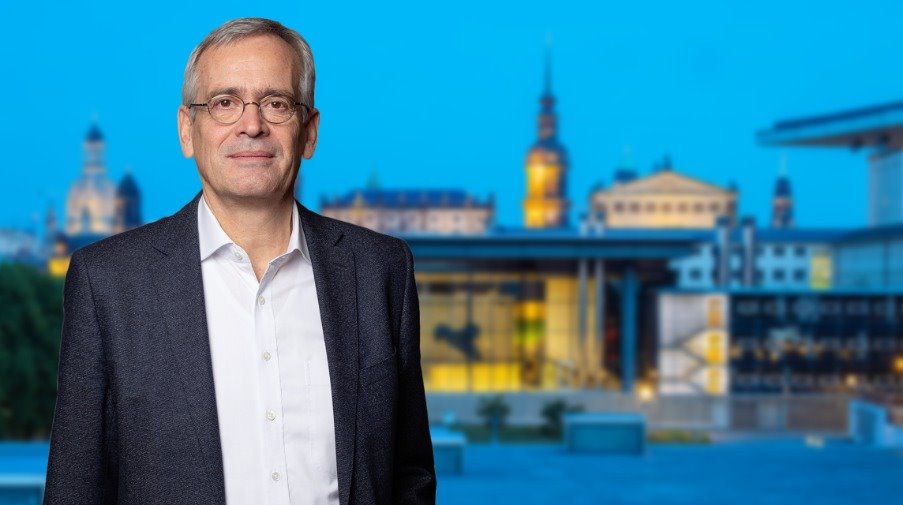
Politics from the center for the people: This is the guiding principle of the FREIEN WÄHLER in Saxony. In an exclusive interview with Thomas Weidinger, the party's chairman, we shed light on the party's policies in five thematic blocks, as well as the results of the tour through Saxony, during which Weidinger has spoken to around 60 mayors over the past two years. He gives us insights into the challenges at municipal level and the goals of the FREIEN WÄHLER in Saxony.
Let's go...
Topic block 1: Party affiliation and political orientation
Mr. Weidinger, with which parties do you see the greatest overlaps in your political agenda and which aspects of your politics most clearly distinguish you from other parties?
Weidinger: The state association of FREIEN WÄHLER in Saxony is not a party in the traditional sense. Our basis are the many FREIEN WÄHLER associations and elected representatives who ensure that things "run smoothly" in the towns and municipalities in Saxony at municipal level, in local councils, district councils and as mayors. In order to give these people a voice at state level, the state association of the FREIEN WÄHLER was founded, which also only competes as a party at state and federal level. At local level, the FREIEN WÄHLER are represented exclusively by associations and voters' associations.
Politics at local level are geared exclusively towards the interests and well-being of citizens, are sensible, fact-based and free of ideological considerations. We want to establish this "municipal" style of politics in the Saxon state parliament. No other party offers this attitude and that is what makes us fundamentally different from all other parties.
How do the Free Voters of Saxony position themselves in the political spectrum of Saxony and Germany, especially in comparison to the established parties?
Weidinger: The FREIEN WÄHLER are oriented exclusively towards the interests of the citizens of Saxony. Ideology has no place with us, we are concerned with content and solutions to the problems of the people of Saxony. Our focus is essentially on people who get up in the morning and go to work, who have worked all their lives while raising or having raised children, on entrepreneurs who take responsibility and create and maintain jobs. We are represented by women and men who have all completed vocational training, have worked in their professions for years and have experience and expertise that they bring to their political work. We are happy to leave our categorization into a political spectrum to others.
Theme block 2: Strength in municipalities vs. state level
The Free Voters are strongly represented in many municipalities and provide around 25 percent of mayors, but this strength does not seem to be equally visible at state level. Here they are at around 3 percent. Why do you think that is?
Weidinger: It's true, we provide around ¼ of the mayors in Saxony; around 3,000 members of the Free Voters associations and clubs sit on municipal and city councils and in district assemblies. At the last state election, we failed to get all these functionaries "under one roof". We have learned from this mistake. Over the past two years, we have spoken to around 60 mayors, town and municipal councillors, many associations and all the FREIE WÄHLER district councils. We have received a great deal of approval in these discussions. We will be standing in the state elections with at least 6 mayors and hope that this will also enable us to "close ranks" between the municipal level and the state association of the FREIE WÄHLER. The polls to date do not yet reflect this new strength, but this will change.
What strategies are you pursuing to increase the visibility and influence of the Free Voters at state level?
Weidinger: In addition to a clear and citizen-oriented platform, we want to go into the election campaign with credible, locally rooted and experienced direct candidates.
Topic block 3: Municipal tour and talks with mayors
In the last two years, you have toured Saxony and spoken to around 60 mayors. What were the most common concerns and needs that were brought to your attention in these conversations?
Weidinger: Almost all of the mayors pointed out the completely inadequate financial resources of the municipalities. The municipalities are not even in a position to adequately fulfill their municipal duties. There is a lack of money for roads, bridges, schools and kindergartens.
How have these discussions changed or broadened your perspective on the local challenges and needs in Saxony?
Weidinger: It was a little surprising that even the money for very basic municipal tasks was lacking. If there are insufficient funds for schools and kindergartens, for example, then we have a fundamental problem.
Can you give a specific example of where a concern from these discussions has had a direct influence on the policy-making of the Free Voters of Saxony?
Weidinger: With regard to municipal funding, we have taken up the many suggestions made to reduce and streamline the unwieldy and sometimes ineffective municipal funding programs and are calling for adequate funding for the municipalities. Incidentally, this will also reduce the considerable administrative burden and excessive bureaucracy caused by the practice of subsidies.
What role do you see for the Free Voters in the implementation of local projects and initiatives, based on the findings of your local government?
Weidinger: The fact that we want to enter the state parliament with a whole range of municipal decision-makers (not only mayors but also city and local councillors) ensures that there is not only municipal expertise but also a corresponding understanding of the problems of cities and municipalities in the state parliament.
Topic block 4: Comparison with the Free Voters in Bavaria and coalition possibilities in Saxony
Mr. Weidinger, do you see parallels or significant differences in the political orientation and strategy of the Free Voters in Saxony compared to the Free Voters in Bavaria, particularly with regard to Hubert Aiwanger's government responsibility?
Weidinger: The situation of the FREIEN WÄHLER in Saxony and Bavaria is structurally similar. The FREIEN WÄHLER in Bavaria also have their roots at municipal level. There are also no significant differences in terms of program.
If the Free Voters of Saxony were to overcome the five percent hurdle in the state elections on September 1, would a coalition with the CDU in Saxony be conceivable for you? Under what conditions could you imagine such a coalition?
Weidinger: The fact is that the CDU has "gathered dust". It seems to be a matter of course for them to provide the head of government. Mr. Kretschmer complains about conditions that he himself is partly responsible for, such as bureaucracy. Under CDU leadership, there has been a constant increase in staff in the State Chancellery in recent years. Why is that?
We need a breath of fresh air in the government. For this reason, the key issues for us FREIE WÄHLER, such as the aforementioned reorganization of municipal financing, the focus on family and education and, last but not least, the strengthening of rural areas and the relief of Saxony's small and medium-sized enterprises should play a central role in the government's work.
Topic block 5: Assessment of the new foundation of the BSW state association in Saxony
How do you assess the planned new foundation of the BSW state association in Saxony? What influence could this new political force have on the political landscape in Saxony?
Weidinger: Saxony has long had a middle-class voter potential of around 70%; I can't imagine that a BSW state association will play a significant role in the state elections.
Are there specific voter groups or political issues where you expect the BSW state association to have a particularly strong influence? Which parties could be most affected by this new formation?
Weidinger: Presumably the Left Party and the SPD in particular, and possibly also the AfD, will lose one or two voters to BSW.
Thank you very much, Mr. Weidinger, for the interview.
Interview conducted by Thomas Wolf

