


More than 200 fire salamanders reported in Saxon Switzerland
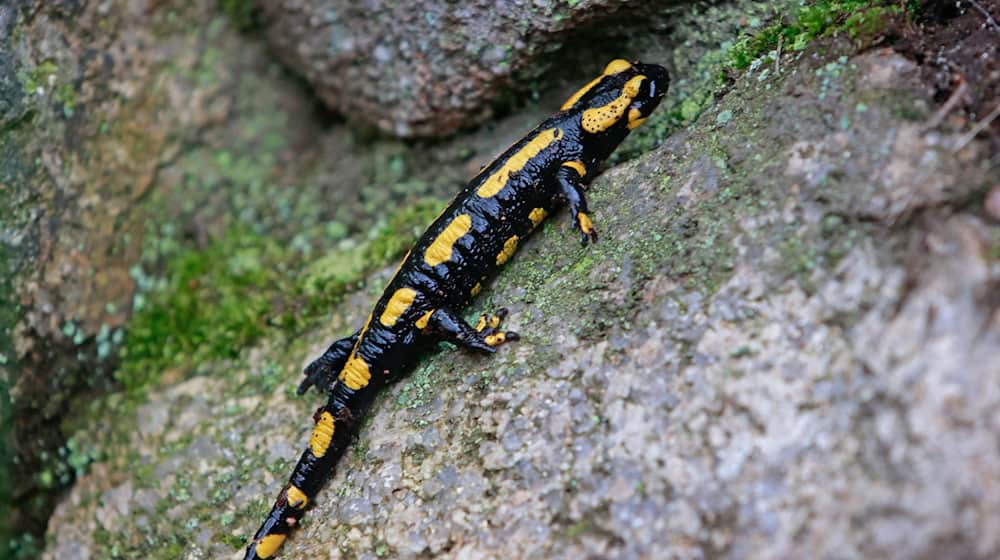
More than 200 photos of fire salamanders have been submitted to a citizen science project on the occurrence of the species in Saxon Switzerland. "I am very pleased about the great interest and the high level of participation in the project and thus also about the large number of animals observed," said Uwe Borrmeister, head of the Saxon Switzerland National Park and Forest Administration. It shows that nature in the region is still in good condition in many places. The project is intended to help the national park and forest administration to better understand the distribution and habitat requirements of the animals. The photos are being analyzed together with the Senckenberg Institute Dresden and the Dresden University of Applied Sciences. Visitors to the national park are also invited to send in photos again next year. The University of Leipzig is also involved in the species conservation project, which is setting up an early warning and monitoring system for the deadly skin fungus "Batrachochytrium salamandrivorans", also known as salamander plague. According to previous findings, the fungus does not occur in Saxony, but it has been spreading in the waters of Central Europe for a few years now. It has already killed 90 percent of the population in the Eifel National Park. The spores of the fungus can enter the waters through waste or when people and dogs enter streams. The Sachsenforst National Park and Forestry Administration has trained its own rangers and volunteers to take swabs from the skin of the fire salamanders without harming the animals. So far, the samples have yielded no evidence of salamander plague in Saxon Switzerland. Copyright 2025, dpa (www.dpa.de). All rights reservedFatal salamander plague under observation

