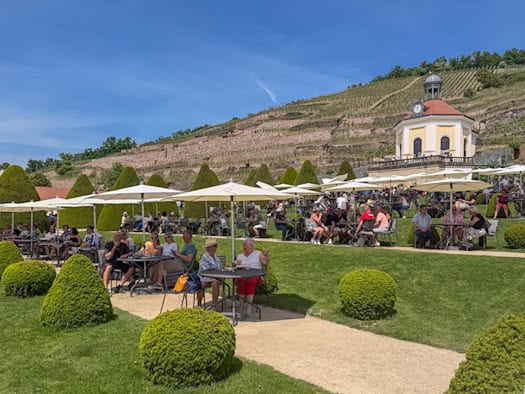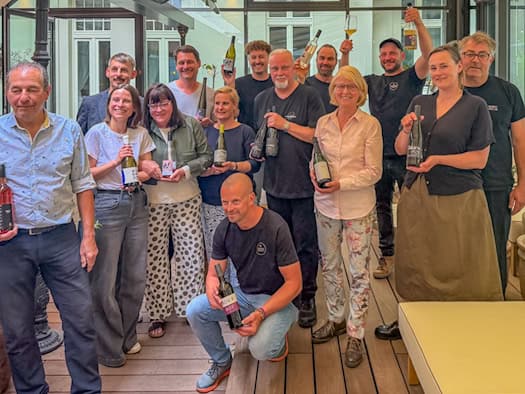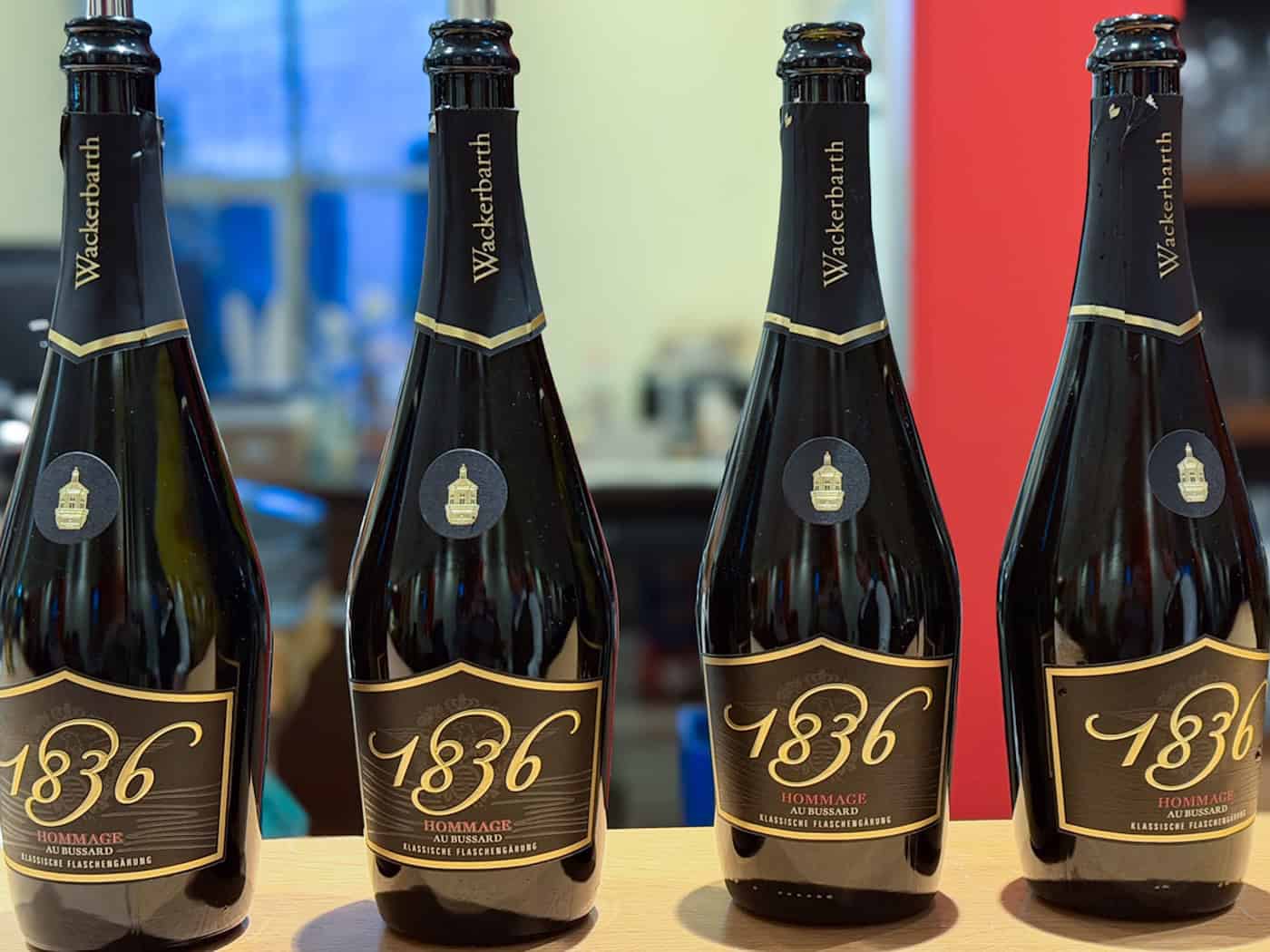
190 years is not exactly a round anniversary - but hey: who knows what will happen in ten years' time? You have to celebrate the festivals as they fall! So let's head to Count Wackerbarth and his successors, where they are committed to the 190-year-old Saxon sparkling wine tradition and are celebrating accordingly. On average, 250,000 bottles of sparkling wine are produced every year in the cellars at the foot of the Wackerbarth mountain - but the Wackerbarthers often sail under the radar in their home country with their good quality. So it's off to the estate's own restaurant for further training, where the wines and sparkling wines are of course always available, but where you can get a guided insight into the variety of bottle-fermented sparkling wines (that's what it's called!) during the cooking star hours under the motto Sekt & Sterne.
So the magic number is 1836. That was the time when people were still quite uninhibitedly imitating the model of the eight champagne. The pioneers were Kessler in Esslingen in Württemberg, Grempler in Grünberg in Silesia (now Zielona Góra) and then Bussard in Radebeul - all with the active support of cellar masters who had been poached from Champagne. But what the heck: it had to taste good - and it did! The three Saxon vineyard owners who founded the Actienverein zur Fabrikation moussierender Weine in 1836 (which later became the Bussard sparkling wine cellar, which joined Wackerbarth much later in the 1970s) also enlisted the help of cellar master Johann Joseph Mouzon from Reims. His skills continue to have an effect, even if today (EU law wants it that way) the term champagne is reserved only for sparkling wines from Champagne - as a Dresdener you know that, it's not much different with Stollen...