


Gesine Roll, Weingut Weedenborn: You have to feel the vineyard
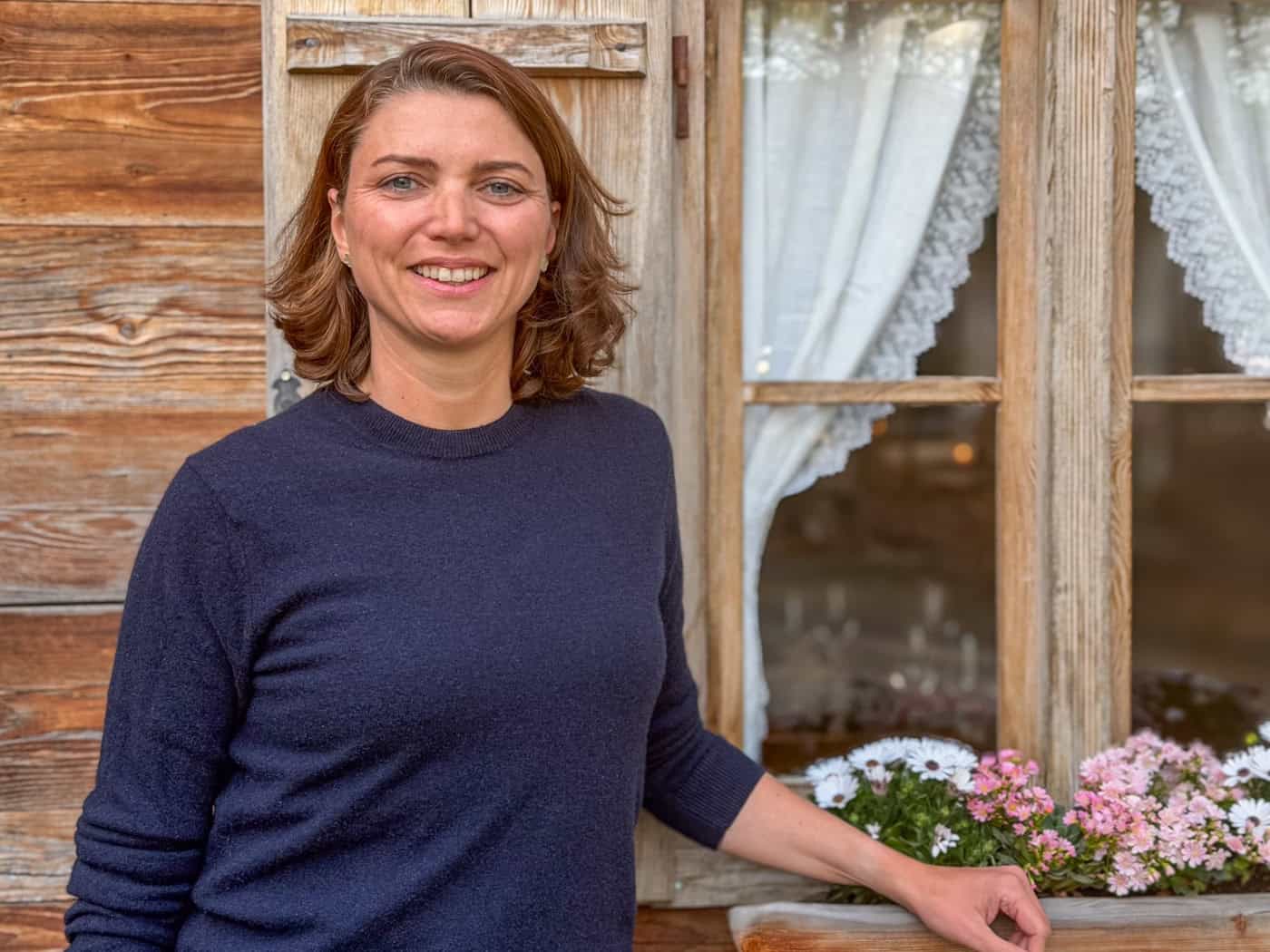


Some formats relating to wine and enjoyment simply don't age. "Winzer im Fokus", introduced more than ten years ago at the Weißer Hirsch in the former Michelin-starred restaurant bean & beluga by Stefan Hermann and his sommelier Jens Pietzonka, is back after a long break - forever young. Gesine Roll, who in 2013 was the Rheinhessen fourth leaf in the quartet with the winemakers "Anette Closheim (Riesling Discovery of the Year 2013) from the Nahe, Theresa Breuer (4 grapes Gault Millau 2013) from the Rheingau and Melanie Stumpf (2 stars Weinwelt 2012) from Franconia" (presented at the time as "best Sauvignon Blanc Rheinhessen, Falstaff Magazine 2012"), ensured a full house at the concert venue. Before the evening, we met up for a podcast...
Gesine Roll has been the driving force behind the Weedenborn winery in Monzernheim since 2008 and committed herself to Sauvignon Blanc early on - at a time when the grape variety was still considered a novelty in Germany. Sauvignon Blanc was only approved in Germany at the end of the 1990s, but father Roll recognized its potential early on: even before it was officially approved, he planted vines in trial cultivation, the oldest of which have already reached a considerable age, for example in the "Terra Rossa" plot.
Ideal location: altitude and limestone soil
The vineyards are located on limestone-rich soils at altitudes between 232 and 265 metres. This combination proves to be ideal: limestone provides tension and structure, while the altitude ensures an extended growing season. While in warmer regions, sugar ripeness often outstrips physiological ripeness, here it is possible to harmonize the two. The result is wines with moderate alcohol but pronounced aromatic ripeness - a balancing act that Roll sees as the true supreme discipline.
In terms of style, Gesine Roll clearly distinguishes herself from the often green and aromatic interpretations of the variety. Her Sauvignon Blanc is intended to be more yellow, riper in fruit, without tipping over into the lush or kitschy. The decisive factor here is the time of harvest, a narrow window that must be hit precisely. Roll describes it vividly: like a banana, neither unripe nor overripe. The condition of the grape at the moment of harvest defines the later wine - technology can only correct this to a limited extent.
And on the subject of "wine is made in the vineyard, we don't do anything in the cellar" - nobody really wants to drink that. Of course, a lot of attention to detail also goes into the cellar work, because which barrel (wood? steel) and many other questions have to be carefully considered. The estate wine, the foundation of the Weedenborn collection, is made from more than twenty individual lots. Different sites, microclimates and clones are harvested and matured separately before being brought together in a complex cuvée. The variety of containers - from 2,000 to 6,000 liters - allows a differentiated development of the wines. The more differentiated the material available, the more precisely the desired style can be composed.
Precise wines
This approach is also evident in the higher-quality wines. The local wine "Terra Rossa" is characterized by calcareous soils rich in iron oxide and displays a mineral style designed for longevity. Partly matured in large oak barrels and with an extended maturation period, it develops a calm, staggered power. The reserve wines from the Westhofener Morstein go one step further: longer use of wood, more time, more depth. They are designed as "long-distance runners", wines that only fully develop their quality over a period of years.
Gesine Roll makes the decisive cuvees alone. All batches are tasted, evaluated and brought together in several stages. Intuition and taste play a major role, but are supplemented by analytical data when it comes to fine-tuning. She sees intervention as necessary, but as minimal as possible - as much as necessary, as little as possible.
The farm itself has grown organically over the years, from 15 hectares (as stated in the 2013 article) to around 25 hectares today. Despite this expansion, the estate's approach is still based on craftsmanship. Eleven permanent employees support the winery, whose focus today is clearly on Sauvignon Blanc, which accounts for over 50 percent of the vineyard area. The changing climate plays into the hands of this development. Conditions that were previously considered too cool now allow for stable ripening. At the same time, the increasing weather dynamics - from heavy rain to periods of heat - require a high degree of adaptability. Roll counters this with precise vineyard work and a consistent focus on organic cultivation, which has been practiced on the estate for years.
In addition to Sauvignon Blanc, Chardonnay and, to a lesser extent, Riesling (from the Westhofener Kirchspiel vineyard) complete the portfolio. The fact that these wines find their way to the end consumer via the restaurant trade is part of the strategy. "Top gastronomy and trendy restaurants are great showcases for the winery," says Gesine - referring to the long-standing partnership with Stefan Hermann and Jens Pietzonka. She is convinced that the personal experience on site creates a more lasting bond than any anonymous marketing. And those who visit the winery also understand more quickly what characterizes the wines: limestone, altitude and the will to precision. If you can't make it to the tranquil Monzernheim on the hill, just come to the concert venue in Dresden, which is just as high up as the winery.
At the Winemaker in Focus evening (€99), Stefan Hermann and his team provided a finely tuned menu, which - no surprise! - mainly Sauvignon Blanc, from sparkling wine to Grande Réserve. But, and this is the beauty of such evenings, mainly means: not only. There were two wines for each course - one was a Chardonnay in direct comparison to the Sauvignon Blanc, the other was Chardonnay in different quality levels. "So she can do Chardonnay too!", as the guests at my table commented approvingly...
Menu and wine pairing
- 2021 Sauvignon Blanc brut nature sparkling wine
- Salade niçoise of char with fine beans and small artichokes
2025 Sauvignon Blanc
2025 Chardonnay - Ray wings in nut butter with capers and salted lemon
2024 Sauvignon Blanc Terra Rossa
2023 Sauvignon Blanc RÉSERVE - Fine guinea fowl with Leipziger Allerlei
2024 Grand Village
2022 Grande Réserve - Warm semolina dumplings with strawberry and rhubarb soupRhubarb soup
2024 Chardonnay Westhofen
2023 Chardonnay RÉSERVE
Winery Weedenborn
Am Römer 4-6
55234 Monzernheim
Tel. +49 6244 - 387
weedenborn.de
[Recorded on April 17, 2026]

