Logo Die Sachsen News
News / Leisure

Cycling by numbers

Cycle path sign
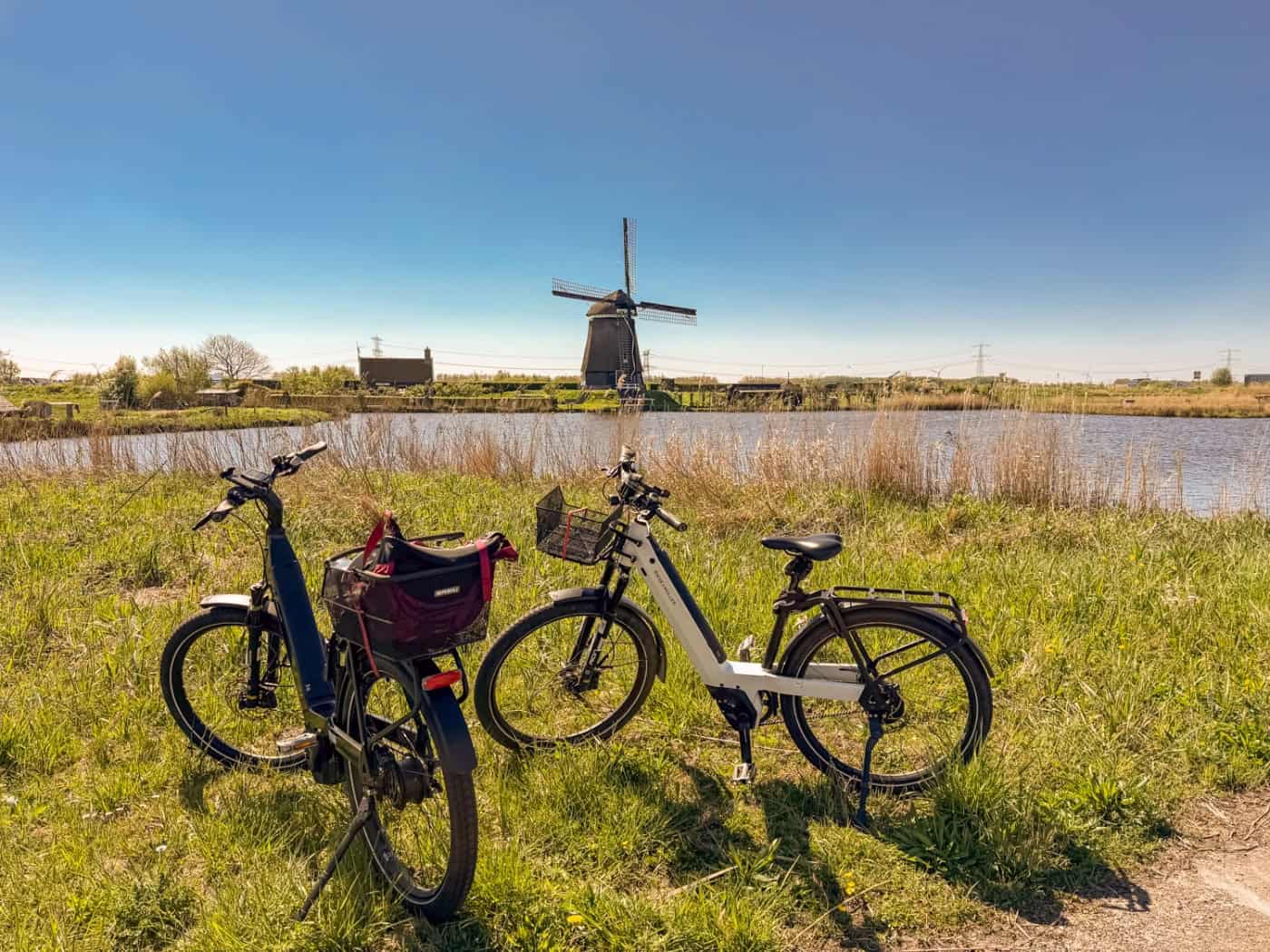
Cycle tour through the Het Twiske recreation area north of Amsterdam. Lots of countryside - and the Twiskemolen. (Image: Ulrich van Stipriaan)
From: Ulrich van Stipriaan
Cycling by numbers in the Dutch Het Twiske: a well-signposted network of junctions leads you stress-free through nature, water landscapes and to the historic polder mill.

Painting by numbers sounds kind of boring - but: it's a sure-fire success. Cycling by numbers is also a sure-fire success - and as exciting as it is relaxing. Thanks to the great idea of Belgian mining engineer Hugo Bollen, there is now a cross-border network of cycle paths where you can cycle from junction to junction and make stress-free progress.

Bollen developed the project to create a network of cycle and footpaths in Limburg, Belgium, where mines were closed at the end of the last century. Tourism was to follow - and in a more natural way. Bollen developed a user-friendly signage system, the Knooppunten (junctions). This created a network in which anyone can put together their own tour. The entire network is clearly signposted in both directions, overview maps at the junctions make it easier to find your way around - and of course there are now also apps that you can use to plan and then ride and/or record the tour (I use fietsknoop.nl on the computer for planning and as an app for tracking). And although there are around 10,000 such junctions in the Netherlands alone, they manage with two-digit numbers (00 to 99) - many small networks combine to form a large one, and a tour can easily run for 34 km from the 30 (in Purmerend) to the 30 (near Egmond aan Zee) - with 15 intermediate destinations at intervals of one to four kilometers.

More from this category

A route description from Purmerend to and through the Het Twiske recreation area reads like this: 29-24-23-22-22-21-15-16-20-19-16-17-12-13-14-60-35-31-30. During the ride, all you have to do is remember the next number and follow the signs. And if a section is not passable because, for example, a bridge is closed: no problem, because cyclists are taken seriously in the Netherlands. A large sign indicates in good time that the section is closed and the alternative route with a large detour sign is easy to find. On top of that, there was a car at the start of the detour with a friendly person who told us something about "Brug dicht" and so on, but quickly realized that our knowledge of Dutch was very limited and immediately switched to perfect English. Exemplary (and very practical, because there was a strong wind blowing - as usual when cycling: from the front, no matter which direction you're going).

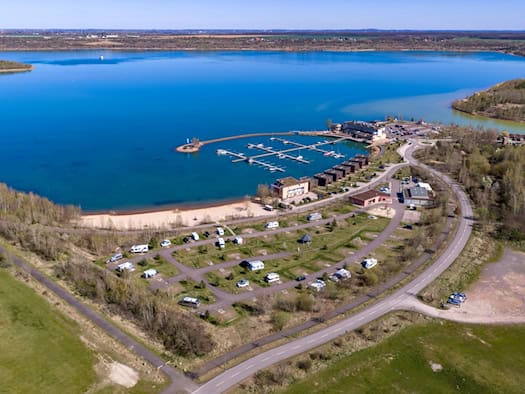
Het Twiske is not actually that old as a local recreation area; it came into being with the construction of the A8 motorway and the Coe Tunnel in the early 1960s. A large quantity of sand was extracted from the peatland for the construction, creating the Stootersplas gravel pit, which is up to 40 metres deep. The area used to be characterised by peat meadows, and it is still wet: a third of the 650 hectares is water. The designs for Het Twiske’s current layout were developed from 1972 onwards by landscape architect Mariske Pemmelaar-Groot, whose aim was to strike a balance between the needs for sport and recreation in the west and south, the higher natural value in the north, and the preservation of the wetland character across the entire area. For day trippers, many of whom arrive by car (and contribute to the upkeep and maintenance of the area through parking fees), there are beaches, an adventure and water playground, a diving platform, a marina, a visitor centre, a holiday farm, day campsites, restaurants and the Twiskemolen polder mill.

The mill is old, 1572 is engraved in the beam. But there is also a second number: 1974 - for reasons, because originally the mill was not located where you see it today: it was in Barsingerhorn. The mill was purchased to drain the Oostzaan polder and stands right on the border between the two villages of Landsmeer and Oostzaan. The wingspan is 24 meters. The mill drains the Twiskepolder as a sub-drainage system of the Oostzaan polder. In 2011, miller Marcel Koop and Marijke Brouwer managed the mill - and used wind power as much as possible. Sometimes, however, the blades only turn "for our pleasure and yours", the large Archimedean screw is decoupled. Conversely, even without wind power, the water can be moved one and a half meters to the other side of the dyke; the propeller also has an electric drive. However, wind is much cheaper in terms of energy! Incidentally, the displaced water then reaches the sea via the North Sea Canal.

The translations are automated with the help of AI. We look forward to your feedback and your help in improving our multilingual service. Write to us at: language@diesachsen.com.
Ulrich van Stipriaan
Article from

Ulrich van Stipriaan

Ulrich van Stipriaan is responsible for the content itself. The platform's code of conduct applies. The platform checks and treats content in accordance with the legal requirements, in particular the NetzDG.

Social Media