

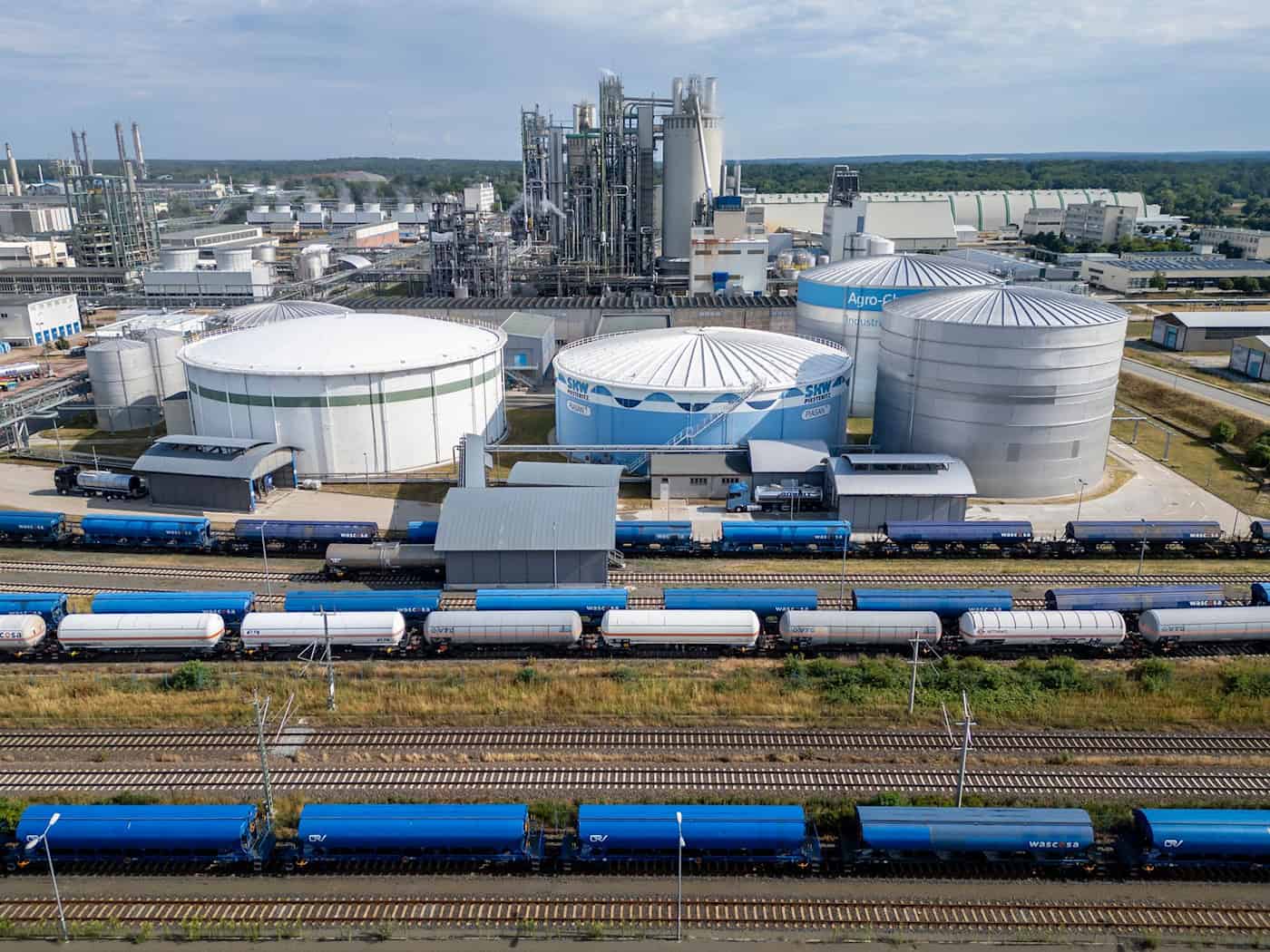
A fertilizer plant in Saxony-Anhalt is increasingly becoming the focus of state, federal, and European politics. State Premier Sven Schulze (CDU) traveled to Prague for this purpose, EU Agriculture Commissioner Christophe Hansen visited the SKW Piesteritz plant in Lutherstadt Wittenberg, and shortly thereafter, the European Commission presented an action plan for the fertilizer industry. Most recently, Federal Agriculture Minister Alois Rainer (CSU) also got a firsthand look at the situation during a visit to the site near the state borders with Brandenburg and Saxony. But why is a plant in Lutherstadt Wittenberg, of all places, currently receiving so much attention? The answer extends far beyond Saxony-Anhalt. The example of SKW Piesteritz illustrates why Europe wants to maintain its production of a strategically important raw material—and why food security, energy prices, and geopolitical crises play a decisive role in this. Many people associate SKW Piesteritz primarily with fertilizers. In fact, the company primarily produces ammonia and urea. These are used to make nitrogen fertilizers, as well as numerous other products. Ammonia is one of the most important raw materials in the chemical industry. It is primarily needed for the production of nitrogen fertilizers and is therefore vital for agriculture and food production. Ammonia is also used to produce urea, which is needed for AdBlue to control exhaust emissions from diesel trucks. In addition, the raw material is found in numerous industrial products and serves as a starting material for nitric acid, which is required for ammunition, among other things. SKW Piesteritz therefore describes ammonia as the “irreplaceable foundation of many system-critical products in the areas of food, logistics, daily necessities, and defense.” For farmers, ammonia is particularly important because it is used to produce mineral nitrogen fertilizers. These ensure that plants receive sufficient nutrients and enable high yields. During his visit, Federal Minister of Agriculture Rainer also emphasized the importance of domestic fertilizer production. “Without fertilizers, it would be very, very difficult when it comes to our food supply,” said the CSU politician. Germany needs “a stable supply of fertilizers.” Precisely because ammonia is used in so many sectors, its production is no longer considered solely a matter for the chemical industry, but increasingly also for economic, agricultural, and security policy. The main reason is natural gas. It is needed in the production of ammonia not only as an energy source but also as a raw material. “Production is particularly energy-intensive because nitrogen is very unreactive and can only be combined with hydrogen under extremely high pressures and at several hundred degrees Celsius,” explains SKW Piesteritz. When gas prices rise, production costs therefore increase immediately. The industry felt the impact of this acutely after Russia launched its war of aggression against Ukraine. It’s no longer just about energy prices. The recent tensions in the Middle East and the at times unstable situation around the Strait of Hormuz have once again shown how vulnerable international supply chains can be. According to the German Agricultural Industry Association, about one-third of the global urea trade passes through the strait. Even the uncertainty over potential supply disruptions has recently caused prices to rise significantly. The European Commission views growing dependence on imports with concern. About 30 percent of the EU’s nitrogen fertilizer needs are already met by imports. At the same time, European production capacity for ammonia has fallen by nearly 10 percent in recent years. With its action plan, the EU therefore aims to strengthen domestic fertilizer production, ease the burden on farmers, and secure supply in the long term. From the Commission’s perspective, recent crises have shown just how dependent Europe is on functioning supply chains and imports. The debate has now also reached the realm of climate policy. The European Commission wants to ease the burden on energy-intensive industries as they transition to climate-friendly practices. EU Commission President Ursula von der Leyen spoke of an “investment and independence plan” designed to strengthen European industry while simultaneously advancing decarbonization. The Agrar industry association also emphasizes the importance of domestic production capacity. “Efficient domestic fertilizer production is a key component of supply security and the resilience of agriculture in Germany and Europe,” the association explains. According to the company, SKW Piesteritz is Germany’s largest producer of ammonia and urea. Short transport routes are an advantage, especially during the fertilizer season. “A ship from China, Africa, or Russia simply takes longer than a truck or train from Piesteritz,” the company argues. Economically, however, the situation remains tense. According to SKW, the competitive disadvantages faced by European manufacturers persist. At the same time, the company is seeing initial positive signs, such as tariffs on certain imports and the elimination of the gas storage surcharge. The parent company, Agrofert, is nevertheless sticking to its growth course, recently consolidated its European nitrogen operations, and continues to invest in the Piesteritz site. At first glance, it seems to be just about a chemical plant in Saxony-Anhalt. In fact, the debate touches on much broader questions: Can Europe produce important raw materials on its own, or will it become more dependent on imports? And how can agriculture and industry be reliably supplied, even in times of crisis? The discussion surrounding SKW Piesteritz thus exemplifies why Europe no longer views its fertilizer production merely as an economic issue, but as part of its supply and food security. Copyright 2026, dpa (www.dpa.de). All rights reservedWhat is actually produced in Piesteritz?
Why is ammonia, of all things, so important?
Why is production in Europe coming under pressure?
What role do current crises play?
Why does Europe want to maintain domestic production?
Why is Piesteritz a particular focus here?
Why does this also affect consumers?


