

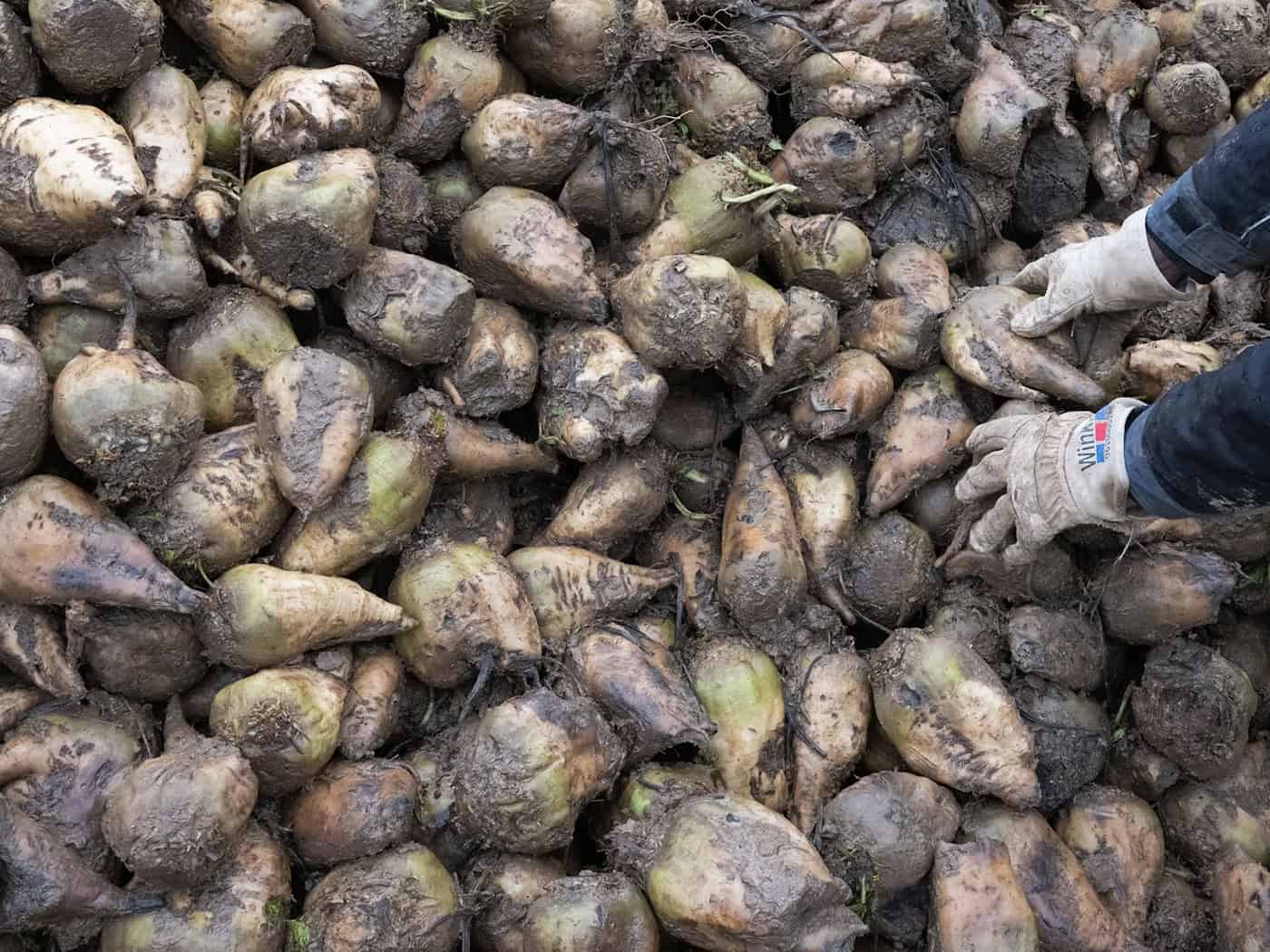
Drought, heat, and disease are taking a toll on sugar beets. As a result, sugar production in southern Germany is expected to be one-third lower than last year, according to the Association of Southern German Sugar Beet Growers in Ochsenfurt, Lower Franconia. The harvest is expected to be the lowest since German reunification, said Managing Director Paul-Martin Pfeuffer. The association anticipates an impact on consumer prices, as harvests are also poor elsewhere. France, Europe’s largest sugar beet-producing country, is suffering from extreme heat and drought, “which carries weight in the market,” said Pfeuffer. “When key growing regions are struggling, we expect a reaction.” While most grain fields have already been harvested, midsummer remains a critical phase for sugar beets, as they continue to grow in size and sugar content. However, due to the persistent drought, the plants have stopped growing in many places, the report continued. Even in locations with normally good water supplies, the crops are showing clear symptoms of drought stress. At the same time, diseases such as SBR and Stolbur are spreading. This is because drought stress weakens the plants’ resistance to pathogens. As a result of the diseases, the beets developed a rubbery consistency, and significantly less sugar could be extracted. Farmers who supply sugar beets had cultivated beets on an average of about 20 to 25 percent of their land, Pfeuffer further explained. Economic pressure is high—especially since yield conditions for other field crops are also difficult. For competitive reasons, the association does not disclose absolute figures on sugar production in southern Germany. The Association of South German Sugar Beet Growers is the umbrella organization for seven regional associations and, according to its own statements, represents nearly 10,000 sugar beet growers. They reportedly grow sugar beets on approximately 100,000 hectares and supply seven factories. The area spans the federal states of Bavaria, Baden-Württemberg, Hesse, Saarland, Rhineland-Palatinate, Saxony, and Thuringia, as well as parts of North Rhine-Westphalia, Saxony-Anhalt, and Brandenburg. Copyright 2026, dpa (www.dpa.de). All rights reservedDiseases Cause Beets to Become Rubbery


