

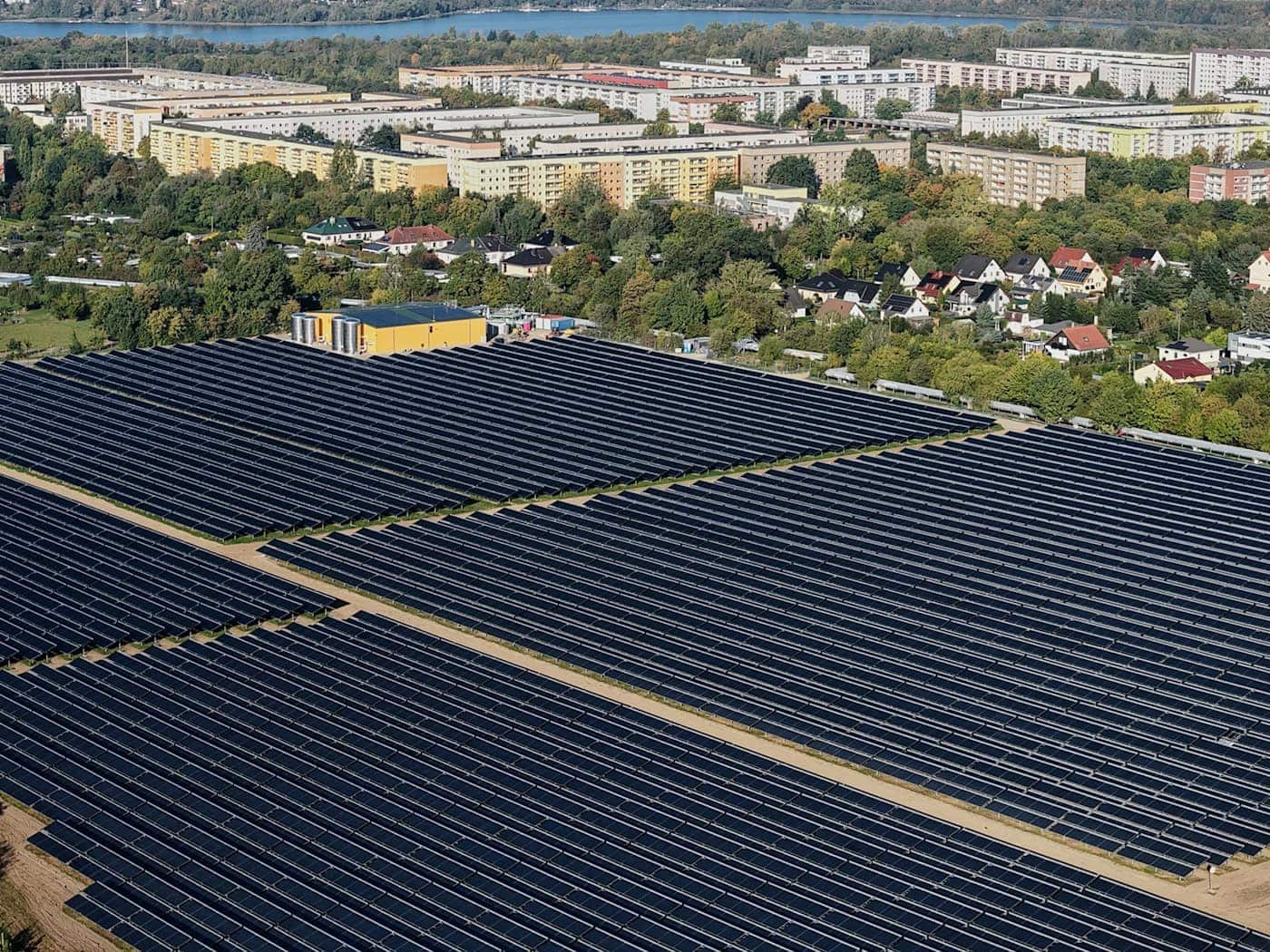
Saxony’s heat supply is facing a profound transformation. In the future, hot water and warm homes should no longer have harmful effects on the climate. At the same time, the district heating network is set to expand significantly. The Ministry of Energy estimates that several billion euros in investment will be needed. Local governments’ plans in this regard are the focus of the East German Energy Forum taking place today and Thursday in Leipzig. Consumer advocates are concerned about price increases for district heating customers in recent years. How can this be countered? According to the Federal Association of the Energy and Water Industries, homes in Germany have so far been heated primarily with gas and oil, with district heating coming in third place with a share of 15.5 percent. However, as part of the heating transition, its importance could grow significantly in the future. And Saxony is already among the leading states in terms of district heating supply when compared nationwide, as the Ministry of Energy points out. It cites figures from the 2022 census: As of the reference date, 28 percent of homes in Saxony were heated by district heating, compared to a national average of just 15 percent. In states such as Hesse, Lower Saxony, and Rhineland-Palatinate, the share was even in the single digits. This comparatively strong infrastructure is a legacy of the GDR. At that time, many residential areas were supplied with heat centrally, resulting in the creation of large district heating networks. “In Dresden, this network was comprehensively modernized and continuously expanded after reunification,” the utility Sachsenenergie stated upon request. As a result, the network has expanded significantly by more than 400 kilometers to about 670 kilometers today. However, district heating in Saxony has so far come primarily from natural gas and lignite. The target is for generation to become climate-neutral by 2045. Coal as a fuel will be phased out even sooner: Germany aims to completely phase out coal by 2038 at the latest. In Hoyerswerda and Weißwasser, for example, heat still comes almost entirely from lignite, while in Leipzig the share is well over a quarter. The transition has already begun. In Chemnitz, for example, the Nord combined-heat-and-power plant—with its huge, colorful chimney—was shut down in early 2024. Until then, massive amounts of climate-damaging lignite had been burned there to generate electricity and heat. Gas-fired power plants are now operating in place of the coal-fired units. According to the utility provider Eins, this reduces CO2 emissions by 60 percent. But one thing is clear: This can only be an intermediate step toward climate neutrality in district heating. Where will district heating come from in the future to heat homes, schools, offices, and businesses? A look at the utilities’ plans shows that there will be a mix. Some notable projects: In the future, large heat pumps, solar thermal systems, and large water boilers heated by electricity (power-to-heat) are also expected to play a greater role in heat supply. There are also plans for new waste-to-energy plants, where the heat will be fed into the grid. Municipalities are required to develop heating plans. The expansion of district heating is set to play an important role in this. For example, Leipzig, Saxony’s largest city, plans to meet about half of its heating demand through district heating in the future—currently, according to reports, this figure stands at just over 30 percent. To achieve this, the network is to be significantly expanded: from about 485 kilometers today to approximately 800 kilometers in the future. Together with the construction of new heat-generation facilities, the costs are currently estimated at at least 3 billion euros. In Chemnitz, according to the utility provider Eins, investments in the hundreds of millions are expected. It is reported that district heating already covers about one-third of the city’s heating needs, including for more than 72,000 apartments. The goal is to increase this share to about 50 percent. To this end, the district heating network will be gradually expanded and densified by 2045. By using district heating, homeowners save on the cost of their own heating system. However, unlike with electricity and gas, they cannot freely choose their provider. There are significant regional price differences. According to the website waermepreise.info, district heating for an apartment building in Zwickau and Meissen costs just over 15 cents per kilowatt-hour (gross), whereas in Niesky, the price is nearly 26 cents. The price also exceeds 20 cents in Freiberg, Kamenz, Löbau, Neustadt, Olbersdorf, and Zeithain. “District heating is a monopoly,” criticizes Lorenz Bücklein of the Saxony Consumer Advice Center. He is counting on the federal government to strengthen the position of consumers. “This includes a mandatory price platform administered by a federal agency and a dedicated arbitration board for district heating.” The restructuring of district heating is a task for society as a whole. The costs should therefore not be passed on to households alone. “We therefore need price oversight that not only reviews prices retroactively but can also intervene effectively.” However, consumer advocates do not want to wait for political action. Following price increases for district heating customers in Saxony’s major cities, the Consumer Advice Center intends to scrutinize the prices. It has called on customers in Leipzig to submit contracts and bills from previous years. The aim is to verify whether the pricing is permissible. Copyright 2026, dpa (www.dpa.de). All rights reservedThe Current Situation: Saxony Leads the Way in District Heating
The Path to Climate-Neutral District Heating
Suppliers face immense investments
Consumer advocates are calling for more price regulation


