

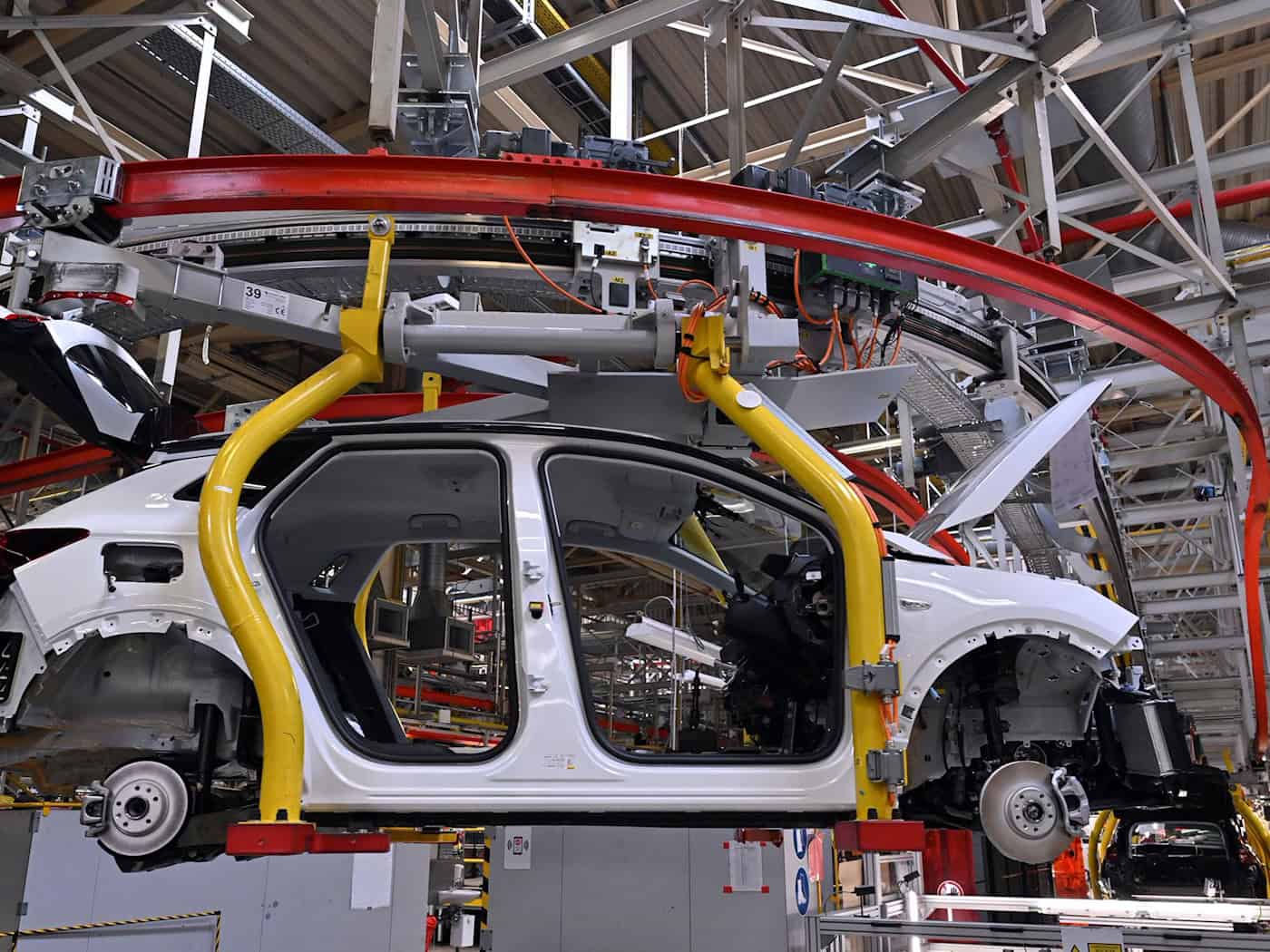
Is car production in eastern Germany too expensive? Faced with overcapacity and cheap competition from China, the eastern German automotive industry is struggling to develop strategies for the future. “We have a mixed situation,” says Jens Katzek, managing director of the Automotive Cluster Ostdeutschland, to the German Press Agency. While capacity utilization at the Volkswagen plant in Zwickau is declining and jobs are being cut there, the BMW plant in Leipzig, for example, has seen very positive development. And Tesla continues to invest in Grünheide and is hiring additional employees. The automotive industry in Germany as a whole is struggling—manufacturers as well as suppliers. As a result, more than 42,000 jobs have been cut in the past year. China is making a strong push into the market as a new competitor, and U.S. tariff policies are causing a great deal of uncertainty for manufacturers there, Katzek explains. But car sales in Europe have also declined. Amid growing competition, the high costs in this country are repeatedly cited. For example, VW CEO Oliver Blume stated last week at a works meeting in Zwickau: “Labor costs today are more than double those at comparable European locations.” And Saxony’s Minister President Michael Kretschmer (CDU) has repeatedly raised the possibility of longer working hours to reduce costs. “The fact is: Yes, we need to work on our cost structure,” Katzek states. For this reason, he says, the utmost restraint is called for in the upcoming collective bargaining negotiations. In addition to labor costs, he also sees a need for action regarding energy prices. According to recent calculations by the comparison portal Verivox, Germany has the highest electricity prices among the G-20 countries. Katzek emphasizes that the East German auto industry is well-positioned thanks to its early focus on e-mobility. According to figures from the Federal Motor Transport Authority, two out of every three newly registered vehicles now have an alternative powertrain, and about one in four is fully electric. This shows that the transition to electric mobility is clearly working, according to Katzek. “We are extremely well positioned for this in eastern Germany.” He points to the factories specializing in electric cars—Tesla’s in Grünheide and VW’s in Zwickau—as well as the battery plants operated by CATL in Arnstadt and Dräxlmaier in Leipzig. Katzek sees various prospects for the local auto industry. These include the use of new technologies such as autonomous driving as well as the development of a circular economy. Foreign investors could also provide new impetus. For example, the production of models from China is repeatedly brought up in discussions. “If the Americans can produce here, so can the Chinese.” CATL is a prime example of this. Under the title “Reality Check: The Automotive Industry,” the association is hosting a conference at the Gläserne Manufaktur in Dresden. The plant managers of six major East German automotive manufacturing sites are also expected to attend—from BMW and Porsche in Leipzig to Opel in Eisenach, Mercedes-Benz in Ludwigsfelde, Tesla, and Volkswagen Saxony. The event will also address trends in production, such as the use of humanoid robots and artificial intelligence. Copyright 2026, dpa (www.dpa.de). All rights reservedIndustry Struggles with High Labor and Energy Costs
Is its pioneering role in e-mobility paying off?
Industry gathering aims to provide an outlook for 2027


