

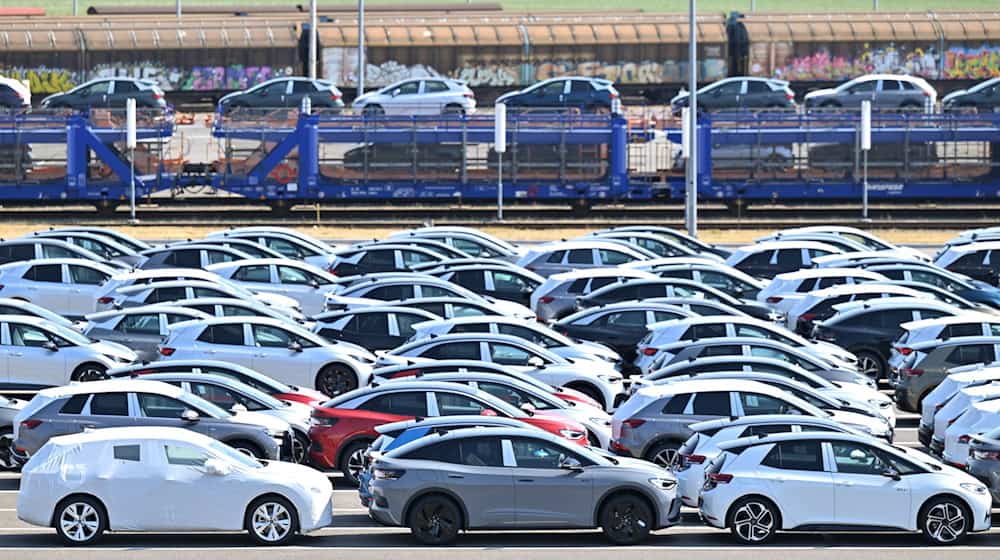
A slower ramp-up of electromobility in Europe would cost thousands of jobs in the eastern German automotive industry, according to a study. A total of around 10,000 jobs would be at stake in such a scenario, the majority of which would be in the supplier industry (8,100), according to a study by the Chemnitz Automotive Institute (CATI) and the industry association Automotive Thüringen. According to the authors, East German car factories are leading the way in the transition to e-mobility in Germany and Europe. They refer, for example, to the pure e-car factories of Tesla in Grünheide and Volkswagen in Zwickau. More than half of the cars produced in eastern Germany (56%) were battery electric vehicles in 2024 and almost half of all e-cars produced in Germany come from the east. The strong focus on the production of electric cars means that "the capacity utilization of eastern German plants is particularly negatively affected if the trend reversal towards electromobility falters", the study states. EU Commission President Ursula von der Leyen announced at the beginning of the week that car manufacturers should be given more time to comply with EU climate targets. This concerns the average CO2 emissions of the cars produced. According to the current decision, no new cars with petrol or diesel engines may be registered from 2035 in order to reduce CO2 emissions in the transport sector. The new study calculates several scenarios. If the path taken so far, with CO2 fleet values and the phase-out of combustion engines, the capacity utilization of East German car factories would increase to around 80 percent by 2030. In addition, there would be an increase of 9,300 jobs at manufacturers and suppliers. A softening of the previous targets, on the other hand, would have a significant negative impact on production figures and employment. "The best way to promote the development of the East German automotive industry is therefore to sustainably support the trend reversal towards electromobility," the experts concluded. A slowdown would entail high risks in terms of international competitiveness. Copyright 2025, dpa (www.dpa.de). All rights reservedCO2 targets shaky - danger for eastern German car industry
Scenarios show different future prospects


