

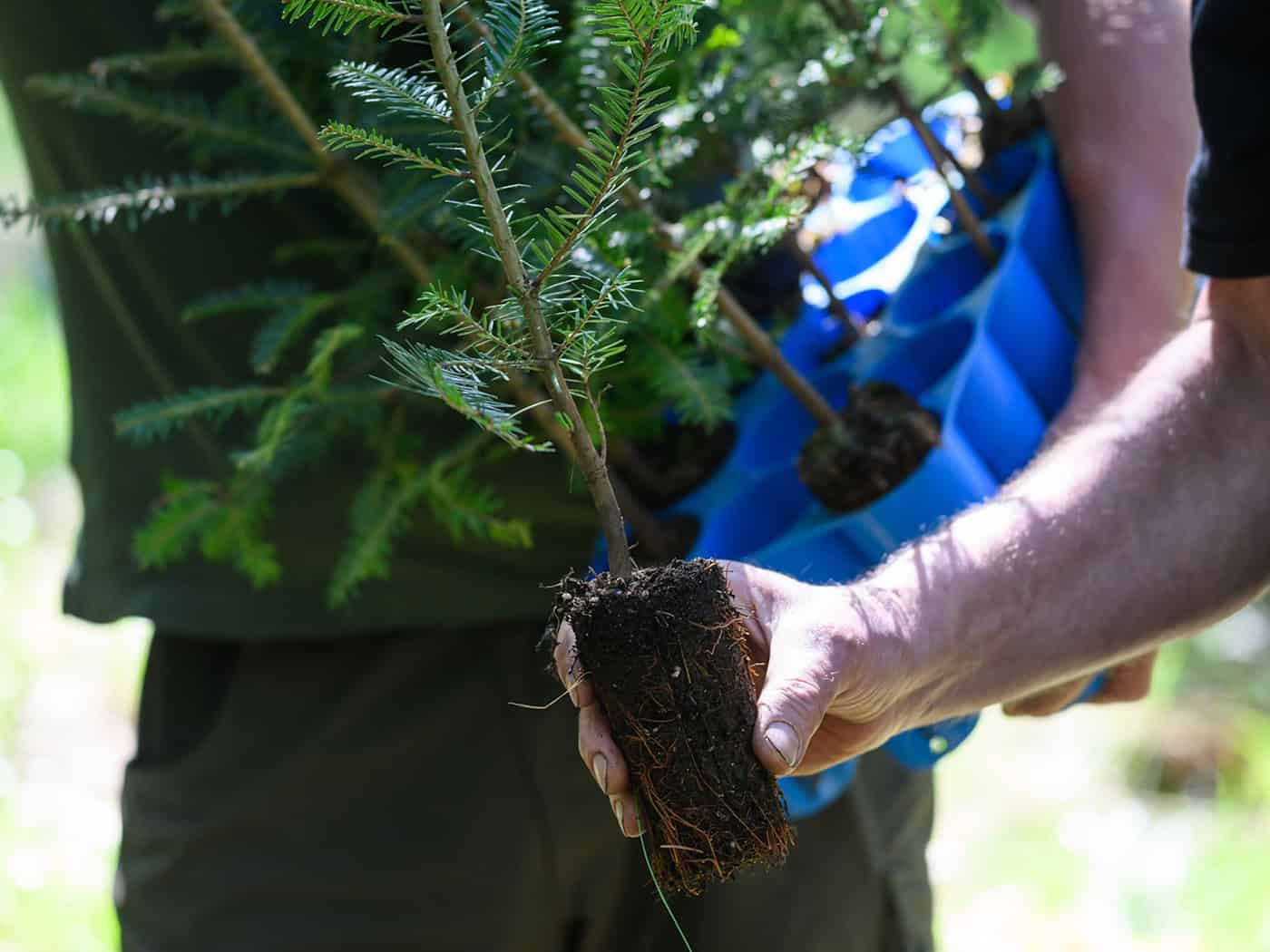
Sachsenforst plans to plant more than five million young trees in the state forest this year and continue the conversion to more climate-stable mixed forests. According to the state enterprise, mainly deciduous trees are to be planted on around 1,310 hectares. Their share is therefore around 72 percent. Red beeches, sessile oaks and English oaks are being planted particularly frequently. Silver fir plays an important role among conifers. The Free State of Bavaria is investing around 15.6 million euros in planting and forest seeds. The aim is to make forests more resilient to the consequences of climate change. "We need climate-stable, species-rich and structurally efficient forests with a wide range of ecosystem services to ensure that our forests continue to grow in the long term and are also available to future generations," said Forestry Minister Georg-Ludwig von Breitenbuch (CDU). However, planting faces challenges. For example, low rainfall since the beginning of the year has made it difficult for the young trees to grow. "The winter precipitation was even lower than the already low amount of the previous year and is causing us great concern," said Thomas Rother, head of a forestry operation at Sachsenforst. More precipitation is therefore urgently needed to ensure successful growth. The availability of seed is also a problem. "Seed availability is a key challenge in the implementation of our forest conversion goals," says Rother. The background to this is that many tree species do not bear the same number of seeds every year. In so-called mast years, as much seed as possible must therefore be secured. In addition to drought, wild animals can also damage young trees. Deer, red deer and hares in particular bite buds. According to the information provided, Sachsenforst therefore relies on adapted hunting in order to achieve forest-compatible game populations and avoid additional protective measures such as fences as far as possible. Copyright 2026, dpa (www.dpa.de). All rights reservedMillions invested in climate-stable forests
Drought makes reforestation more difficult
Seed remains scarce
Wildlife browsing as a further risk


