


“The Elbe Is a Diva” – What Needs to Be Done Now
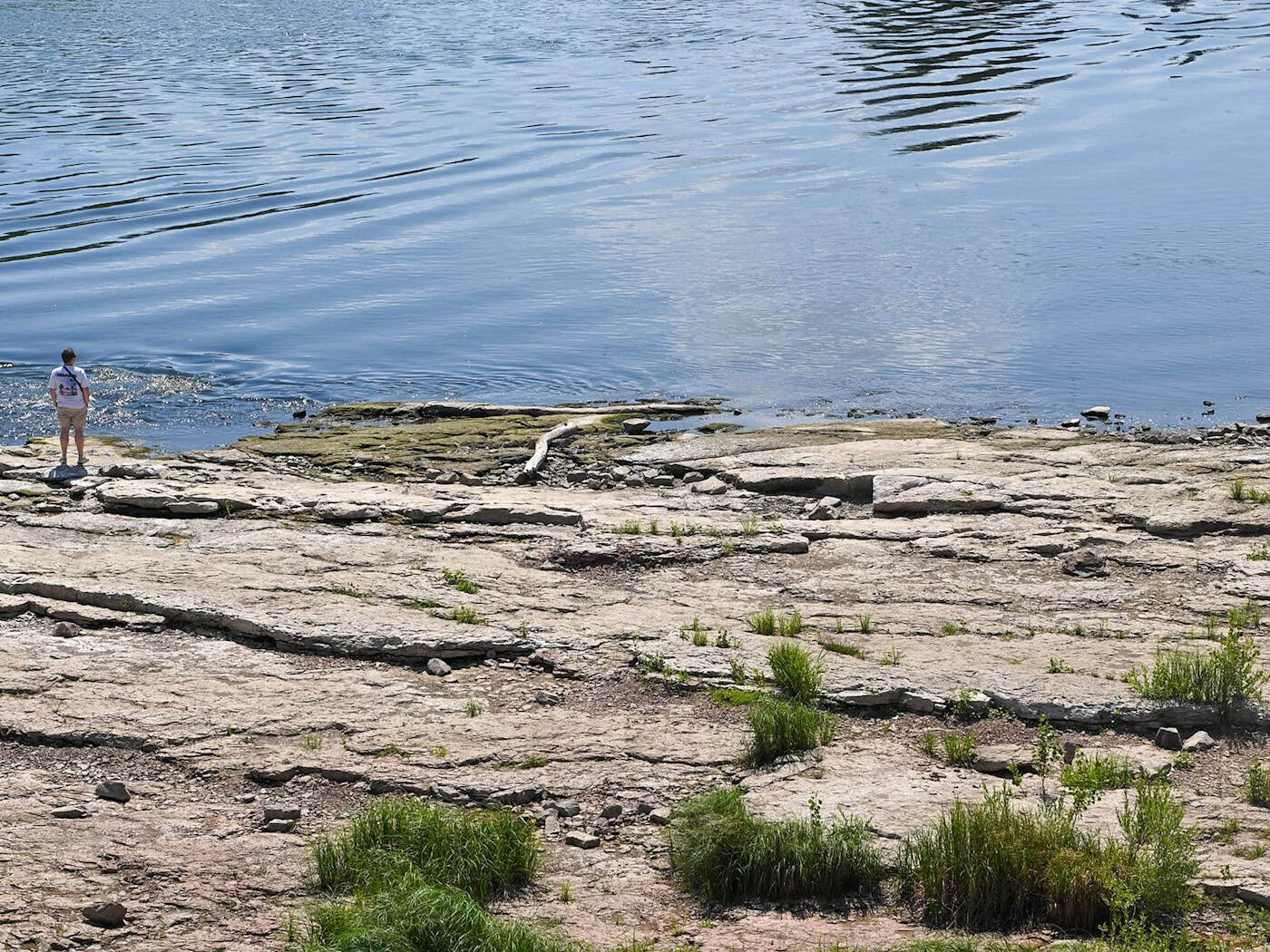
Exposed sandbars, stranded ferries, and sometimes dangerous objects found in the riverbed: The consequences of low water levels are visible in many places. In the future, such situations could become more frequent. Over the past ten years, extremely low water levels have been reached with striking frequency on the Elbe, says Daniel Bachmann, professor of hydromechanics – that is, the study of the behavior and movement of water – at Magdeburg-Stendal University of Applied Sciences. Particularly in the summer and fall, pronounced low water levels are expected to occur more frequently. “As far as water levels and outflows are concerned, this is definitely exceptional,” says Bachmann. At the Magdeburg-Strombrücke gauge, 35 centimeters were measured at the start of the week—ten centimeters lower than the previous record low set in 2019. In 2025, the level had once again dropped to 45 centimeters. “We’ve been in the low-water range since May. That’s a very long period,” explains Bachmann. In the future, extremes could intensify in both directions. More frequent periods of low water do not mean, therefore, that flooding is a thing of the past. We must continue to expect that as well. The current, comparatively cooler and more changeable weather does not automatically mean the situation is easing. “What we need now is rain,” says Bachmann. Heavy rainfall in the Elbe river basin—for example, in the Czech Republic, Saxon Switzerland, and the Saale and Mulde river basins—is crucial. So-called “Hungersteine” (low-water markers), some of which record low water levels dating back centuries, show that low water levels are not a new phenomenon. However, comparisons are difficult because the river system has changed. Today, for example, dams on the Vltava River support the outflow. “Of the current approximately 117 cubic meters of water per second in the Elbe, about 40 cubic meters come from the Vltava cascade,” says Bachmann. The low water levels are particularly noticeable for ferries and shipping. “The Elbe is a diva,” says Bachmann. If it rains in the watershed, the water level rises; if there is no precipitation, it drops rapidly. Unlike the Rhine, the largely free-flowing Elbe also has no glacial inflow. Bachmann therefore sees only limited potential for commercial shipping. The Elbe could continue to play an important role in special transports. He is more skeptical about traditional freight transport: “The Elbe has never been—and never will be—a major lifeline like the Rhine.” However, ships with shallower drafts are conceivable. Low water levels also take a toll on nature. Especially in smaller rivers, habitats and refuge areas for fish can disappear. In the long term, water must be retained more effectively in the landscape, says Bachmann. In agriculture and forests, rainwater could remain in the ground longer instead of draining away quickly through drainage systems and ditches. This would also help replenish the groundwater. There is no quick fix. Adaptation will take years, possibly decades. But a shift in thinking has already begun. However, Bachmann makes it clear that recent years have shown just how urgent adaptation is. “Perhaps it’s hitting us a little harder now than we originally thought.” Copyright 2026, dpa (www.dpa.de). All rights reservedRain Must Fall in the Watershed
“The Elbe is a diva”
Retaining Water in the Landscape

