


When did dogs really become our best friends?
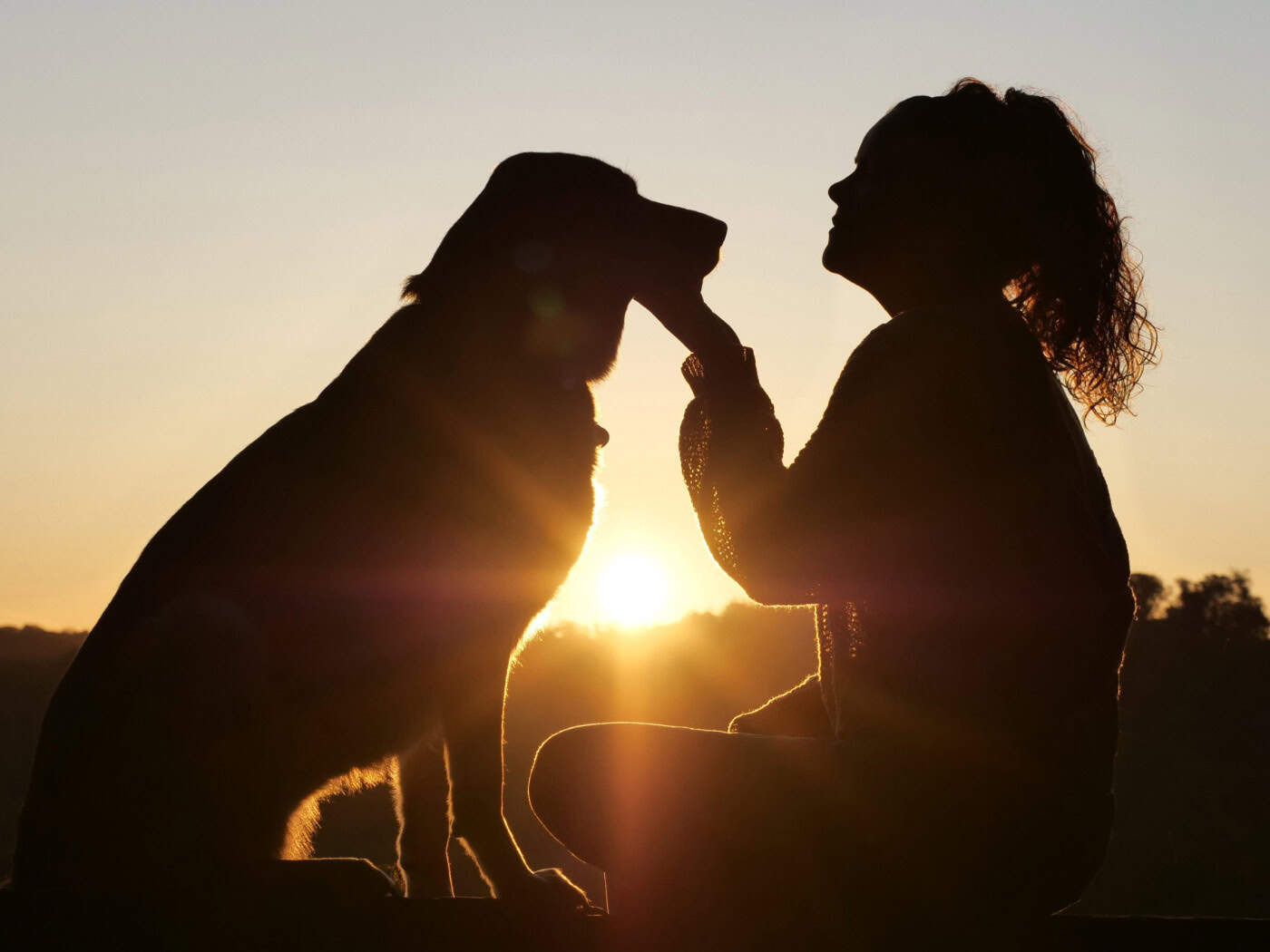
I'm sure anyone who has a dog will recognize this scene: as soon as you come home, your excited four-legged friend is already wagging its tail. The bond between humans and dogs is ancient – older than previously thought. A new international study shows that dogs lived alongside humans at least 14,200 years ago, and probably even earlier. The Max Planck Institute for Evolutionary Anthropology in Leipzig was also involved in the study.
The research team analyzed genetic material – the DNA found in every cell – from 216 ancient remains of dogs and wolves. Most of the bones come from Europe, including Switzerland, Germany, Belgium and Turkey. It is the largest study of its kind to date.
What do the bones reveal?
This sounds simpler than it is. Dogs and wolves look very similar, especially when only skeletal remains are available. A bone from Belgium was thought to belong to a dog for decades because of its small size and signs of human modification. Genetic analysis, however, showed that it was a wolf.
The breakthrough came with a method called “hybridisation capture”. Using this technique, the researchers were able to isolate dog DNA from the ancient material, even when the samples were heavily contaminated by bacteria and other microorganisms. “We worked out how similar each sample is to a present-day dog,” explains Anders Bergström. The researchers also confirmed that a bone from the Kesslerloch cave in Switzerland did indeed belong to a dog – one that lived around 14,200 years ago. “The oldest known dog DNA was previously dated to 10,900 years. Now the horizon extends much further back in time,” says Pontus Skoglund.
The first farmers adopted the hunters’ dogs
The study also addresses the question of whether dogs were domesticated independently in different regions. The results suggest this was not the case. All early European dogs share genetic roots with dogs from Asia. “There is no evidence that European dogs underwent an independent domestication process separate from dogs in Asia,” says Bergström. When the first farmers arrived in Europe around 10,000 years ago, they brought their own dogs with them. But the dogs of local hunter-gatherers did not disappear – they were adopted. Today, many European dog breeds trace around half of their ancestry back to these early animals.
The study highlights how closely the histories of humans and dogs are intertwined. At the same time, key questions remain unresolved – such as where dogs were first domesticated. Researchers worldwide are continuing to investigate this. New genetic methods are providing increasingly precise insights, but they also reveal how complex this shared history is. Dogs accompanied humans long before the advent of agriculture and adapted alongside them to new ways of life. “Most dogs running through a park today trace some of their ancestry to dogs that lived in Europe more than 14,000 years ago,” says Skoglund. “It is fascinating that we have walked side by side for thousands of years despite major changes in human lifestyles.”
Original publication:
Bergström, A., Furtwängler, A., Johnston, S. et al. Genomic history of early dogs in Europe. Nature 651, 986-994 (2026).

