


Layering steel: TU Chemnitz prints giant components
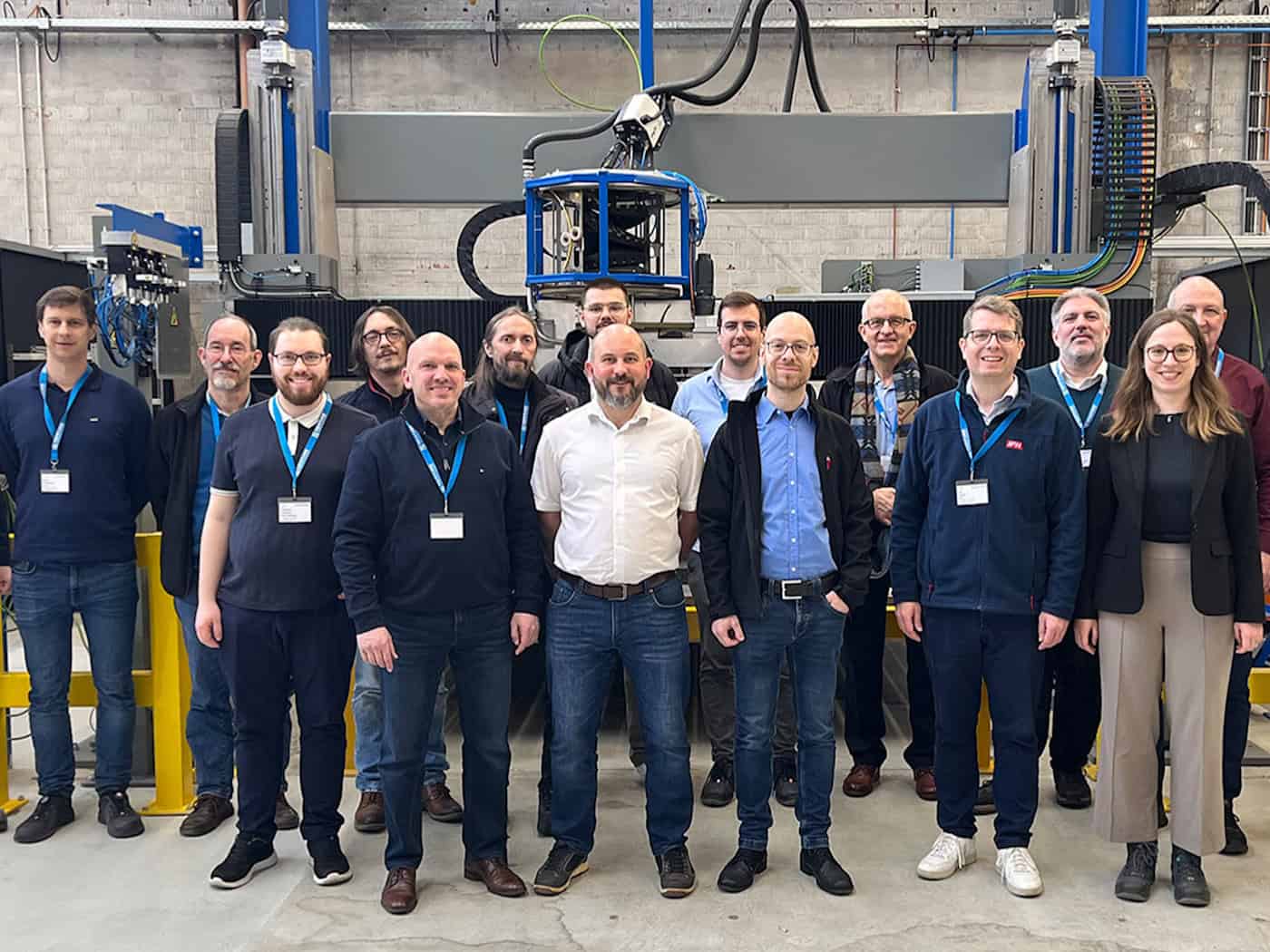
A marine gearbox weighs several tons. Until now, its housing has been cast or milled out of large blocks of metal. This is a complex process in which a lot of material is lost. Researchers at the Chair of Welding Technology at Chemnitz University of Technology are now working on an alternative. They want to build up such giant components layer by layer from steel. The principle is similar to a 3D printer, but with metal and on a much larger scale.
Additive manufacturing of large metal components is regarded worldwide as an important building block for a more resource-efficient industry. Instead of processing large blocks of metal and removing material in the process, only the material that is actually needed is used. This saves raw materials, energy and costs. The process behind this is called DED-Arc. The term stands for "Directed Energy Deposition Arc", i.e. the targeted application of material using an electric arc. Put simply, metal is applied layer by layer and fused together until a complete component is created. A laser provides additional support for this process.
The problem: steel warps
As promising as the process sounds, it poses a tricky challenge. During assembly, so-called residual stresses arise in the component. These are internal forces in the material that can cause the finished part to warp or not reach the desired dimensions. With small components, this can be controlled relatively well. With a gearbox housing for a ship weighing several tons, this is much more difficult.
This is precisely where the joint project "BigInTension" comes in. Together with five other partners, including REINTJES GmbH and the Laser Zentrum Hannover, the researchers from Chemnitz are developing strategies to control these tensions in a targeted manner. The aim is to create a component that achieves the desired dimensions during the first production run and does not require expensive reworking.
Artificial intelligence helps with welding
To achieve this, the participants are also relying on digital tools. So-called digital twins, i.e. virtual images of the real production process, should help to predict and monitor the process on the computer. The researchers are also developing AI-supported models that will be able to control the process in real time in future.
A real demonstrator component is to be produced at the end of the project: an additively manufactured part of a marine gearbox housing. The researchers also want to use this to investigate how sustainable and economical the process actually is. The project is being funded by the German Federal Ministry for Economic Affairs and Energy. The results could change more than just the shipbuilding industry in the long term. Industries such as mechanical engineering, plant construction and the energy sector also require large metal components that could be manufactured faster, more precisely and with less use of resources in the future.

