


New building material made from old bricks and mining waste
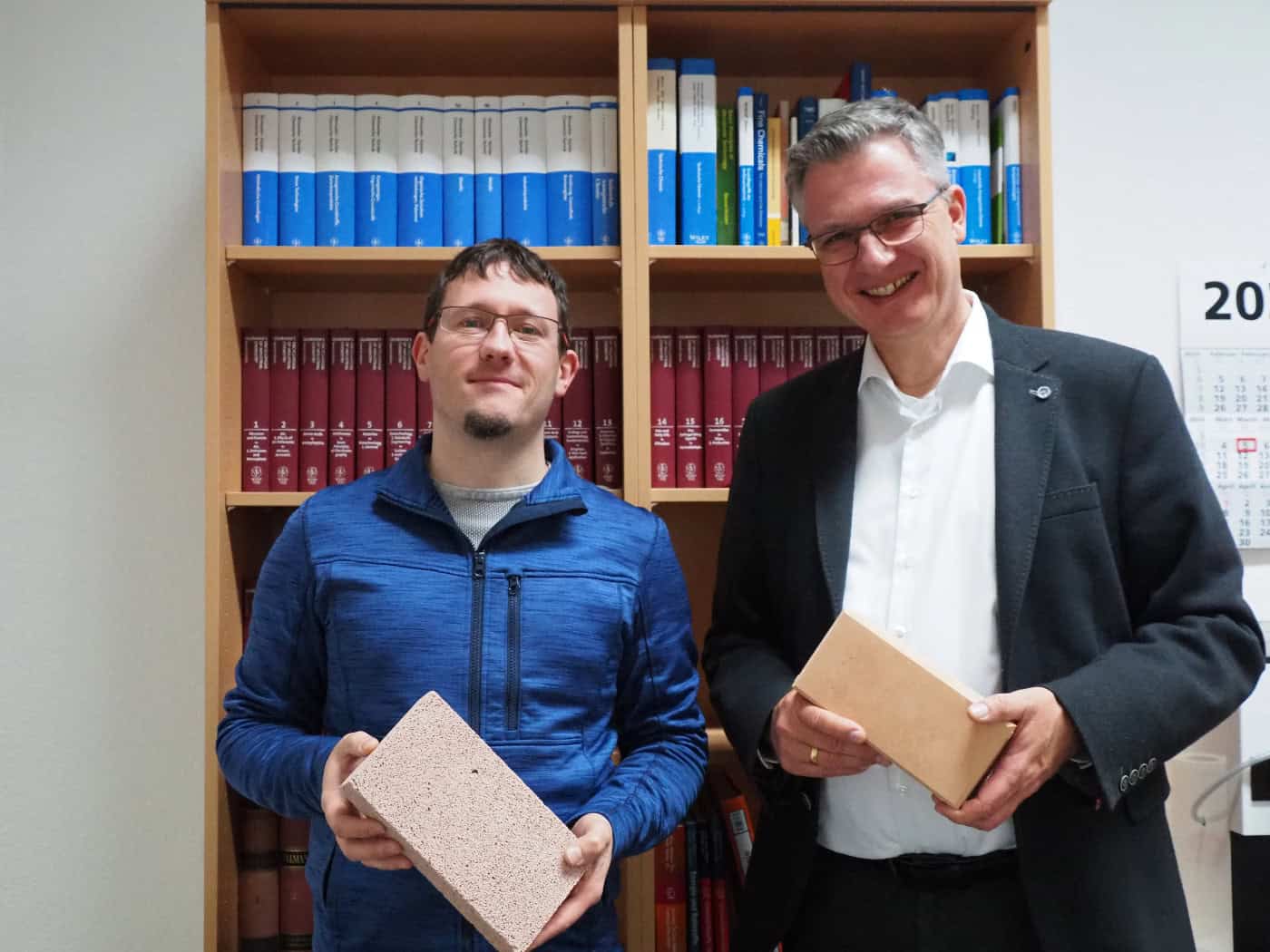
The production of building materials such as cement, bricks and concrete causes large amounts of CO₂. Researchers at TU Bergakademie Freiberg therefore want to develop a building material from waste that is significantly more climate-friendly. At the beginning of May 2026, the European Patent Office granted TU Bergakademie Freiberg a patent for a lightweight brick made from brick waste and geopolymers. It was not the brick itself that was patented, but the process used by the researchers to produce the lightweight bricks.
Geopolymers are a type of artificial rock. They can be used in a similar way to cement, but cause significantly less CO₂ during production. The raw materials come from mining residues, i.e. what is left over from the extraction of natural resources. More than 99 percent of the new building block consists of secondary raw materials, i.e. residual materials and by-products that would otherwise often be disposed of or only used to a limited extent.
Insulates like polystyrene - and can still be recycled
"Geopolymers are building materials that behave like cement or even have better properties than cement in some cases, but are almost CO₂-free to produce. And they can be recycled endlessly," says Prof. Martin Bertau, Professor of Technical Chemistry at TU Bergakademie Freiberg and co-patent holder. The geopolymers can be foamed to create a material that insulates like polystyrene and allows the building to breathe at the same time.
Because only a single building material is used, subsequent recycling is also easier. "Another advantage is that geopolymers are non-flammable and acid-resistant," adds team member Dr. Michael Kraft.
Paving the way for practical applications
The new building material is lightweight, insulates well, is non-flammable and resistant to high temperatures and many chemicals. Its production does not require any particularly energy-intensive processes. According to Bertau, the material achieves similar or even better properties than conventional bricks and concrete. The technology has already been awarded the Saxon State Prize for Building Practice of the Future.
However, further development steps are required before the lightweight bricks can actually be used on a larger scale. The patent has now created the basis for further developing the technology towards practical application.

