


A reactor accident, an incident at a nuclear facility or contaminated food: Radioactive substances can enter the human body. But what exactly happens in our organs? And how can we get rid of these dangerous intruders? A research team from the Technische Universität Dresden (TUD) has now systematically investigated these questions for the first time.
The focus is on americium and curium. Both elements are produced during the use of nuclear energy. They are both radioactive and toxic. If they enter the body via contaminated food, they are deposited in the liver, bones and kidneys. There they cause double damage. Once as chemical toxins and through their radiation. The study was published in the journal "Ecotoxicology and Environmental Safety".
How americium destroys kidney cells
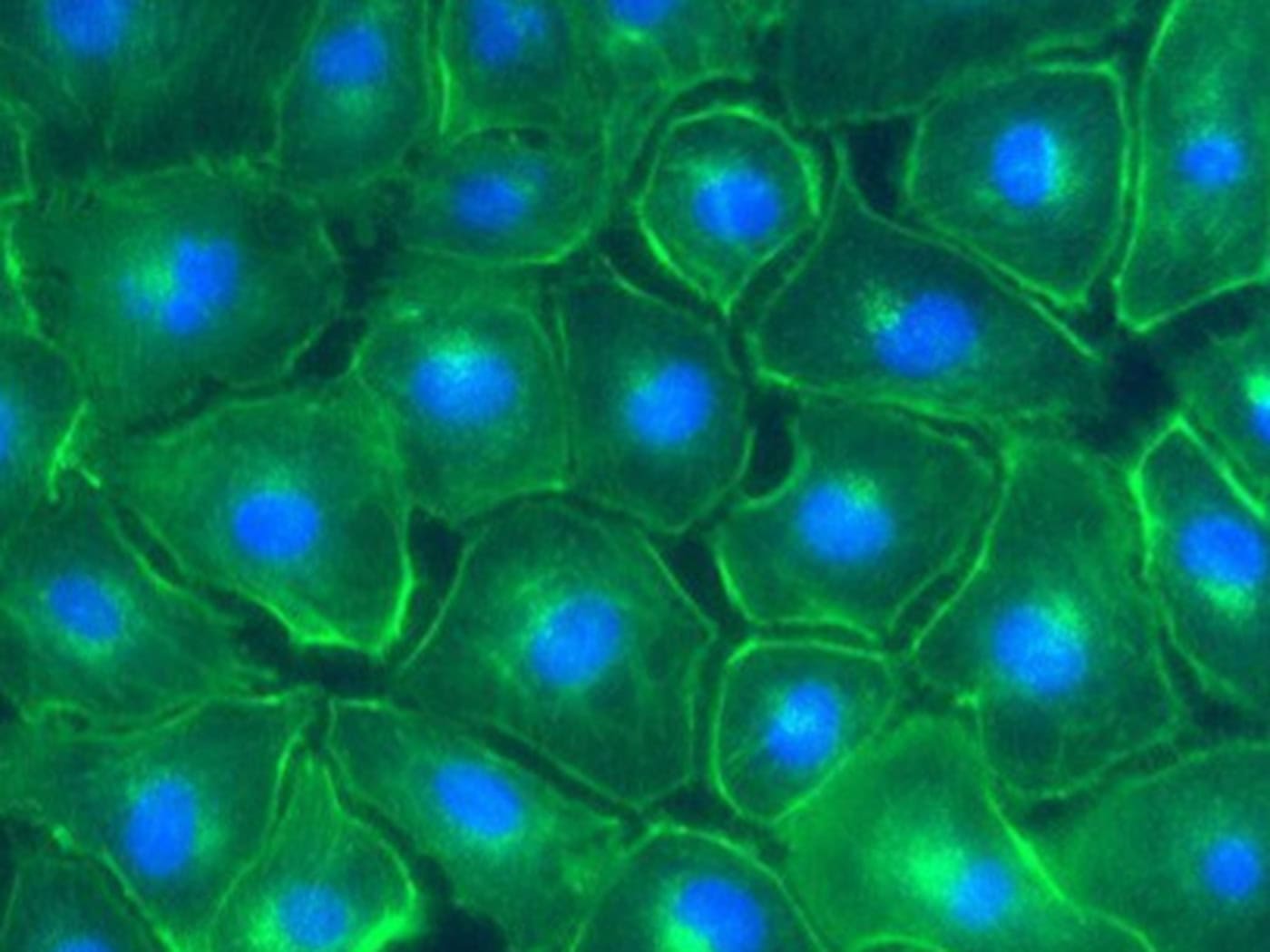
The Dresden researchers investigated what americium does to rat kidney cells in the laboratory. The result is clear. The cells are severely damaged. They lose their viability and their structure changes. Oxidative stress occurs, a kind of internal rusting process at cell level, which further wears down the cells. In addition, there is a sign of programmed cell death as well as cracks in the genetic material, so-called DNA double-strand breaks.
For the first time, the scientists were able to clearly separate two harmful effects - the chemical toxicity on the one hand and the radiation effect on the other. "For the first time, our data allow a differentiated view of chemotoxic and radiotoxic effects of americium on kidney cells," explains first author Dr. Anne Heller, former research associate at the Chair of Radiochemistry/Radioecology at the TUD. A surprising finding: most of the radiation does not come from the americium in the cells themselves, but from the surrounding culture medium of the cell culture.
Which antidote really helps
There are special drugs to prevent poisoning with radioactive substances. They are called decorporation agents and are designed to bind the dangerous elements and flush them out of the body. The researchers compared two such agents: DTPA and LIHOPO. Both have fundamentally different effects.
DTPA prevents americium from entering the cells in the first place. LIHOPO, on the other hand, penetrates the cells with the bound americium. That sounds worse at first. But this could be the decisive advantage. Under the conditions of the laboratory tests, this led to a higher uptake into the cells. In the human body, however, these compounds could help to release and remove americium that has already been stored. "LIHOPO has the potential to mobilize americium already stored in cells, whereas DTPA can only bind americium circulating in the bloodstream," explains Christian Senwitz, former doctoral student at the Chair of Radiochemistry/Radioecology at TUD.
These findings will help to develop better treatments after radiation accidents and improve radiation protection overall. Research that will hopefully never be needed. But which can save lives when it counts.
Publication:
Heller, A. and Senwitz, C. et al. (2025): Am/Cm(III) and DTPA/LIHOPO interactions with renal cells in vitro studied by bioassays, luminescence spectroscopy, and microdosimetry. Ecotoxicology and Environmental Safety 307, 119445.

