


Here's to a glass: Five courses, seven wines, and a few surprises
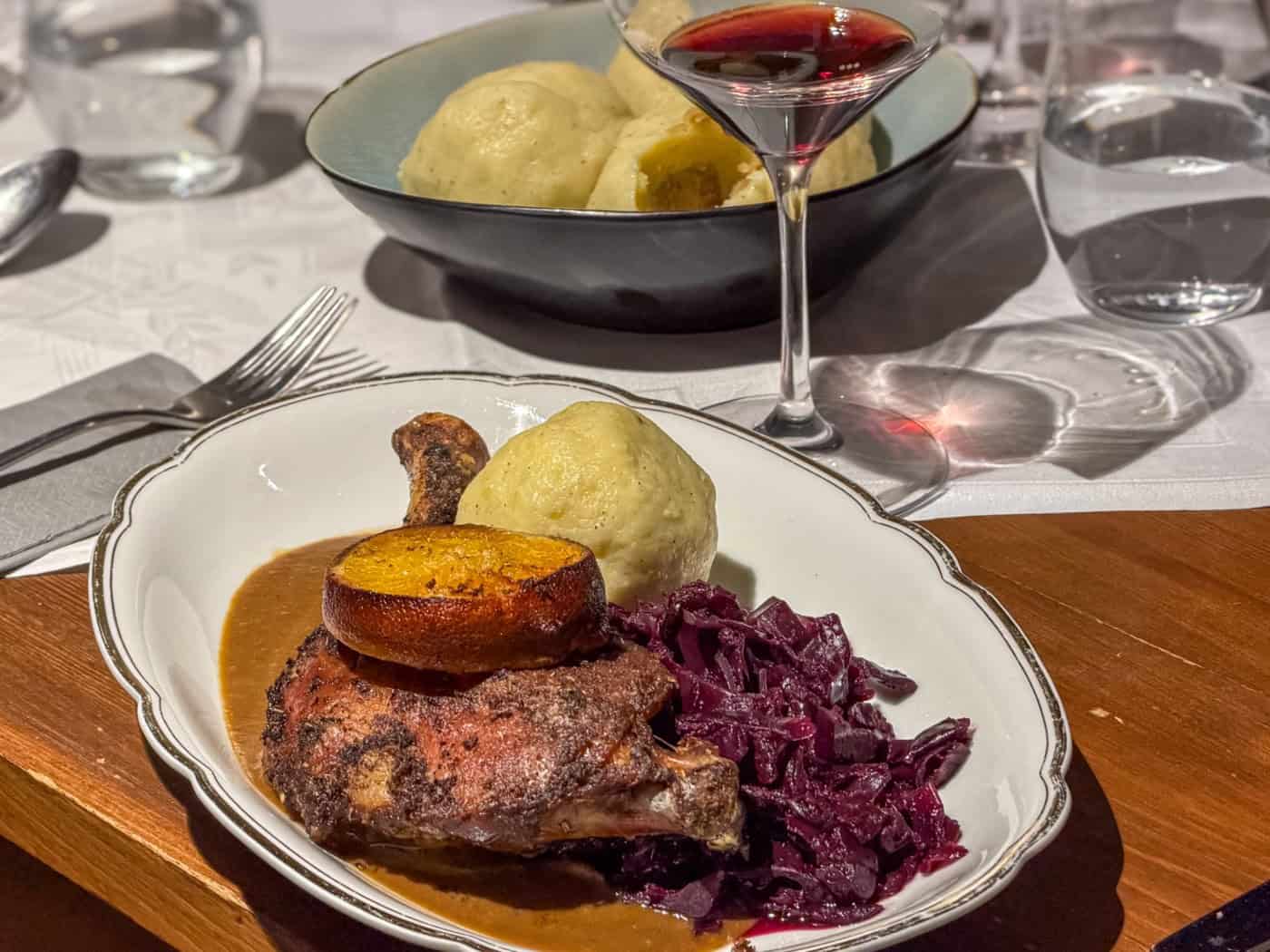
Pinot Gris with residual sweetness for the appetizer, an unusual rosé with goose meatballs, and Chardonnay instead of Riesling with the roast: At Gräfes Wein & Fein in Radebeul, wine pairings for a goose dinner aren’t chosen according to traditional rules. Matthias Gräfe and Ulrich van Stipriaan, together with the Wein&fein team, tasted 16 sparkling and still wines. The result is a selection based not solely on grape variety or origin, but on how the wines pair with the food. After the tasting dinner, we got together for a podcast—and now we’re presenting the selected wines here, while also talking (and drinking…) about some of the ones that didn’t make the cut… The selection for the 2026 goose dinner shows just how unhelpful rigid rules are when it comes to pairing wine with food. Red wine isn’t a must with goose, nor is a dry wine automatically the best choice for a hearty appetizer. What matters far more are the specific characteristics of the dish: fat content, texture, seasoning, sweetness, and acidity. The residual sweetness of a Pinot Gris can balance out fatty meat. A wood-aged rosé can have enough body to pair with a hearty meatball. And an elegant Chardonnay can be a more compelling choice with roast goose than a full-bodied Riesling.
A Saxon sparkling wine to start
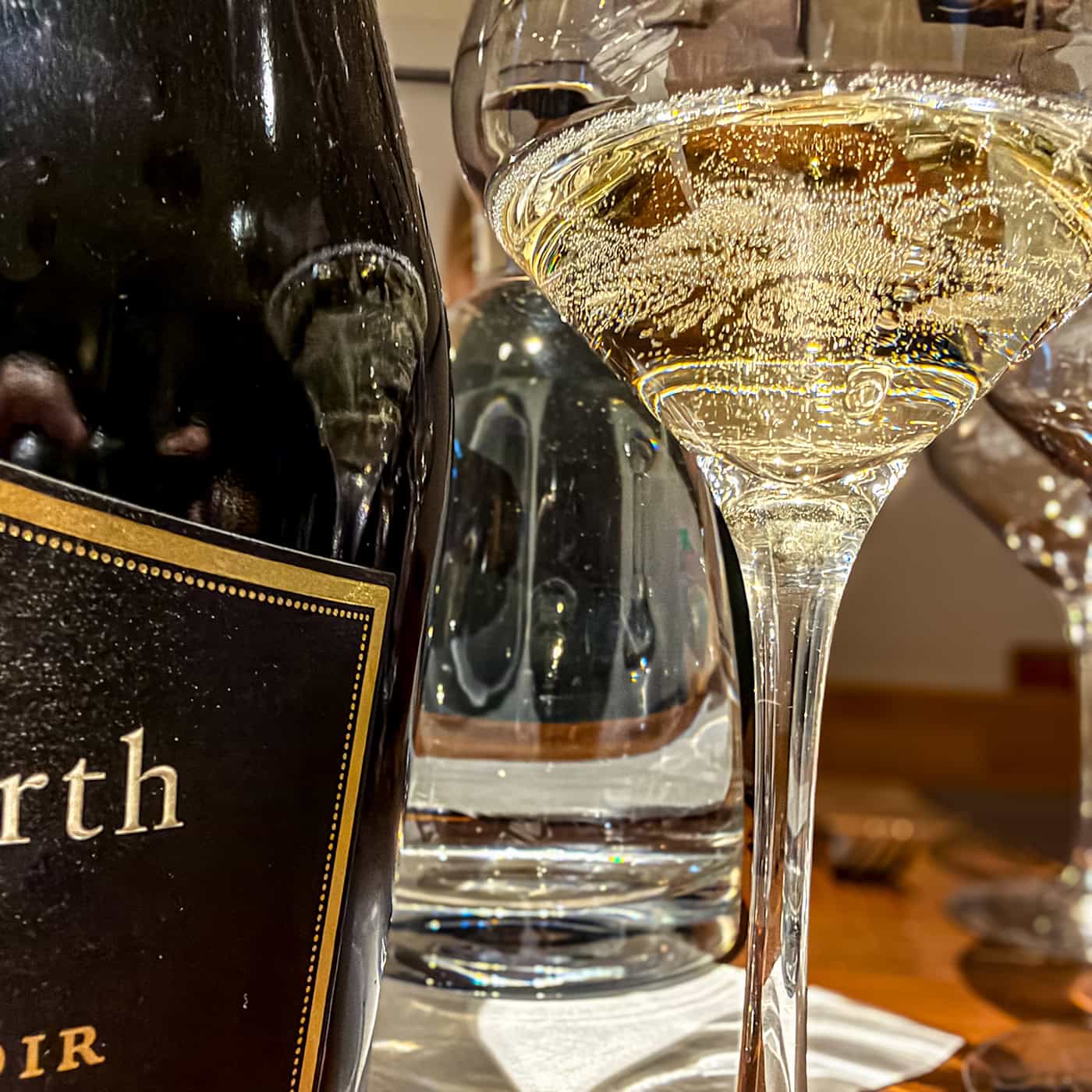
The first wine of the evening comes from Radebeul: a 2019 Blanc de Noir brut from Schloss Wackerbarth. This sparkling wine, made from red grapes, aged on its lees for 54 months. This is particularly evident in its structure and subtle effervescence. The carbonation is finely integrated; the wine feels more like a wine than a distinctly sparkling one. It also features citrus aromas, freshness, and a decidedly bold character.
Only about 1,200 bottles were produced from this vintage. Two sparkling wines from Schloss Wackerbarth were under consideration, including the Cuvée Pinot. The choice fell on the Blanc de Noir, whose longer yeast aging and elegant structure were particularly compelling. It is intended to do one thing above all else: kick off the evening without overpowering the flavors of the courses that follow. As a non-alcoholic alternative, we offer the organically produced Fine Bouche Blanc de Blancs from Domaine Noria in France’s Languedoc region—a beverage produced through fermentation that does not require the alcohol to be removed afterward.
Goose Rillettes: Why a Delicately Dry Pinot Gris Is the Perfect Choice
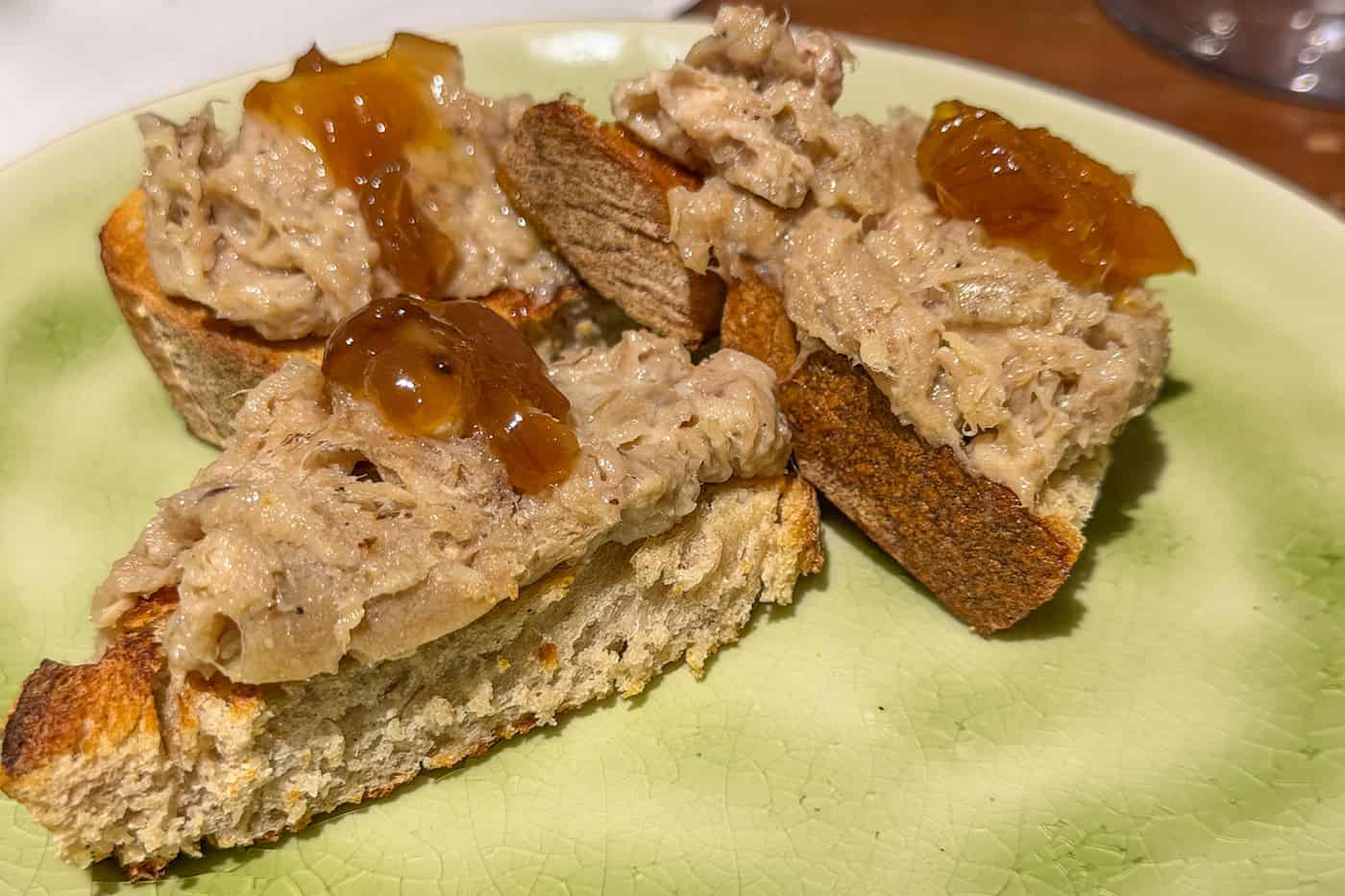
The first real surprise comes with the appetizer. The kitchen serves a bit of chutney with the goose rillettes on toasted bread. The meat offers a pronounced richness and a soft, juicy texture; the bread provides toasty aromas and crispiness; and the chutney adds a fruity, slightly exotic element. To go with this, we particularly enjoyed the very wine we wouldn’t have immediately chosen based on its label: a 2025 Pinot Gris with delicate fruit notes from the Drei Herren winery in Saxony. On the back label, we even see the additional designation “Spätlese.”
The wine has only 11 percent alcohol by volume and a distinctly perceptible, yet by no means overpowering, residual sweetness. During the tasting, it was estimated at about 20 to 25 grams per liter; no analytical value was available. In any case, it’s the balance that matters. The fruit has a certain exotic quality but remains elegant, while the acidity provides freshness. It is precisely this combination that makes the Pinot Gris the perfect pairing. The chutney complements the wine’s fruit sweetness, and the acidity provides a counterpoint to the richness of the rillettes. As a result, the appetizer doesn’t feel heavy despite its rich ingredients. The non-alcoholic pairing is Lunar Herbs by Leon Gold from Württemberg.
Goose Broth: A Bacchus with a Second Life
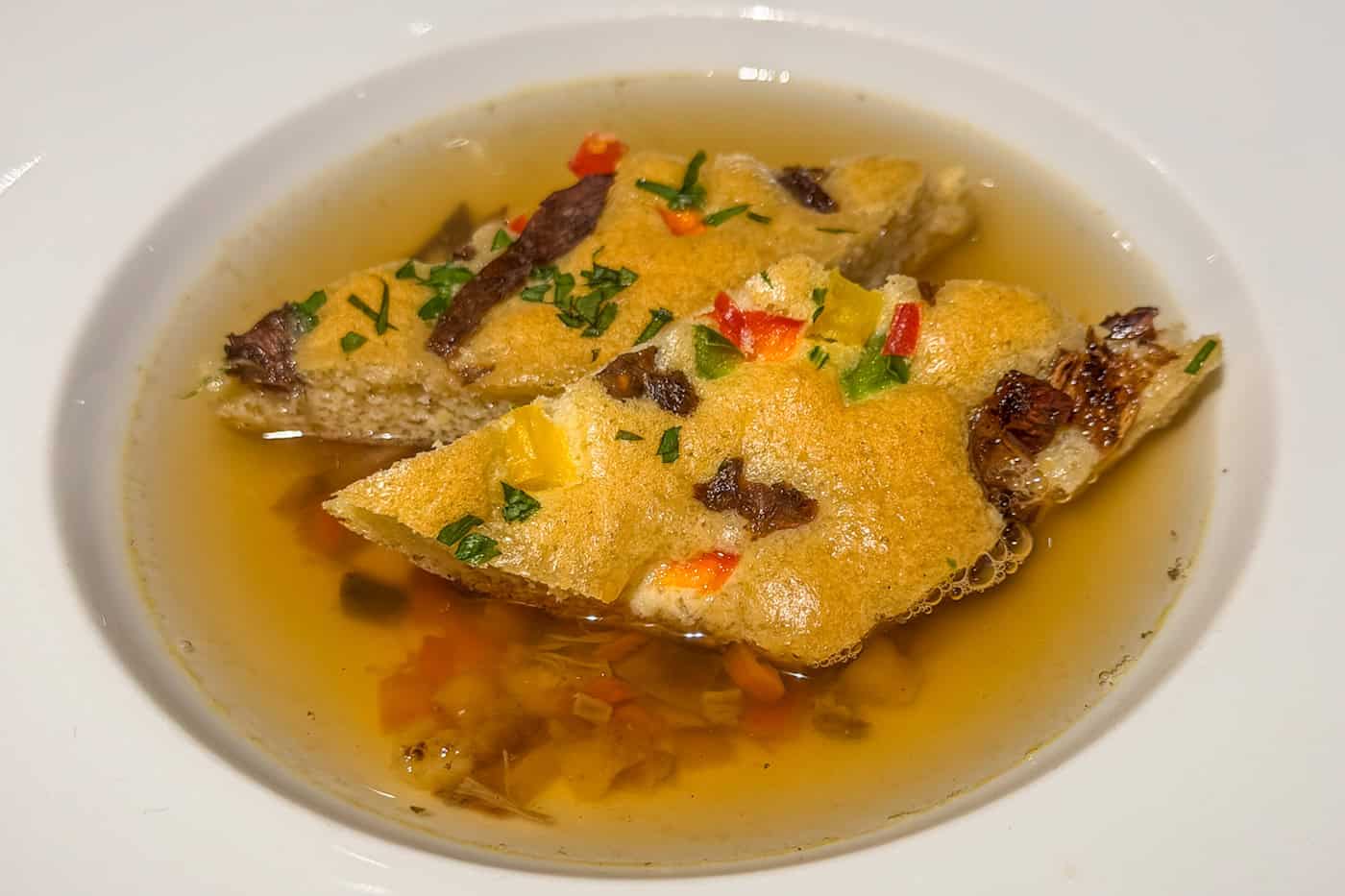
To accompany the Asian-style goose broth, complemented by a porcini mushroom and bell pepper soup, another Saxon specialty is poured into the glass. The 2025 Bacchus “Über den Mauern” by Sebastian Lehmann and Matthias Gräfe is the result of a collaborative winemaking concept. Its uniqueness lies in its aging process. The base wine was aged in barrels for an additional half year, largely without contact with oxygen. As a result, it has moved away from the immediate primary fruit and liveliness often found in young Bacchus wines. Instead, it displays ripe cassis and apricot aromas, along with subtle herbal notes and a certain complexity, without becoming heavy. With about six to seven grams of residual sugar per liter, it remains dry but feels approachable thanks to its pronounced fruitiness.
The broth, in turn, combines the classic aromas of a hearty goose broth with subtle Asian seasoning. The Schöberl—a savory sponge cake garnish familiar from Austrian cuisine—soaks up the broth and adds extra flavor through porcini mushrooms and paprika. The Bacchus complements these flavors without overpowering them. Its herbal notes and ripe fruit complement the broth’s spiciness, while its moderate residual sweetness rounds out the interplay.
For those who prefer non-alcoholic options, this course is paired with the de-alcoholized Sauvignon Blanc “Der Gedanke ist frei” from Kretschko & Gräfe.
Goose Boulette: A Rosé That’s Almost a Red Wine
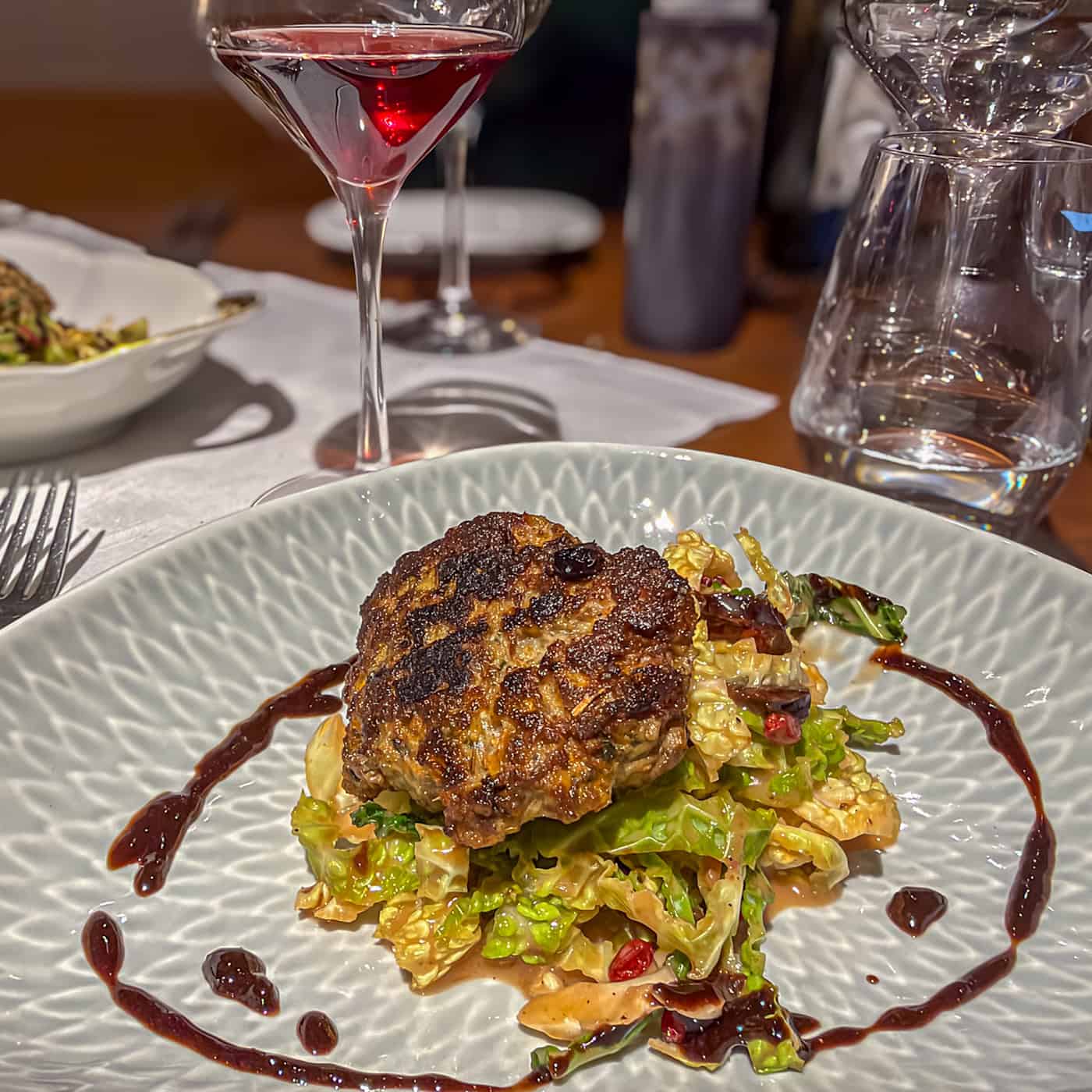
The intermediate course is one of the most unusual combinations on the menu. A juicy goose meatball is served with a savoy cabbage and prune salad and a Marsala-barberry dressing. The dish combines several flavors: the rich, fatty meatball, the slightly bitter savoy cabbage, the sweetness of the prunes, the oxidative notes of the Marsala, and the fresh acidity of the barberries. This calls for a wine with significantly more body than a light summer rosé. The choice fell on the 2025 “Routine neu berechnet” Rosé from Kretschko & Gräfe, a Regent from Saxony. Its color alone stands out: deep and dark. Its flavor profile, too, is a far cry from the usual expectations of a rosé. It was aged in barriques that had previously held Pinot Noir. The wine displays pronounced cherry fruit, density, and remarkable fullness.
Its power is not a drawback for the goose meatballs—it’s actually a prerequisite. It can hold its own against the intense meat flavor, picks up on the fruitiness of the prunes, and counters the various acidic and spicy components with sufficient structure of its own. This makes this Regent Rosé an interesting alternative for anyone who wants a full-bodied wine with goose but doesn’t necessarily want a classic red.
As a non-alcoholic option, there is the Cuvée Rosé from A. Diehl in the Palatinate, which, with its fruitiness, also complements the various components of the dish well.
Goose leg and goose breast: white wine or red wine?
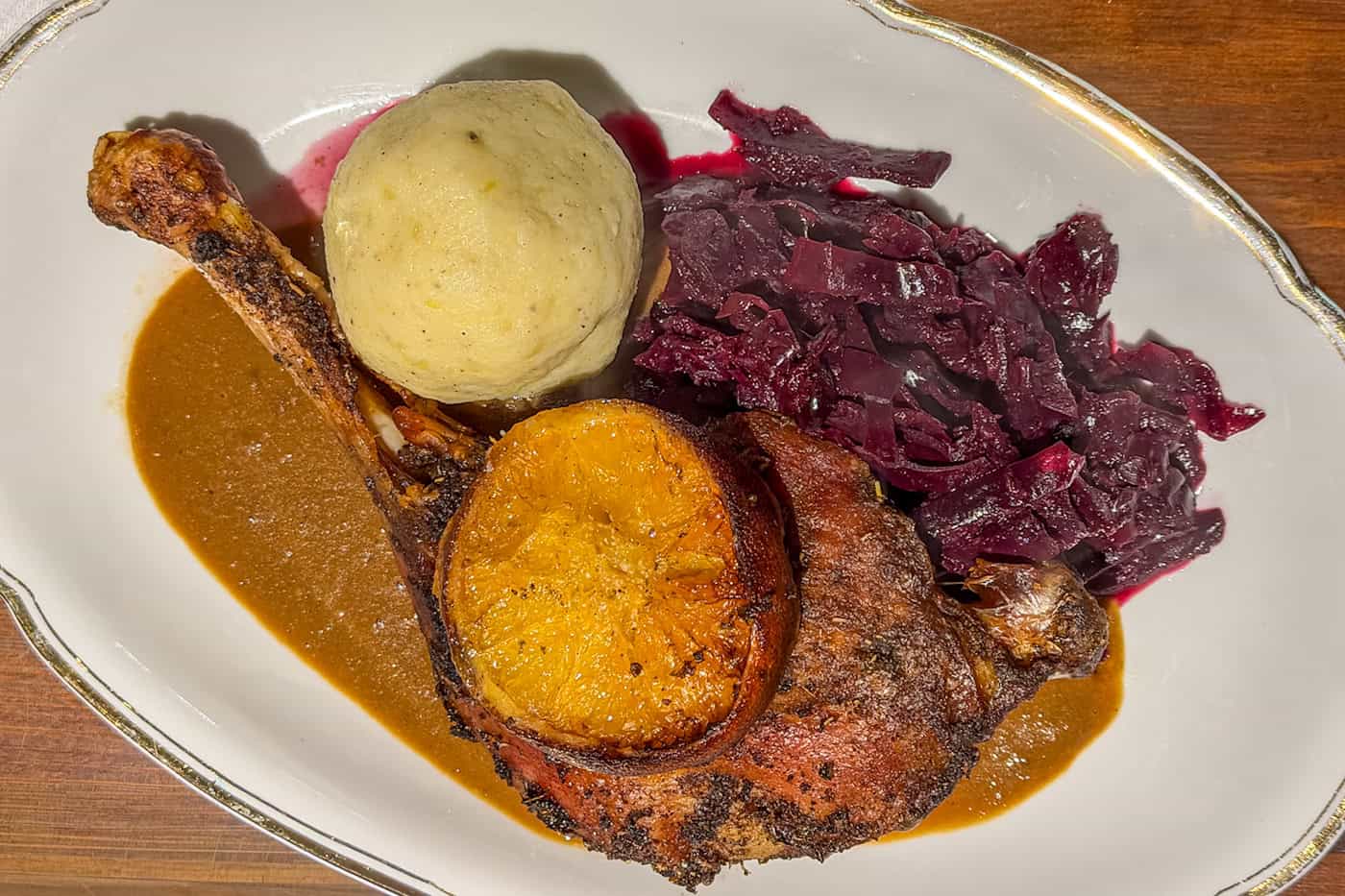
The main course features the classic goose, served either as a leg or a breast. It’s served with red cabbage and black currants, a dumpling stuffed with chestnuts and onions, and a rich, full-bodied sauce. During the tasting, two wines stood out: a Chardonnay from the Saar and a Pinot Noir from the Palatinate. Both possess the necessary body but offer different flavor profiles.
The 2023 Chardonnay VDP.Gutswein from van Volxem is remarkable simply because of its origin. The winery on the Saar is best known for its Rieslings. The fact that it also produces Chardonnay is, not least, a reflection of its focus on adapting to changing climatic conditions in viticulture. In terms of flavor, this Chardonnay differs from many common perceptions of the grape variety. It exhibits neither pronounced buttery notes nor dominant oak aromas. Instead, elegance, herbal spice, and a structure that is nonetheless robust take center stage. This is precisely what makes it a good pairing for goose. The wine has enough body to hold its own against the meat and the sauce, yet remains fresh enough to provide a counterbalance to the fat. Its spicy components blend with the hearty aromas of the roast and enhance the umami flavor.
The second selected wine is the 2024 Spätburgunder VDP.Gutswein from the Rings Winery in the Palatinate. The Rings brothers are among the German producers who demonstrate just how much substance and structure a Spätburgunder can possess even beyond the great single-vineyard wines. This is not a particularly light, easy-drinking red wine, but rather a wine with backbone. During the tasting, what was particularly impressive was how well it paired with the entire main course. Meat, sauce, red cabbage, and dumplings form a complex combination of fat, spice, fruit, and a certain sweetness. The Pinot Noir holds its own against this diversity of flavors without becoming too dominant itself. In doing so, it also dispels the misconception that Pinot Noir is generally too light for a hearty roast goose.
We didn’t take the decision lightly, as the other candidates show. A Barbera d’Asti from the Nizza vineyard of Prunotto, the Piedmontese winery belonging to the Antinori Group, came in a close second. It impressed with its body and structure and might also be an interesting alternative to serve with goose breast. A Pinot Nero “Red Angel” from Friuli-Venezia Giulia was enjoyable on its own but couldn’t hold its own against the dish. A Cannonau di Sardegna Riserva, on the other hand, developed appealing notes of Amarena cherry and marzipan after extended aeration, but seemed a bit too light for the goose and its side dishes during the tasting.
The two selected main-course wines are also available in alcohol-free versions that retain their varietal characteristics: the CHRD Chardonnay Réservé and the PNR Pinot Noir Réservé from the Leitz Winery. Both are meticulously crafted de-alcoholized wines in which the work with yeast plays an important role. They are priced on par with their alcoholic counterparts—a sign that high-quality non-alcoholic wines do not necessarily have to be cheaper.
For dessert: An amber-colored Banyuls
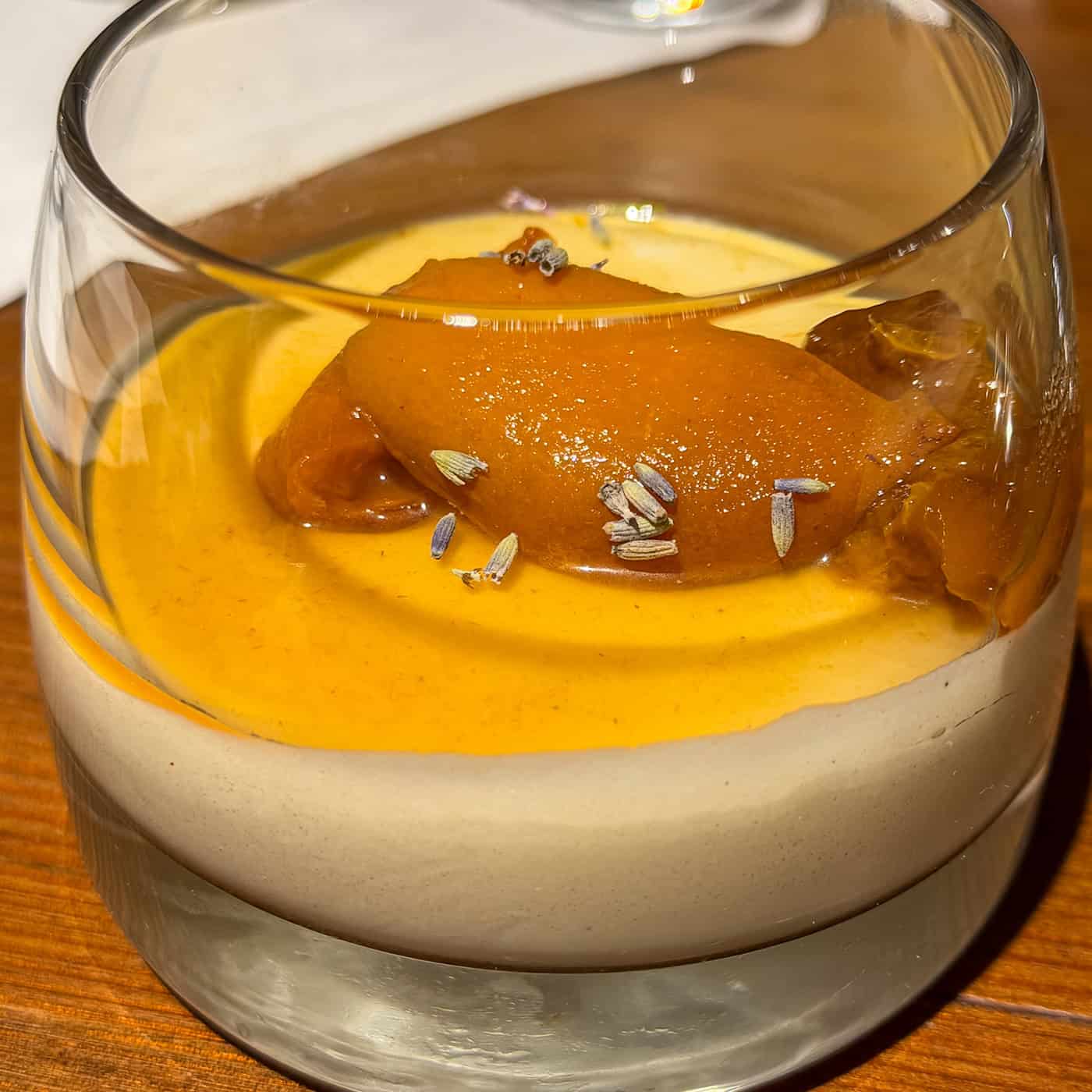
After the savory courses, a dessert that’s not too sweet: Cottage cheese mousse with preserved apricot and lavender. This combination calls for a wine that complements the fruit and floral aromas without overwhelming the dessert with excessive sweetness. The choice fell on the Cornet & Cie Banyuls Ambré from Abbé Rous in the French Roussillon. Banyuls is one of the traditional sweet wines of southern France. The term “Ambré” refers to its amber color and oxidative style. Such wines combine sweetness with mature, often nutty and spicy aromas. This pairs particularly well with a dessert in which the apricot provides a fruity foundation, while the lavender, with its essential oils, adds an unusual aromatic accent. The Banyuls brings the necessary intensity but doesn’t feel overpowering in this pairing.
The non-alcoholic alternative is a single-varietal Scheurebe grape juice from van Nahmen, whose pronounced fruit aromas also pair well with dessert.
The "Repair Wine": Riesling from the Golden Wagen

There’s something special at the end of the wine list: a “repair wine.” Of course, this doesn’t mean a wine meant to salvage a failed evening, but rather one you can enjoy after the meal simply for the pleasure of wine. The 2025 “Routine neu berechnet” Riesling from Kretschko & Gräfe comes from the Goldenen Wagen vineyard in Radebeul—more specifically, from a vineyard taken over by Andreas Kretschko that features vines ranging from 50 to 60 years old. The wine was aged in a 500-liter wooden barrel, underwent spontaneous malolactic fermentation, and was bottled unfiltered. It is available exclusively in magnum bottles. Despite the malolactic fermentation, it is distinctly dry, with a pronounced sense of terroir and a robust, mineral-like structure. For Matthias Gräfe and Ulrich van Stipriaan, it is one of those Rieslings that clearly reflects its origin.
Incidentally, its place at the end of the meal is not its only distinguishing feature: it could just as easily serve as a dry aperitif—especially for guests who prefer to start the evening with a still wine rather than sparkling wine.
Listen to the podcast
Info
Gräfe’s Wine & Fein
Hauptstraße 19
01445 Radebeul
Tel. +49 351 / 8365540
graefes-weinundfein.de

