

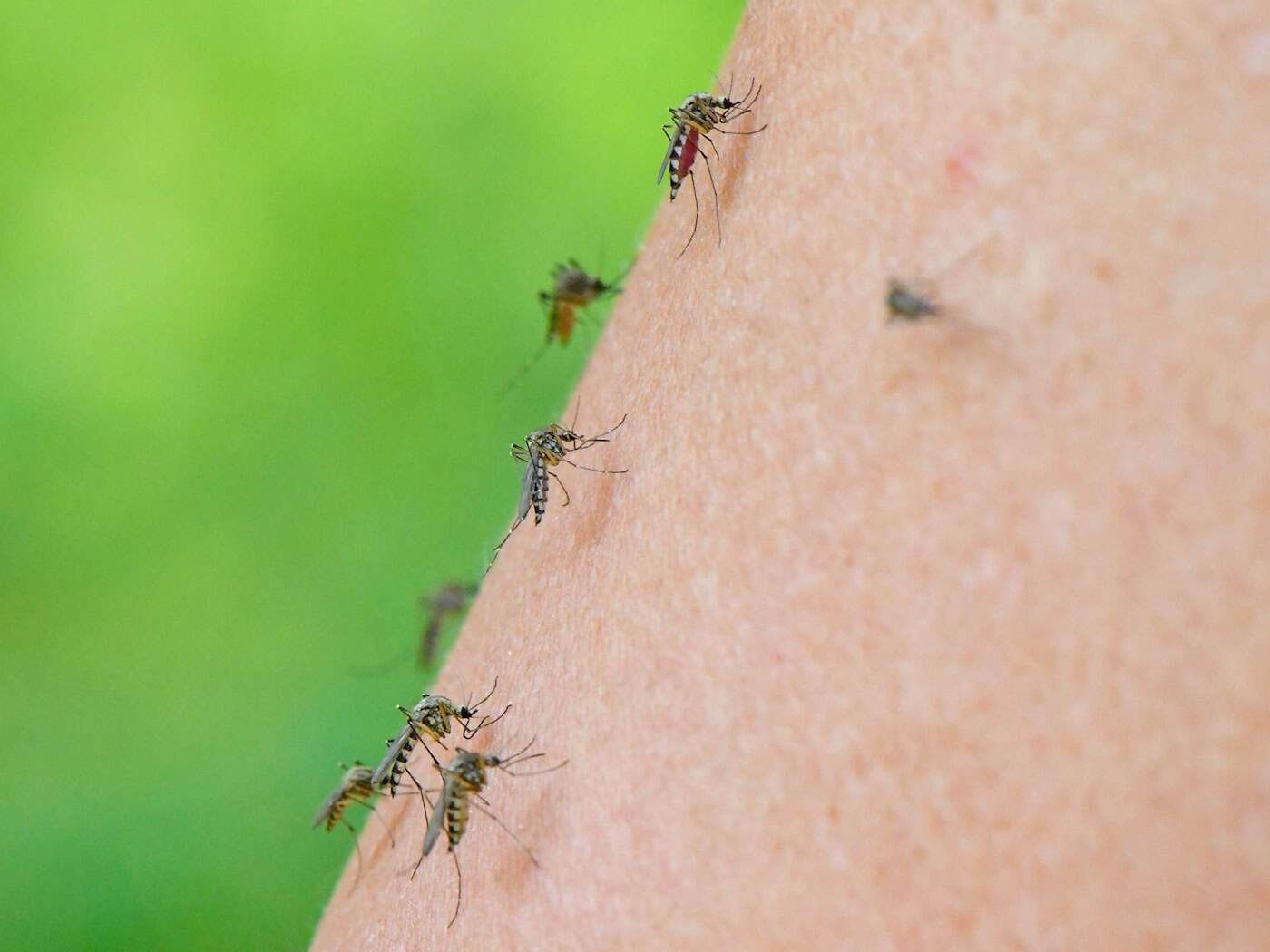
Whether in the woods, by a lake, or in the city: There are plenty of mosquitoes everywhere that can spoil a carefree time outdoors. “There’s a lot of ignorance and misinformation when it comes to mosquitoes,” says Doreen Werner of the Leibniz Center for Agricultural Landscape Research (ZALF), who leads the “Mosquito Atlas” project together with the Friedrich Loeffler Institute. The help of amateur researchers is an important tool for keeping potential threats in check. The Mosquito Atlas is a project that has been running since 2012, a collaboration between the two institutes. Members of the public can submit mosquitoes they have caught, which are then scientifically identified and tested for pathogens. ZALF is a non-university research center funded by the federal and state governments, based in Müncheberg, Brandenburg. Although mosquitoes such as the tiger mosquito have attracted widespread attention, the greatest danger currently does not come from the introduced species: “No worms or viruses have been detected in the invasive mosquito species so far,” the expert said. Although these mosquitoes could serve as potential vectors and are “practically constantly” introduced from Southern Europe via freight traffic and tourists, the pathogens in the mosquitoes’ saliva cannot multiply optimally over a longer period under current climatic conditions in Germany. Given changing environmental conditions with longer warm periods, this cannot be ruled out in the future—but there is currently no evidence of it. “However, the probability is no longer zero.” The Asian tiger mosquito (Aedes albopictus) was first documented in Germany in 2007. It is now widespread primarily in Baden-Württemberg, Bavaria, Hesse, and Rhineland-Palatinate, but has also been detected in Thuringia and Berlin. The tiger mosquito is considered a potential vector for pathogens such as the dengue, chikungunya, and Zika viruses. However, efficient transmission of these viruses requires temperatures that remain consistently high over extended periods. By contrast, a common companion on many summer evenings outdoors is considered the primary vector for pathogens such as the West Nile virus, which can be quite dangerous, especially for older or sick people: the common house mosquito. According to data from the Friedrich Loeffler Institute and the Robert Koch Institute, native mosquitoes have now spread the virus from Berlin and Brandenburg as far as Saxony, Saxony-Anhalt, and Thuringia. The West Nile virus was first detected in Germany in late summer 2019 in people who had become infected within the country. But mosquitoes can become a problem not only through the transmission of diseases but also due to their sheer numbers—whether it’s the native Rhine mosquito or the introduced tiger mosquito. “Both species are extremely persistent and annoying,” says Werner. Unlike the common house mosquito, for example, they relentlessly pursue their victims and are almost impossible to shoo away. Moreover, they sometimes appear in such large numbers that they fall under the scientific definition of the word “plague”: this is defined as 20 or more bites per minute. “Under such circumstances, a barbecue is no longer possible.” The Rhine midge (Aedes vexans) is a native floodplain mosquito whose larvae develop in massive numbers in flooded meadows and floodplains following high-water events. It can reach enormous population densities in a short time and travels up to several kilometers to find hosts. Black flies, on the other hand, cause wounds that can be quite severe. Unlike mosquitoes, for example, which suck blood from their victims through a fine proboscis, these insects tear a small crater in the subcutaneous connective tissue until a small drop of blood forms, which they then lick up. More problematic than the bite itself are the possible consequences of improper treatment, explains Werner. “With black fly bites—as with all puncture wounds—the most important rule is: keep your hands off the wound,” warns Werner. Even minor contaminants that enter the wound when scratching can sometimes lead to serious secondary infections. Black flies live and reproduce in oxygen-rich flowing waters. Midges also employ a similar blood-sucking tactic—though usually completely hidden from view. These insects, which are usually only one to two millimeters in size, often go completely unnoticed until the itchy bite makes itself felt, according to Werner. Even if you retreat into your tent to escape midges, you’re not safe there either: Because of their size, these tiny pests can squeeze their way through even the thin gauze fabric of tent canvases. There are several thousand species of midges worldwide. However, scientists cannot definitively say which of these midges causes the most unpleasant bites: Every reaction to a bite depends on the individual’s immune system, says Werner. In addition, the protein cocktail secreted during the bite influences the reaction: Proteins that are unfamiliar to the body could lead to stronger immune responses. To document the occurrence and spread of mosquitoes and to be able to intervene as quickly as possible when potentially dangerous species appear, mosquito researchers rely on the public’s help, says Werner. So far, around 42,000 participants in Germany have caught and submitted more than 250,000 mosquitoes for research. Newly emerging mosquito populations are initially quite easy to eliminate. That is why timely support is extremely important for a rapid response. Copyright 2026, dpa (www.dpa.de). All rights reservedIntroduced Species Show No Evidence of Pathogens So Far
Native Mosquitoes as Virus Vectors
Black fly bites carry infection risks
Midges can even get through tent canvases
Mosquito researchers rely on public support


