

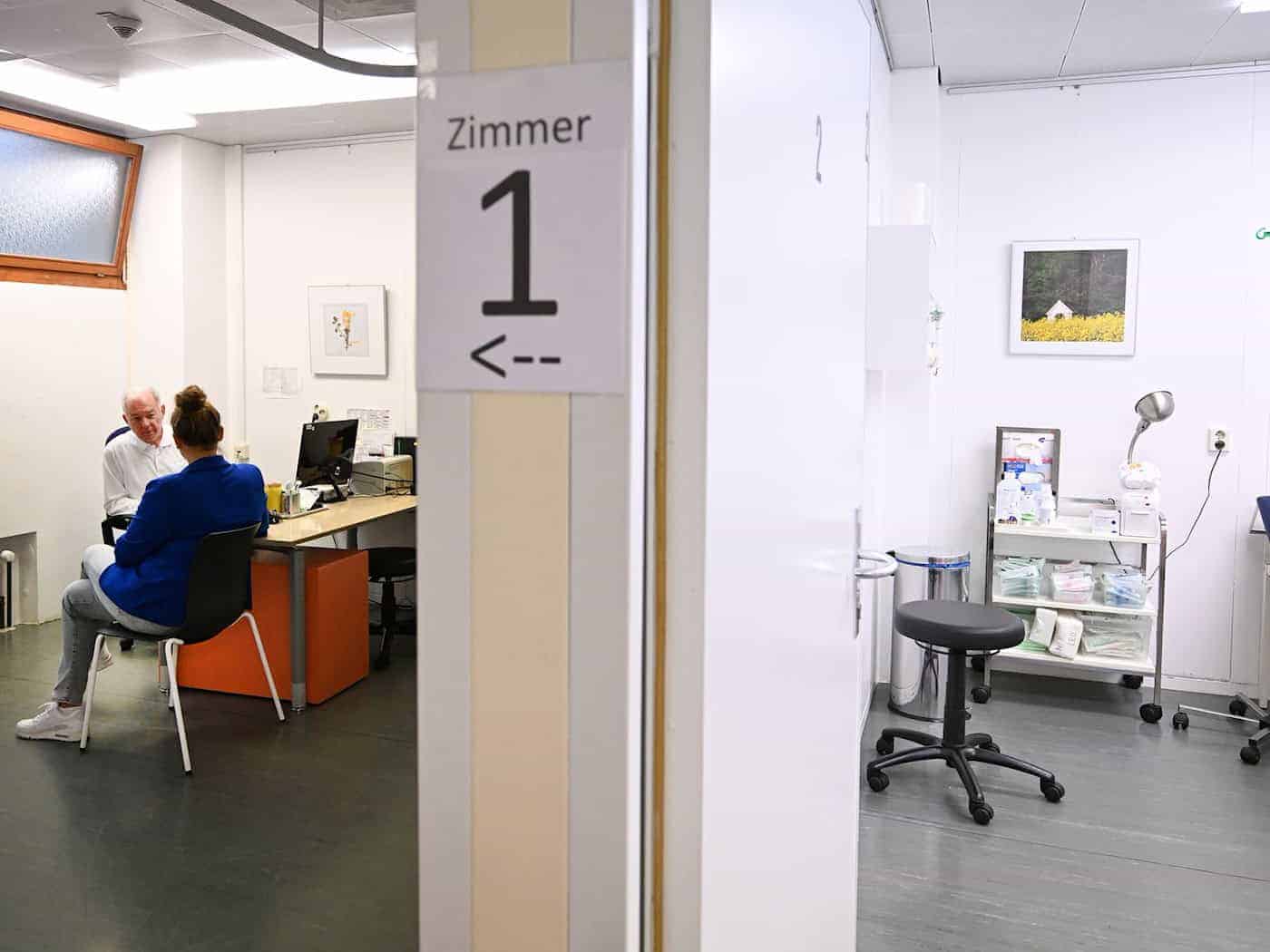
“Could you please describe how long you’ve had this cough and whether you’re experiencing any accompanying symptoms such as fever, shortness of breath, or chest pain?” What sounds like a classic question from a doctor was, in this case, asked by artificial intelligence (AI). AI has long been able to detect tumors on X-rays, for example. But now, the technology has advanced to the point where it can conduct conversations with patients. Researchers primarily from Heidelberg University Hospital and the Else Kröner Fresenius Center for Digital Health at TU Dresden, along with a team from Google, have developed two independent AI models for patient management that cover everything from diagnosis to treatment recommendations. Both are currently being presented in the journal *Nature*. Many AI developments in the healthcare sector have so far been limited to specific tasks. The two models—MIRA (Medical Intelligence for Reasoning and Action) from the German researchers and AMIE (Articulate Medical Intelligence Explorer) from Google—go significantly further: Among other things, they independently collect medical histories via chat, order diagnostic tests such as microbiological examinations, and create treatment plans that include prescriptions for specific medications. In doing so, they take into account, for example, clinical guidelines, professional literature, and factors such as drug interactions. Instead of vague recommendations, Google’s system reportedly provided extremely detailed, actionable instructions. In tests, both models proved to be, in some cases, better and more precise than human doctors, according to the authors. The Google team points to problems such as staff shortages and a lack of continuity during treatment spanning multiple appointments. The experts from Heidelberg and Dresden refer to “co-pilots” for doctors, so that they have more time for patient care. With regard to the broad spectrum of tasks in the clinical management of patients, *Nature* states: “If AI agents could take on such tasks and perform effective clinical decision-making, they would be able to support doctors with routine tasks and potentially alleviate doctor shortages in some regions of the world.” No. Both groups note that their models cannot yet be applied in real-life settings. They tested their applications using AI versions of patients, though these were based on real data. According to the report, these simulations have their pitfalls. For example, such a virtual patient responds and reacts completely differently than a flesh-and-blood human who comes to a clinic with acute symptoms. It is noted that MIRA generally suggested appropriate, evidence-based treatment. However, the recommendations were not 100 percent reliable. “The results demonstrate the potential that AI agents have for medicine,” says Uwe Platzbecker, Chief Medical Officer at Dresden University Hospital. For further development, the key question is “how we can integrate such innovations into clinical practice safely, transparently, and for the benefit of patients.” Kerstin Denecke of Bern University of Applied Sciences currently sees the data landscape in healthcare, approval procedures, unclear responsibilities, and representative studies on the risks of such systems as hurdles. “Clinical decisions require more than just adherence to guidelines,” explains the expert in patient-centered digital health. What is needed is an understanding of the individual situations of those affected. Robert Ranisch, who is, among other things, a professor of medical ethics at the University of Potsdam, views the MIRA study as an “exciting and methodologically sound contribution.” However, he notes that it examines the performance of AI agents under laboratory conditions. Here, as with many AI studies, the key question arises: Does this also work in everyday clinical practice? “This is precisely where many promising AI systems have failed so far,” he explains. They quickly reach their limits as soon as, for example, real patients and healthcare providers, incomplete data, and different IT systems come into play. According to Reinhard Busse, head of the Department of Healthcare Management at TU Berlin, the fact that an AI agent can systematically map clinical processes as well as diagnostic and therapeutic decisions does not necessarily mean that this will result in better care or reduced costs in everyday practice. The German Medical Association has examined AI in medicine in detail. In a publication on communication, it states that the formulation of diagnoses, treatments, and prognoses, for example, involves not only technical actions but is also linked to emotions and values. “These form the basis of the relationship of trust between doctors and patients.” When using AI-based assistance systems, it is important to assess whether interpersonal and emotional aspects are being unduly sidelined—for example, when human communication is supported or even replaced by technical voice assistance systems such as chatbots. Despite all the time saved thanks to AI, Eugen Brysch, Executive Director of the German Foundation for Patient Protection, also emphasizes: “The doctor-patient conversation will continue to play an indispensable role for patients in the future.” This is of particular importance for older adults. According to Brysch, the multi-billion-euro electronic health records project still lacks an AI component. “Filtering, linking, and analyzing these vast amounts of data would be a breakthrough.” At the same time, he warns against increasing dependence on non-European companies: “It is unacceptable that the future viability of analysis and communication lies in the hands of tech billionaires and their political ties.” Copyright 2026, dpa (www.dpa.de). All rights reservedWhat’s new about this?
What’s the point of this?
Will I soon be talking to “Dr. AI”?
How do experts assess this?
What role does AI play in communication with patients?
Are there any other concerns?


