

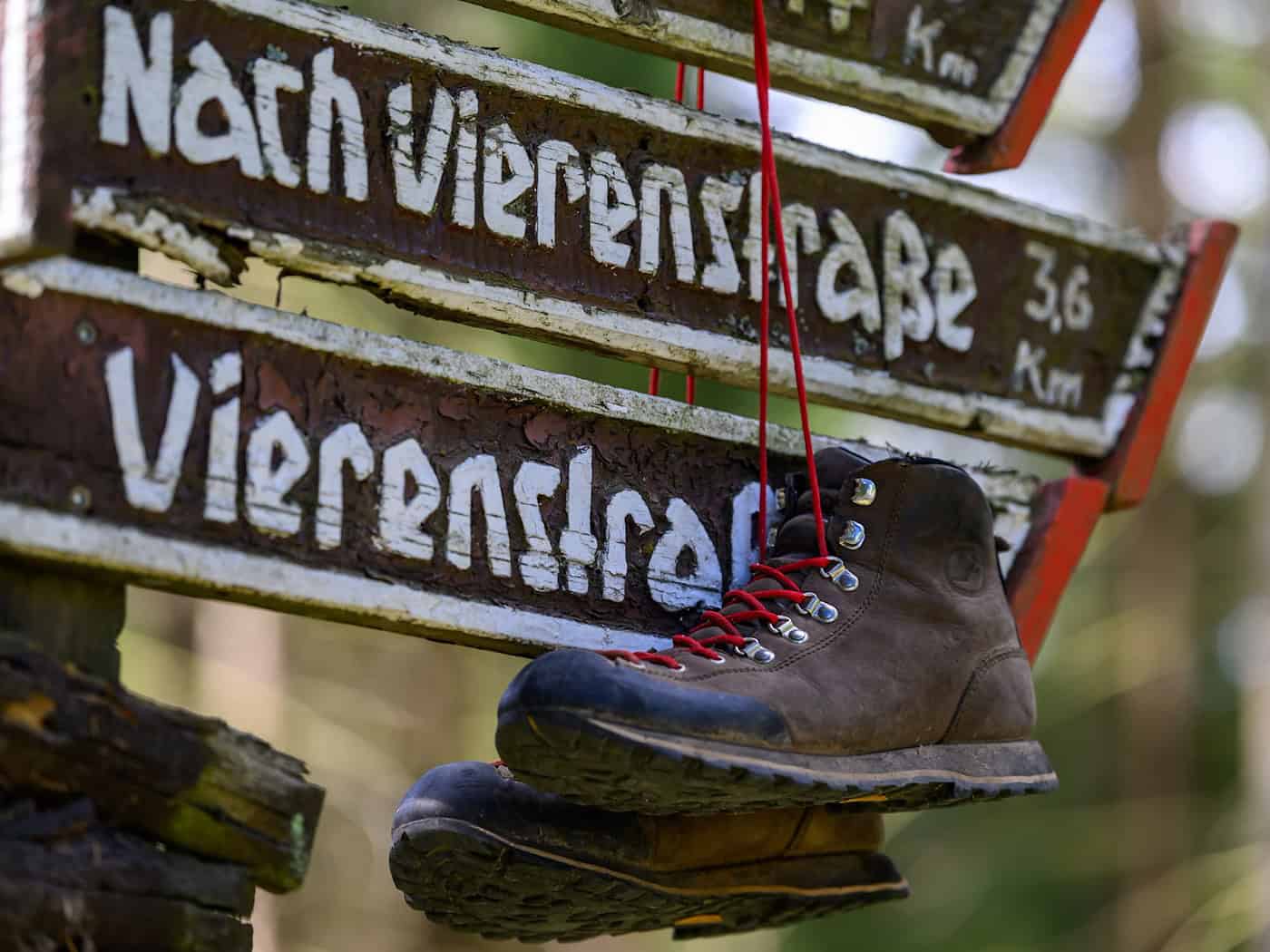
Natascha Heinrich has already crossed the Alps on foot; today she is the manager of a family-run hotel in the Ore Mountains. When it was time for renovations, the old lodge at the foot of the Fichtelberg was torn down and the “Basislager” was built at a cost of several million euros. With 13 rooms and a 10-person hiking lodge, she has been welcoming primarily active guests—including many hikers—since spring 2025. They arrive via the Erzgebirge-Vogtland Ridge Trail, for example, or use the hotel as a starting point for tours in the German-Czech border region, as the 43-year-old explains. To make hikers feel at home, she says, you need more than just a place to stay: the offerings range from shoe dryers and insider tips for hikes to a wellness area with saunas and infrared cabins for relaxation after a hike. “People who hike long distances also want to eat well,” the hotel manager continues. “And those who are on the trail for several days are happy to be able to wash and dry their clothes.” According to studies, interest in hiking has risen in recent decades. “More people are hiking again today,” says Bernd Hartmann, managing director of the German Hiking Association: “About two out of three Germans aged 16 and older.” And they’re not just spending money on shoes, outdoor clothing, or maps. They’re also driving revenue at restaurants, hotels, and guesthouses. This results in an annual economic impact of about 7.8 billion euros in the regions, with rural areas benefiting the most. Hiking has undergone an image transformation since the 1990s, explains Heinz-Dieter Quack, director of the Hiking Research Center at Ostfalia University of Applied Sciences in Salzgitter: from a rather sedate pastime to a lifestyle-oriented recreational activity. Every year, his research group compiles the Hiking Monitor each year, focusing on various topics—including the economic value of hiking. The 2025 survey revealed that respondents had spent an average of about 445 euros on gear over the previous two years. At the top of the list are shoes, socks, and pants; however, respondents also purchased backpacks, water bottles, apps, and maps. People aged 30 to 49, in particular, are willing to spend a fair amount on gear. On average, the hikers surveyed also spent more than 60 euros per day while on the trail—for example, on food, shopping, or bus and train fares; those who were on a multi-day trip spent an additional 100 euros, including lodging. “Hiking is, however, a relatively inexpensive leisure activity,” Quack emphasizes. “You need good shoes, pack a sandwich, and then you’re off.” That’s because using the trails is free. They are maintained by volunteers and local governments—a considerable effort. The professor therefore wanted to know whether hikers would be willing to pay to use them. About 43 percent of those surveyed could imagine doing so. However, he questions whether this would work in practice. Projects in which contributions were voluntarily requested have yielded only meager returns. Quack explains that service offerings along the trails are more promising—such as transportation and food services, or parking fees. The Hiking Association refers to a hiking trail network of more than 300,000 kilometers in this country. That’s seven and a half times the length of the equator. With its diverse regions, Germany offers plenty of variety—not just for domestic hikers. Abroad as well, the German National Tourist Board promotes Germany as “Hiking Country”. The variety of hiking options has increased in recent years. While some seek peace and quiet in nature or go on pilgrimages, others explore architecture and parks in cities through urban hiking. Still others seek athletic challenges. The Hiking Marathon in the Franconian Forest attracts, according to the organizers, hundreds of participants from Germany and abroad and usually sells out within a few hours. Hiking marches are held regularly in the Harz Mountains, and in Saxony, extreme hikers tackle the Fichtelberg Hike from Chemnitz to the Fichtelberg in just one day—more than 60 kilometers and 1,700 meters of elevation gain. The highest peak in eastern Germany is known nationwide as a winter sports destination. But as in other low mountain ranges, snow is often scarce there in winter. To attract visitors nonetheless and increase year-round occupancy at hotels and guesthouses, the tourism industry is focusing on other activities—such as mountain biking and hiking. In addition, this mining region, recognized as a UNESCO World Heritage Site, offers many trails on both sides of the German-Czech border. A new offering is being added these days: the Stoneman Miriquidi Hike + Trail Run. Hikers can hike or run a route of 62 kilometers (hike) or 86 kilometers (trail run)—over three, two, or just one day. Hotel manager Natascha Heinrich in Oberwiesenthal is pleased with these new offerings. This week, the region is also hosting the European hiking festival Eurorando and the German Hiking Day. Heinrich is counting on the fact that anyone who’s been here once will come back—and bring family or friends with them. “There are so many people who haven’t yet discovered the Ore Mountains.” And hiking can also be combined with other activities, she says. Such as corporate conferences or classes like yoga. Copyright 2026, dpa (www.dpa.de). All rights reservedShoes, Apps & Co: Hikers Invest in Gear
A dense network of hiking trails
Hiking is getting more extreme: the search for an adrenaline rush


