

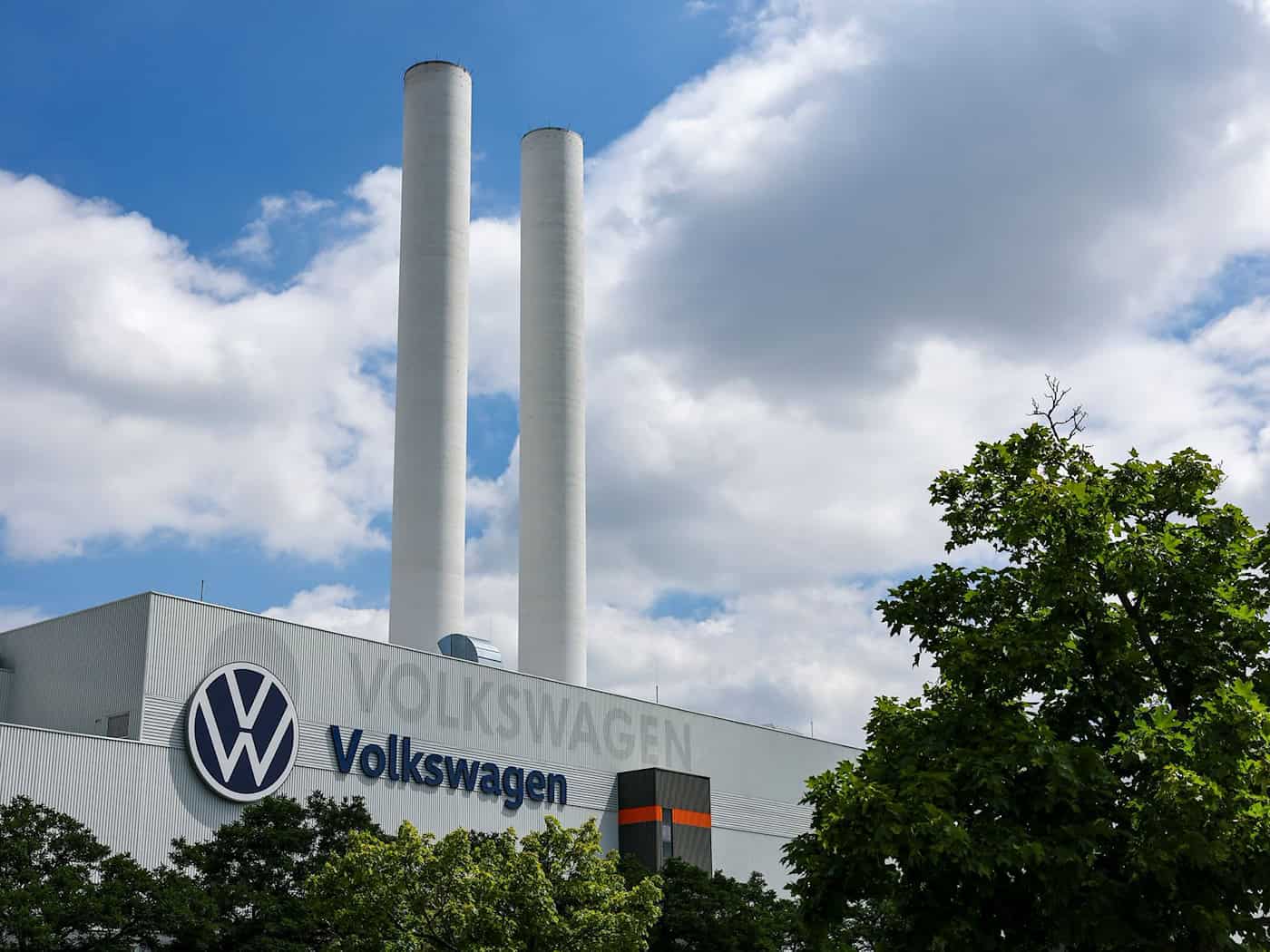
Overcapacity, competition from China, job cuts: Due to the tense market situation, further workforce reductions are being discussed at automaker Volkswagen. Next week, CEO Oliver Blume will attend his first town hall meeting at the electric car plant in Zwickau. “We expect him to finally speak plainly,” Mike Rösler, chairman of the General Works Council at Volkswagen Saxony, told the German Press Agency. “Our colleagues here are passionate about building cars and need a clear vision of what the future holds after 2030.” The site is guaranteed until the end of 2030—but what comes after that? That remains uncertain. Zwickau has recently been repeatedly mentioned alongside Emden, Hanover, and Neckarsulm as the group’s car plants that are on the brink of closure. Group CEO Blume, however, has repeatedly said that there are smarter solutions than closing plants. “I hope the executive board does its job and finally presents these solutions to us.” And directly from the source. Rösler criticizes that, lately, employees have mostly learned about new plans from the newspaper. “That greatly increases uncertainty.” The car plant in Zwickau is considered a pioneer in electric mobility at Volkswagen. Since 2020, only electric cars have been built there. But the plant has taken a significant hit. At its peak, around 11,000 employees worked there; currently, there are about 8,000—and more than 1,000 additional jobs are scheduled to be cut in the coming years, Rösler laments. One of the two production lines is set to be shut down in 2027. To compensate, the dismantling of used vehicles is being ramped up as a new business segment. According to Rösler, about 100 people will be working there by the end of the year. According to the company, that number is expected to rise to as many as 1,000 in the foreseeable future. The goal is to dismantle and recycle up to 15,000 vehicles annually starting in 2030. The works council points to cost-cutting efforts across all areas, including reductions in energy and procurement costs in addition to job cuts. Rösler: “We’re working flat out in every corner of the company to achieve these goals.” However, if the plant’s capacity utilization drops, unit costs will rise. “Our plant is designed for up to 360,000 vehicles; this year, production is expected to be around 202,000,” explains the 43-year-old. “At full capacity, our production costs per vehicle would be the same as in Bratislava.” The VW subsidiary Skoda operates a car factory in the Slovak capital. In the debate over the competitiveness of the German auto industry, the 35-hour workweek is now also being called into question. It no longer fits the times, said Prime Minister Michael Kretschmer (CDU) about a month ago in an interview with Deutschlandfunk. Rösler counters: “The strain of shift work is high.” Employees in Zwickau have shown flexibility by working special shifts and extended shifts, and in fact often work 39 hours per week or more. He emphasizes that increasing the weekly workweek would also mean fewer workers are needed and more people would lose their jobs. One option Zwickau is hoping for in the future is the production of models that Volkswagen has so far manufactured only in China. The SUVs ID.Unyx 08 and ID.Era 9X are cited as examples. In addition to the car plant in Zwickau, Volkswagen Saxony also includes the Gläserne Manufaktur—where car production has already been discontinued—and the engine plant in Chemnitz. Internal combustion engines are still being built in Chemnitz, so the plant is operating at a high capacity. But Rösler warns that decisions regarding future utilization will be needed there as well in the foreseeable future. Group CEO Blume will address the workforce at several German locations next week. He will begin on Tuesday at the main plant in Wolfsburg, followed by Emden and Zwickau on Wednesday. Copyright 2026, dpa (www.dpa.de). All rights reservedA pioneer in electric cars
Works Council: Cost-cutting efforts across all areas
Is the 35-hour workweek on the line?


